
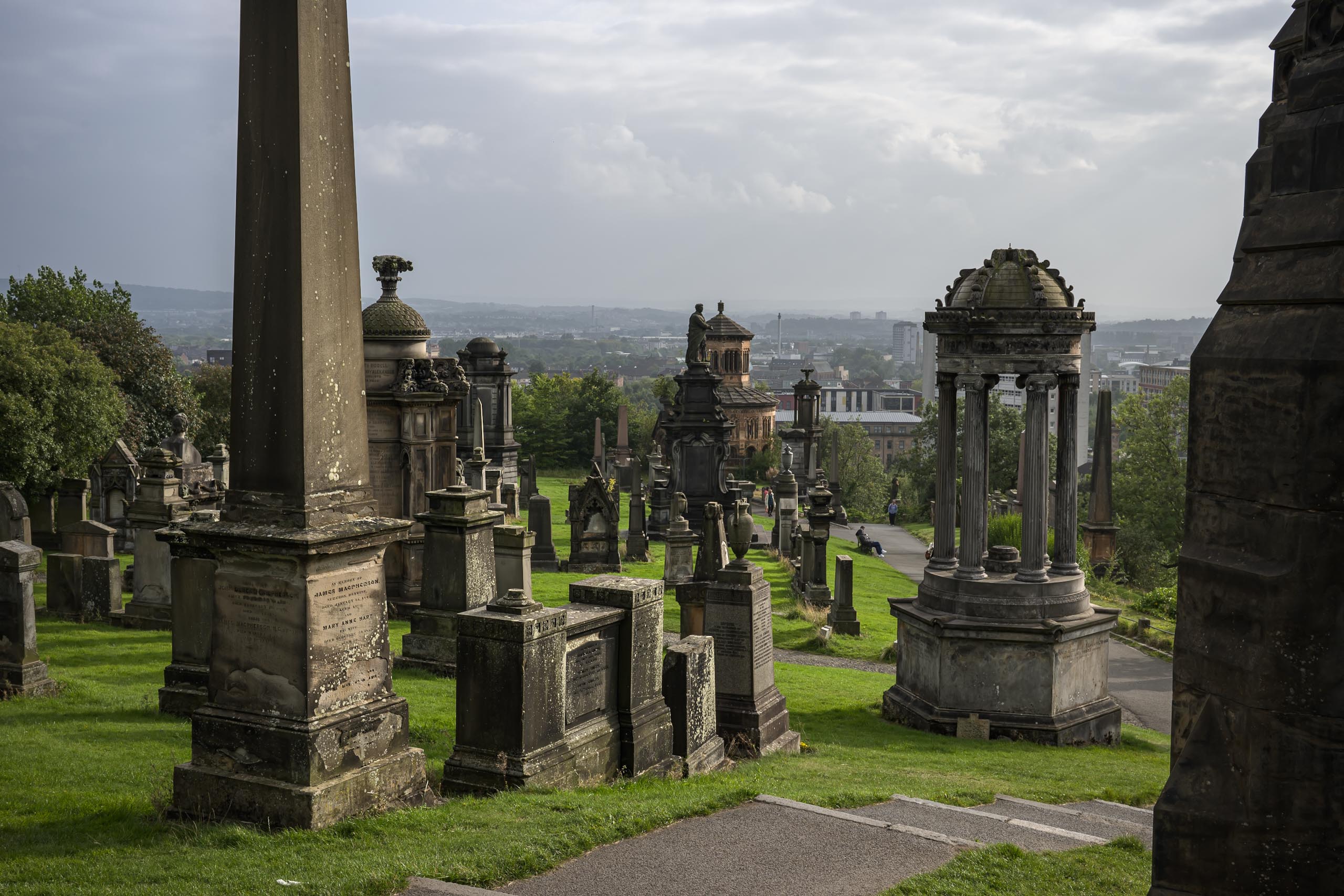
Exiting the Glasgow Cathedral graveyard I crossed a massive stone pedestrian bridge to reach the Glasgow Necropolis. The Necropolis loomed before me, a truly impressive sight, densely packed with a plethora of ornate grave monuments in many styles. Once upon a time it had been a city park, but the wealthy gentry decided they needed a suitably grand place for their eternal rest once they had retired from the main metropolis, so Necropolis it became. Very Egyptian of them!
The bridge is named the “Bridge of Sighs” (riffing off Venices’), as funeral processions at one time crossed it (maybe they still do!). It crosses a canyon which now contains Castle Street, but at one time was the course of the Molendinar Burn, a tributary to the river Clyde, where story has it Saint Mungo (the patron saint, and founder, of Glasgow) once fished for salmon.
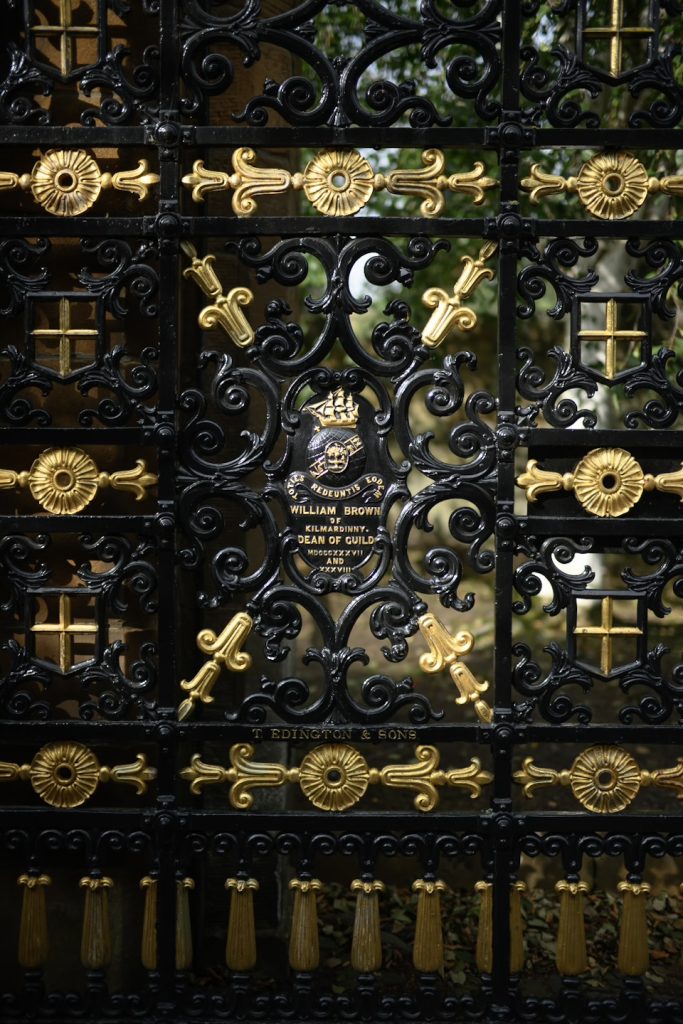
Reaching the other side I was presented with impressive gates in the side of the hill of the necropolis. These were to lead into catacombs, but apparently the excavation was discovered to be too difficult. Rather than making directly for the summit of the Necropolis, I decided to take a gently curving path clockwise in order to circle up from behind.
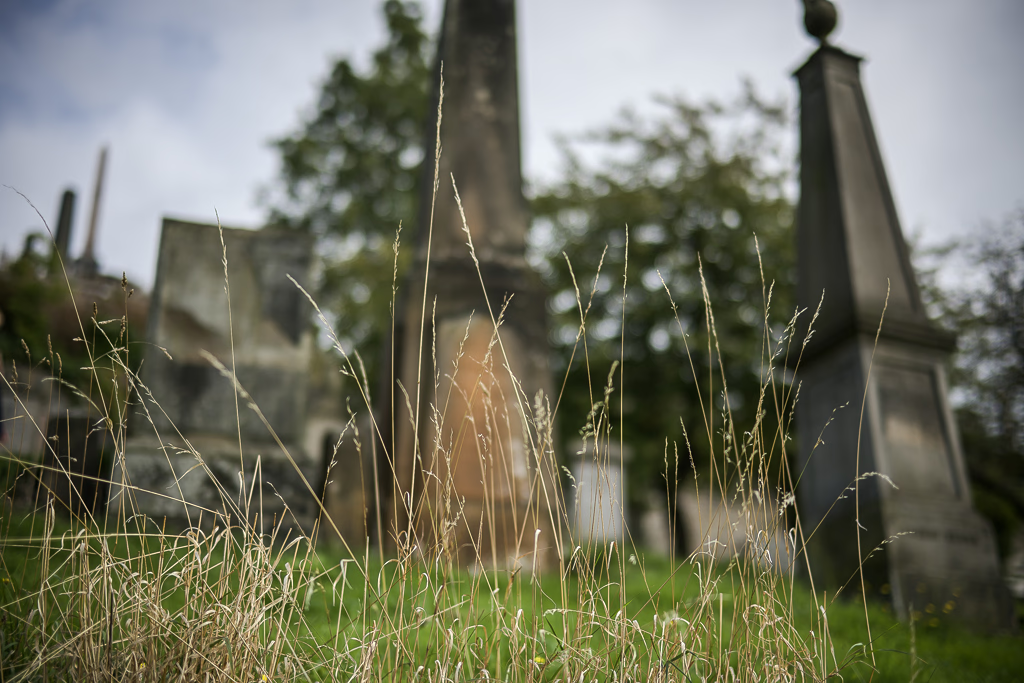
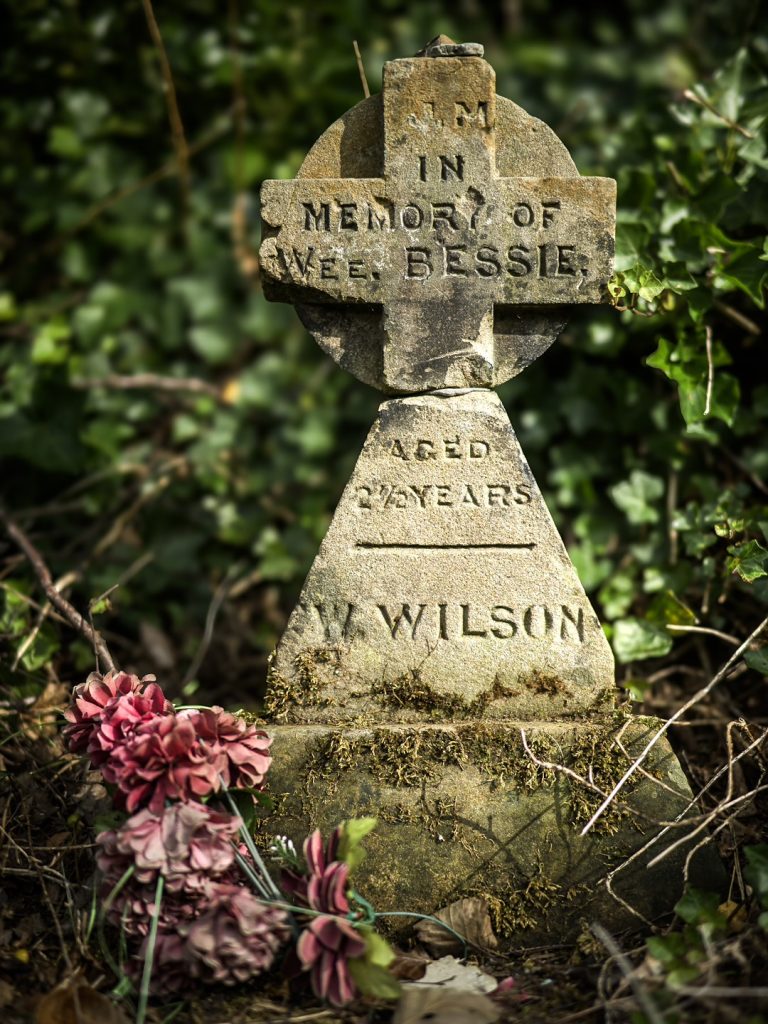
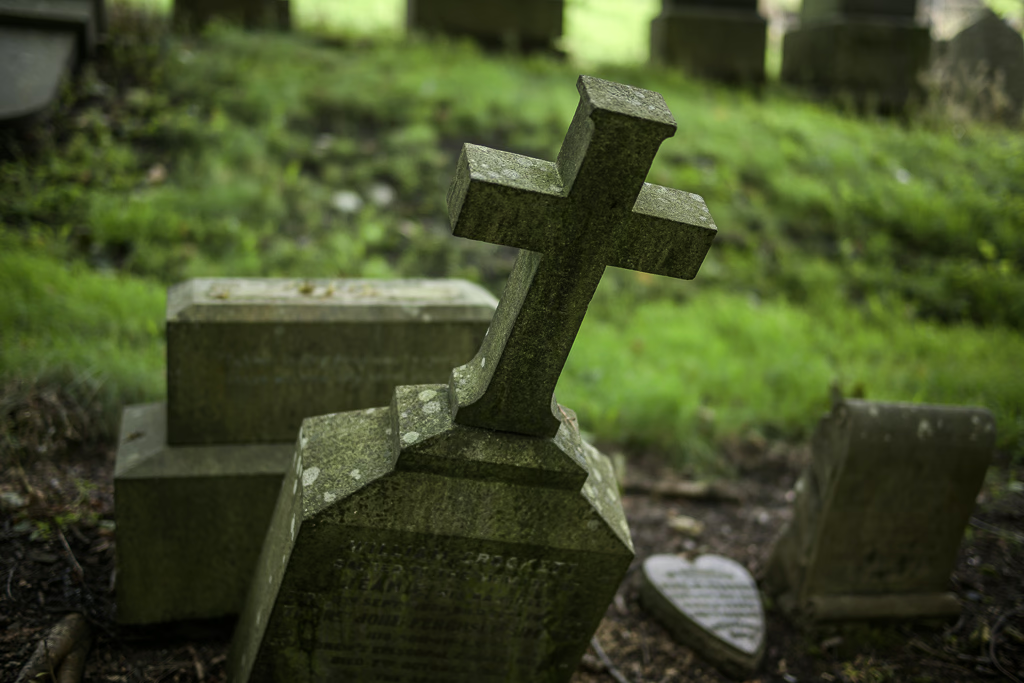
Many of the gravestones I passed on the lower slope were in disrepair, leaning, or even fallen over. Even the memory of these citizens has now passed beyond the gates of time.
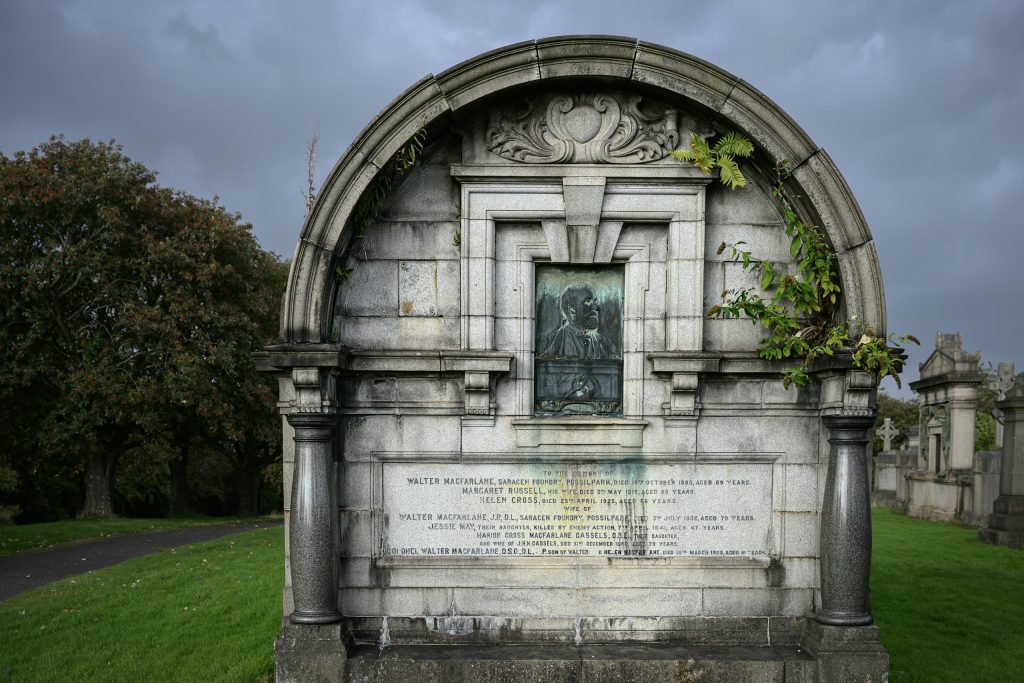
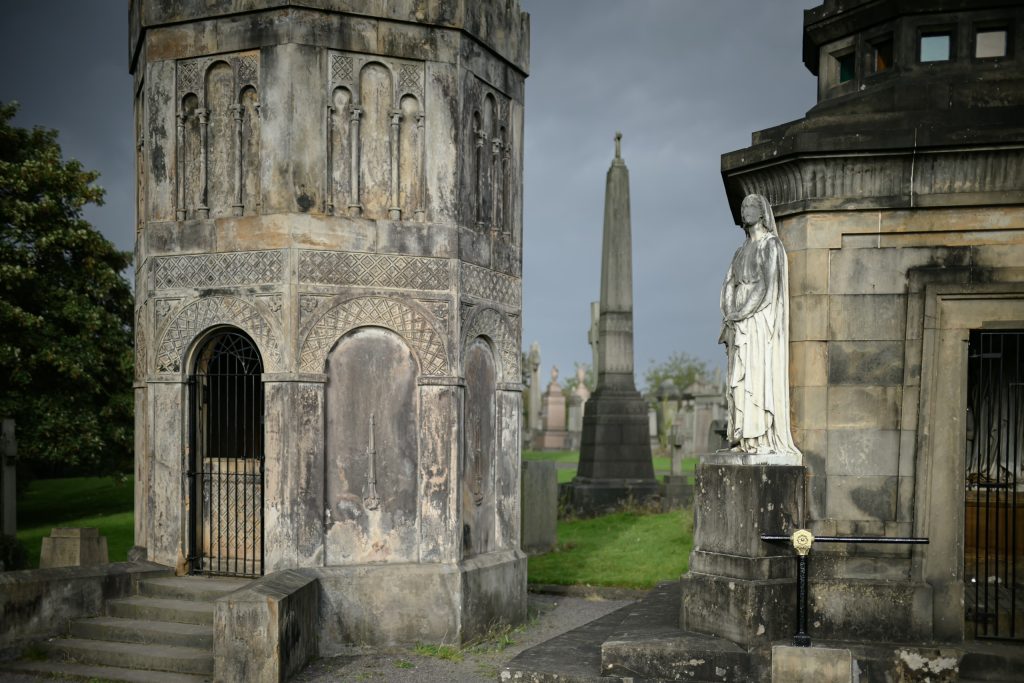
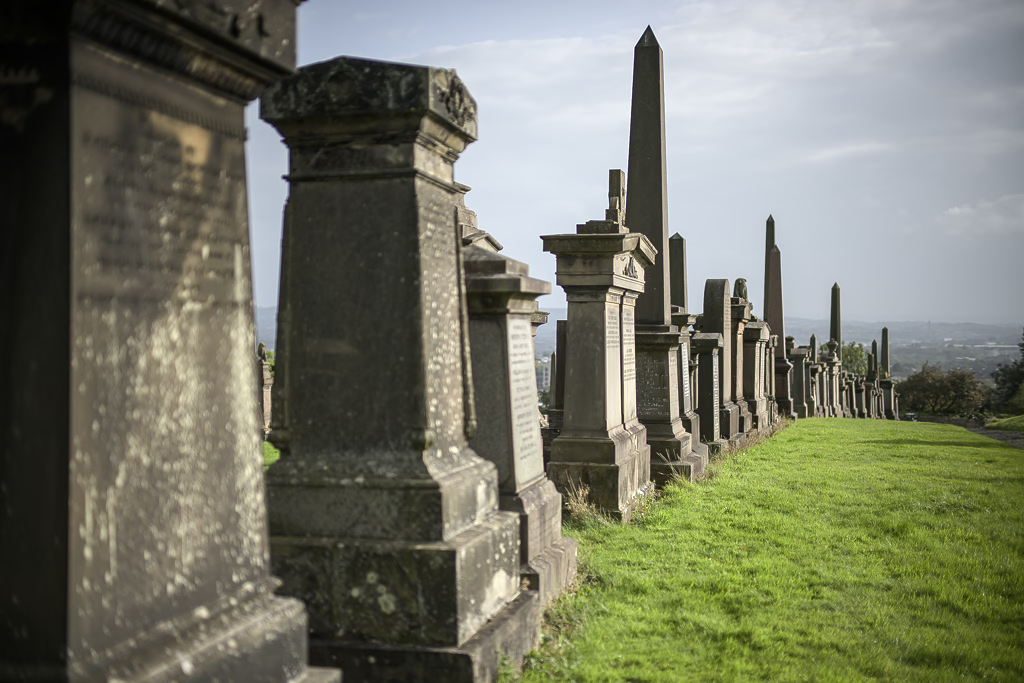
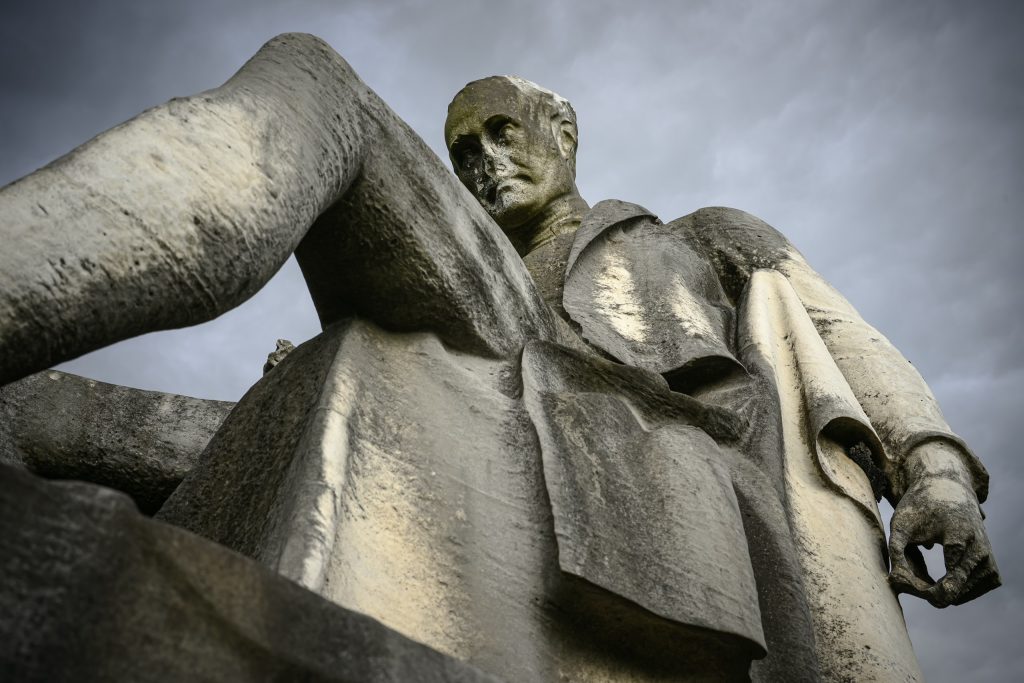
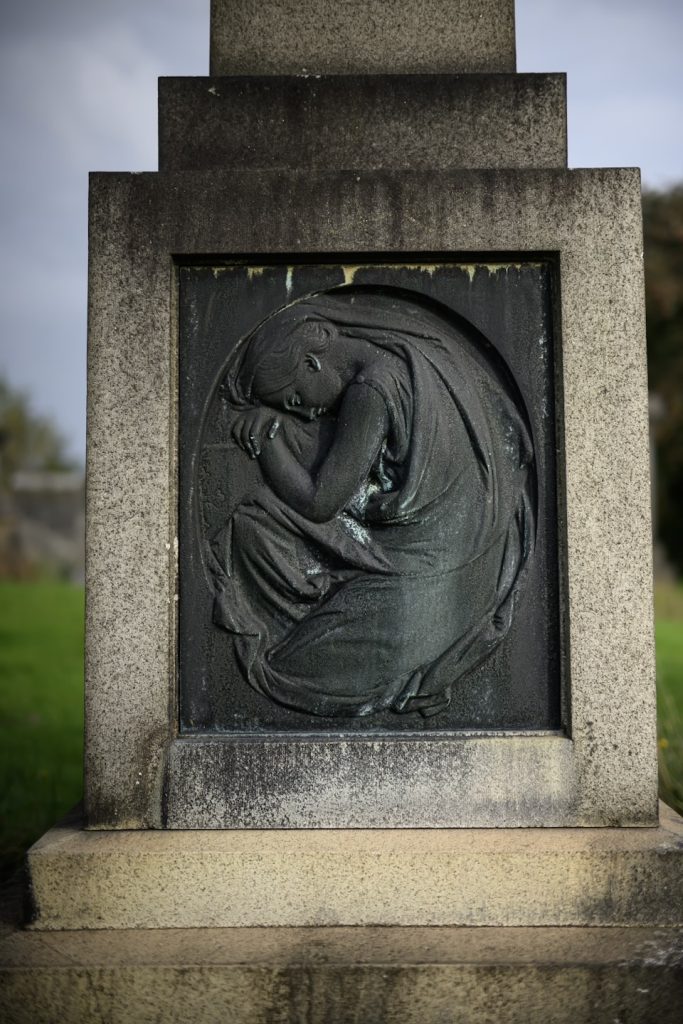
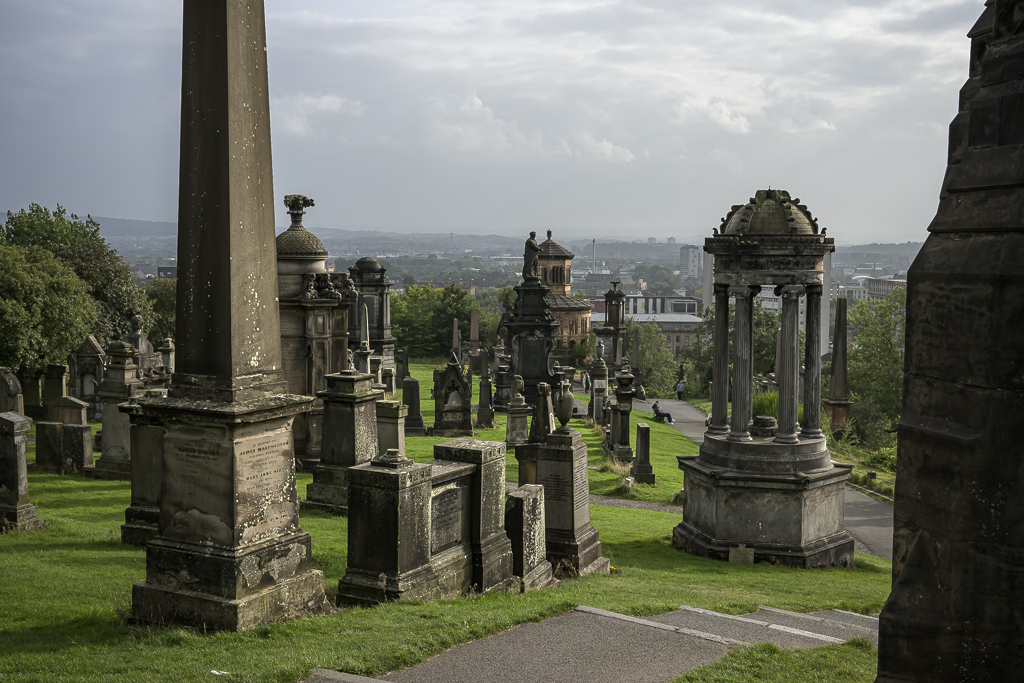
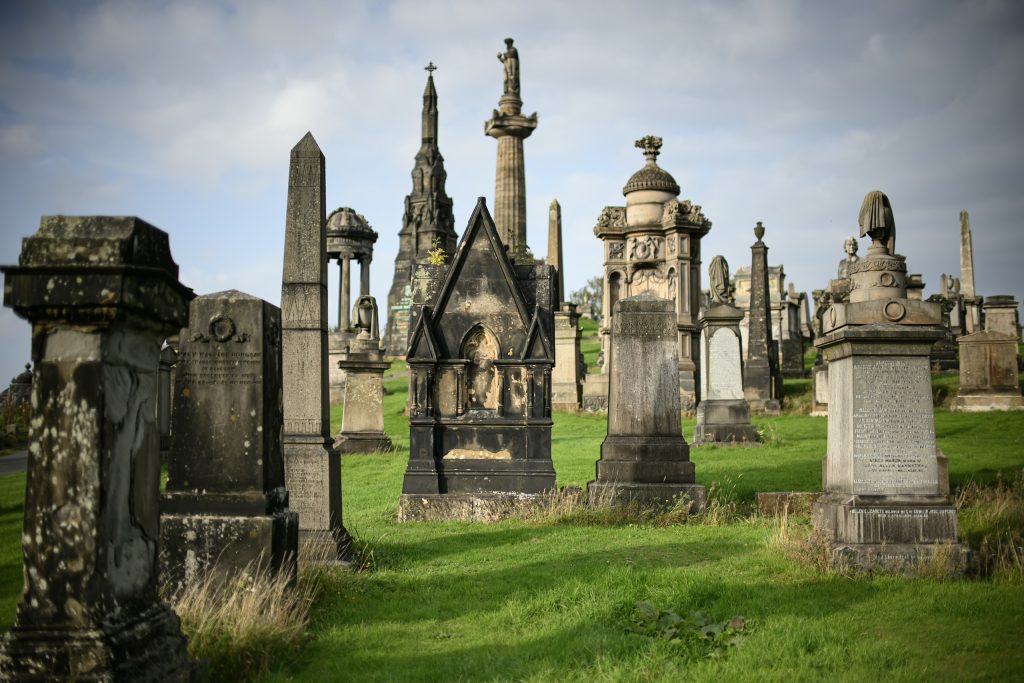
The crown of the hill held the most impressive edifices of this city of the dead. The monuments here are arranged in looping lanes and straight rows. Some are veritable mansions of the afterlife. I amused myself considering what a fine spot this would be for a zombie film, mouldering corpses shambling forth into the glare of the light of the twenty first century in their Victorian finery: watch fobs, top hats, monocles, bustles and petticoats, elaborate headresses, toothy mandibular grins and all, what?
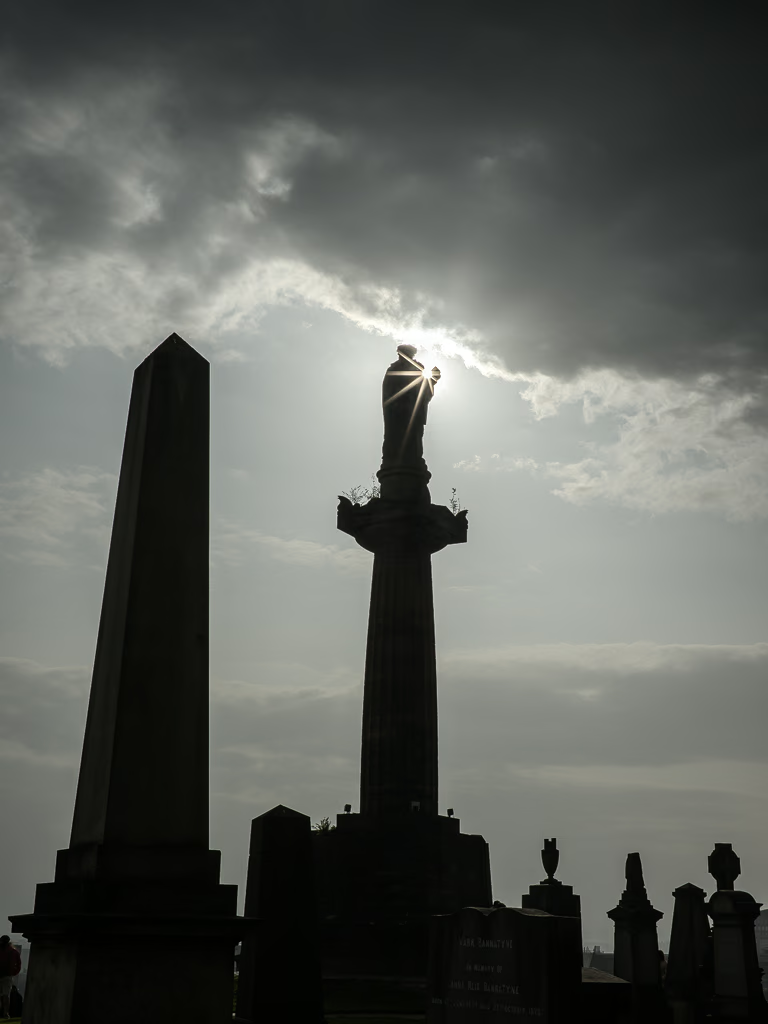
Looming over them all was a massive tall pedestal topped by the effigy of John Knox. He was a leader of the Reformation in the mid sixteenth century, leading to the overthrow of the Roman Catholic Church in Scotland, and the establishment of Scottish Presbyterianism.
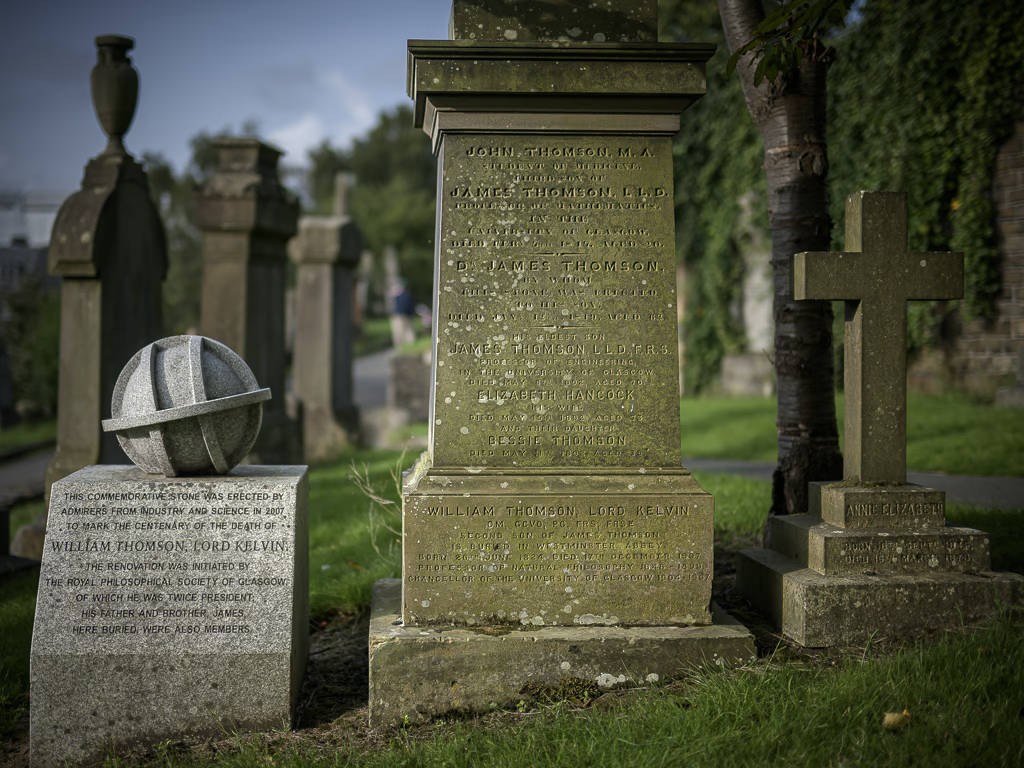
Working my way down from the summit I came across a curious small orb-like marker, next to a couple of other more typical grave markers. Reading the inscription I learned it was dedicated to William Thomson (better known as Lord Kelvin), emplaced to commemorate the hundredth anniversary of his death. Although he is not buried there, the other markers signify other members of his extended family who are.
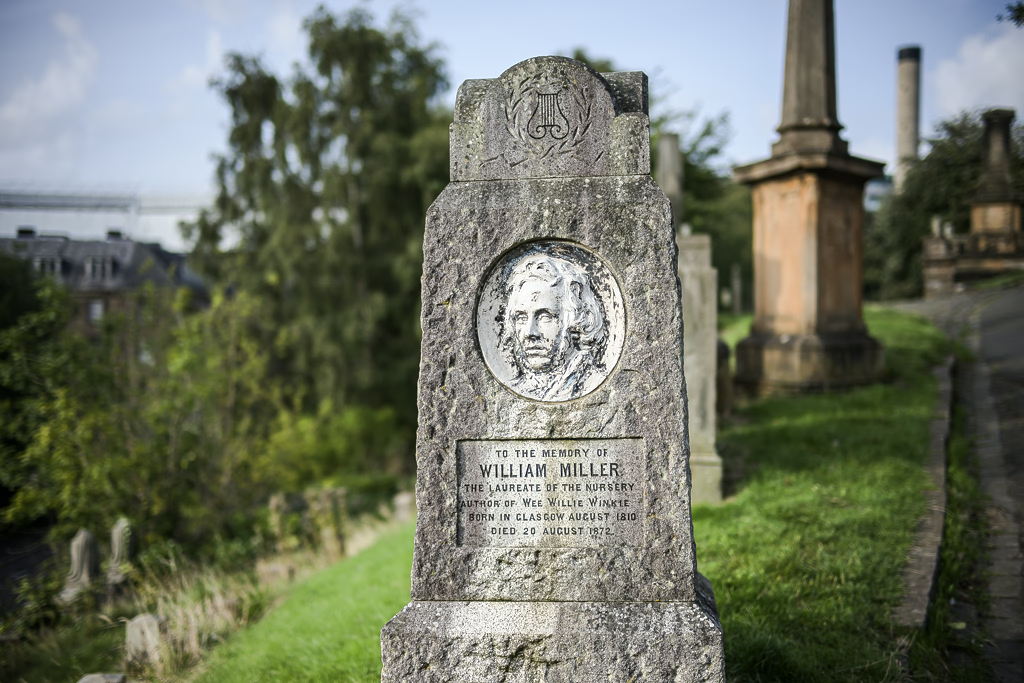
A startling bas-relief face staring out from its stone marker commanded my attention. William Miller, the laureate of the nursery, author of “Wee Willie Winkie,” died 1872. Perhaps he is remembered still in Scotland, his poem still crooned to babes to lull them to sleep?
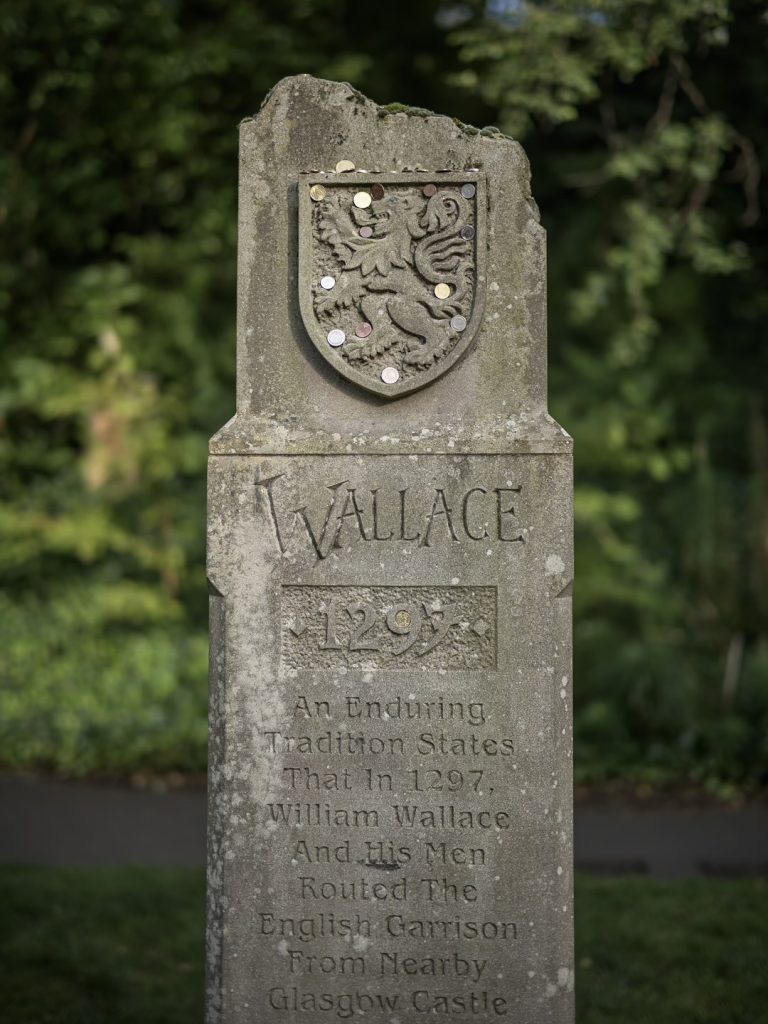
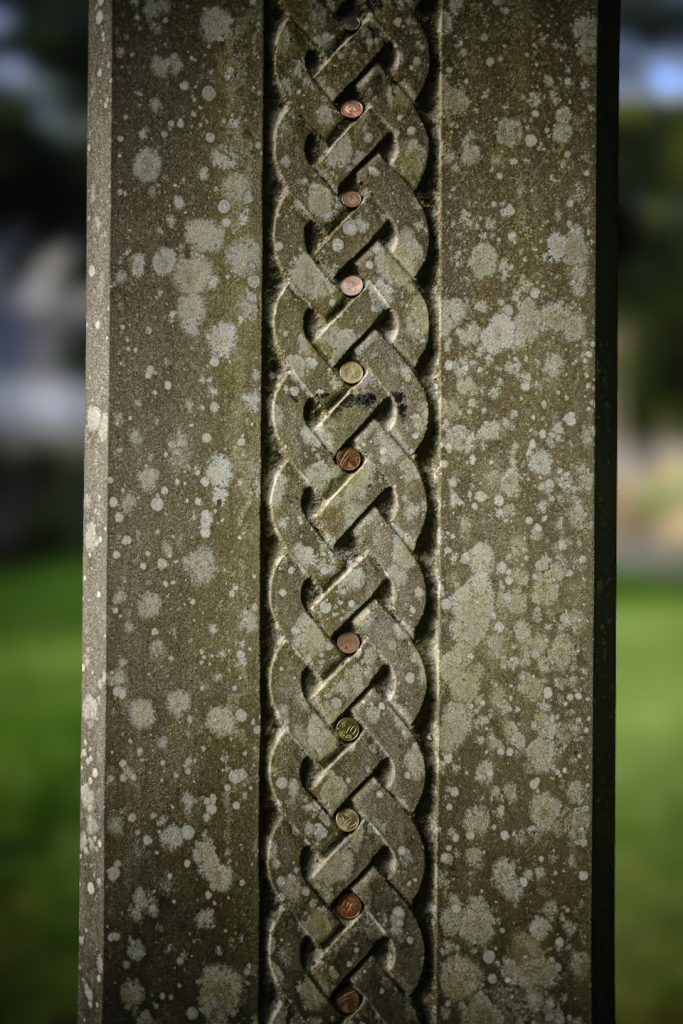
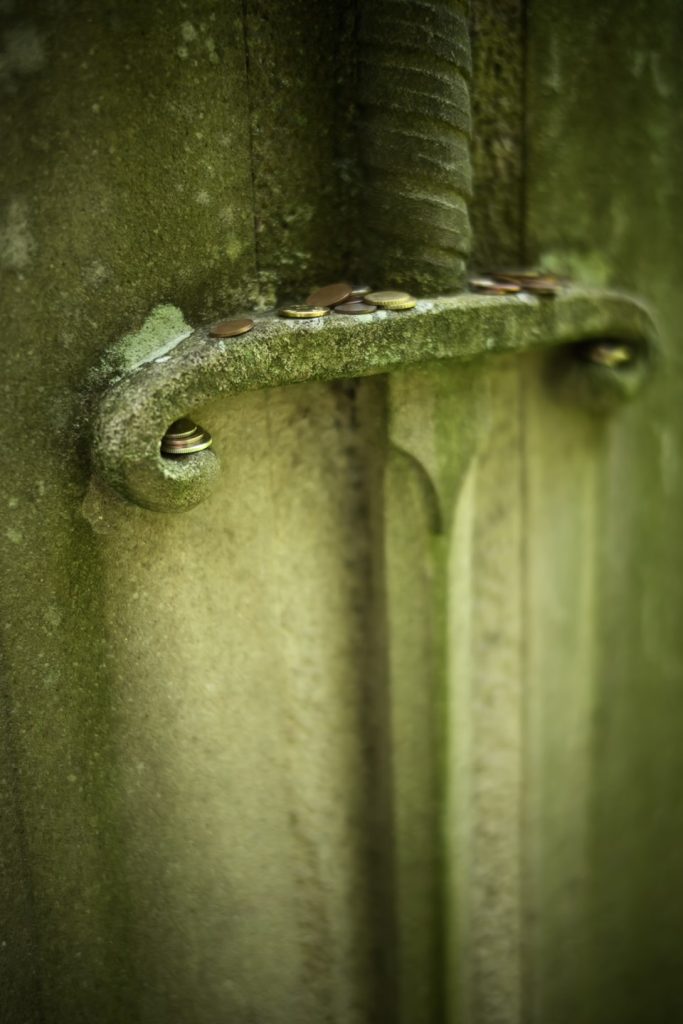
Finally I came upon a head-high plinth dedicated to the Scottish hero William Wallace. He was a leader of a Scottish rebellion for independence back at the end of the thirteenth century. The movie “Braveheart” is loosely based on his life and deeds (and death). Many coins had been inserted into the Celtic braids chiseled into the sides, and also placed on the hilt of a bas-relief sword on the back of the marker. On the front the following is inscribed:
WALLACE
*1297*

An Enduring
Tradition States That In 1297,
William Wallace
And His Men Routed The English Garrison
From Nearby
Glasgow Castle
And Forced
Them To Flee
This Later Became
Known As The Battle Of The Bell O' The Brae

— • —

I Am Scotland's
Guardian
Though My Body Has Been Broken
My Spirit Will
Rise Again
To The Sound of Freedom
Leave a Reply