
Into the cathedral
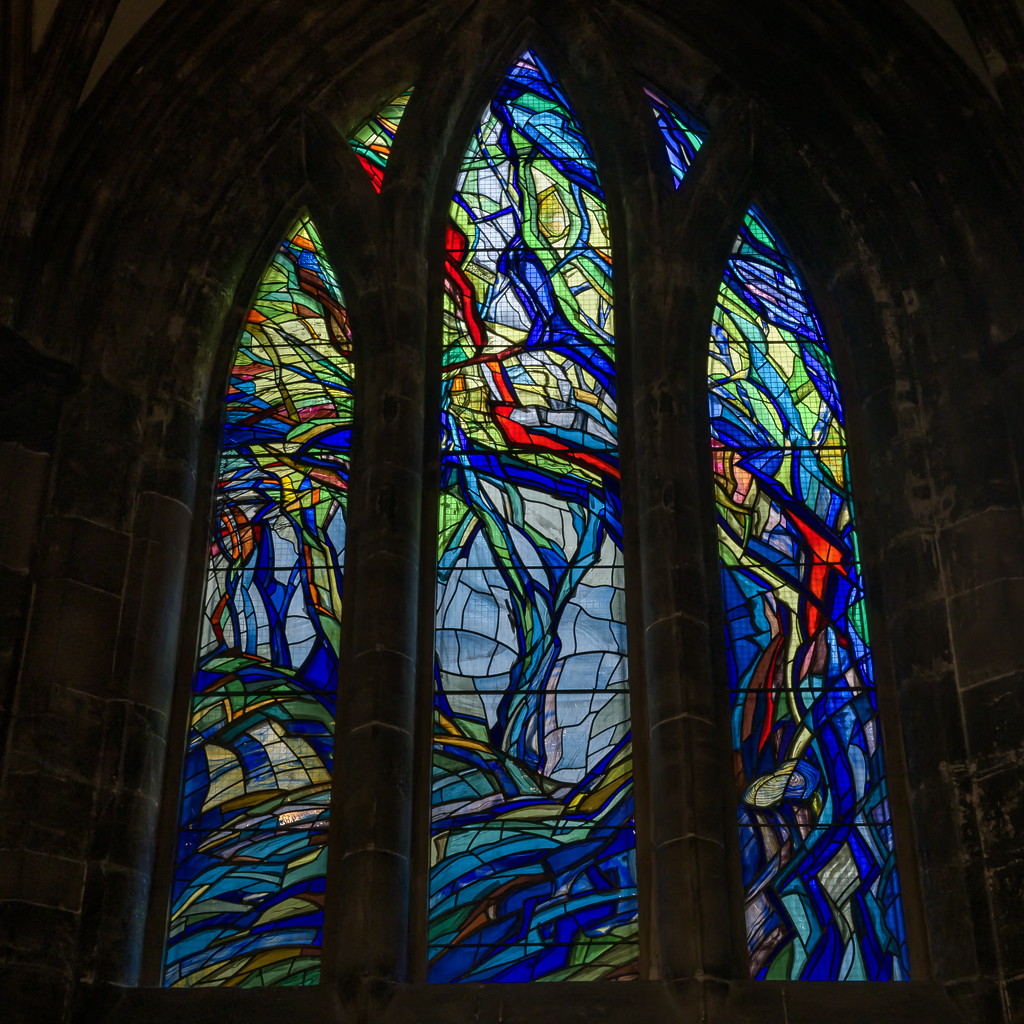
Entering the cathedral I was immediately struck by a beautiful, modern, fairly abstract stained glass window to my left. I have since learned this is named the Tree of Jesse Window, which is apparently a fairly traditional theme. This has been interpreted in a striking fashion by the contemporary stained glass artist Emma Butler-Cole Aiken.
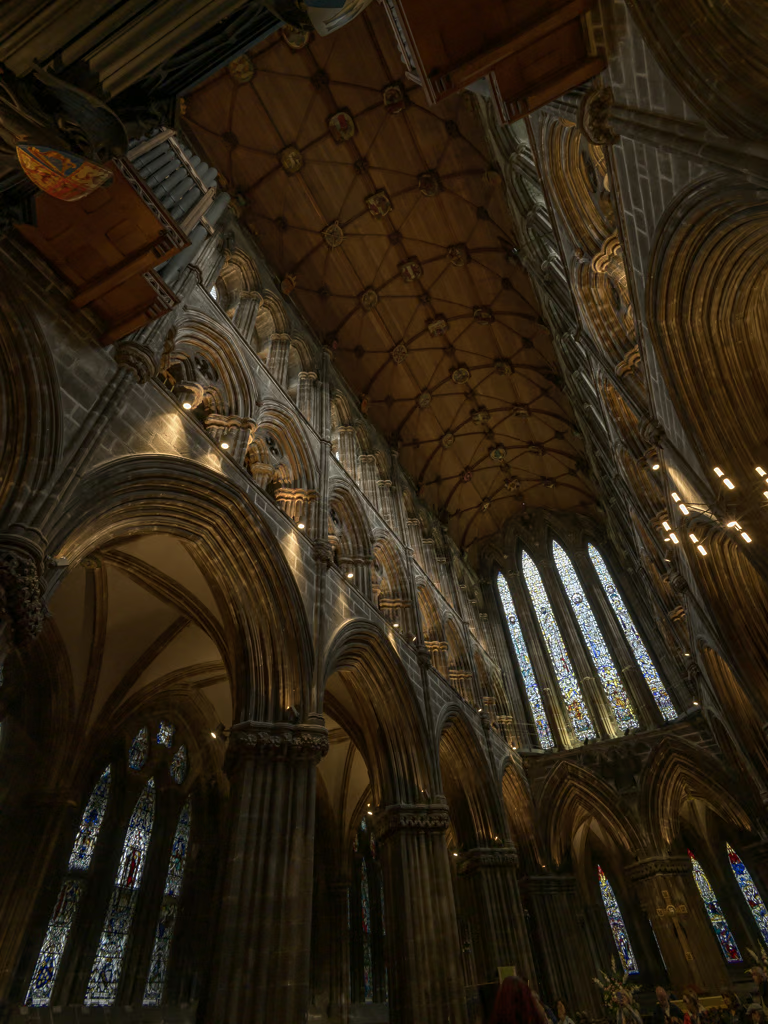
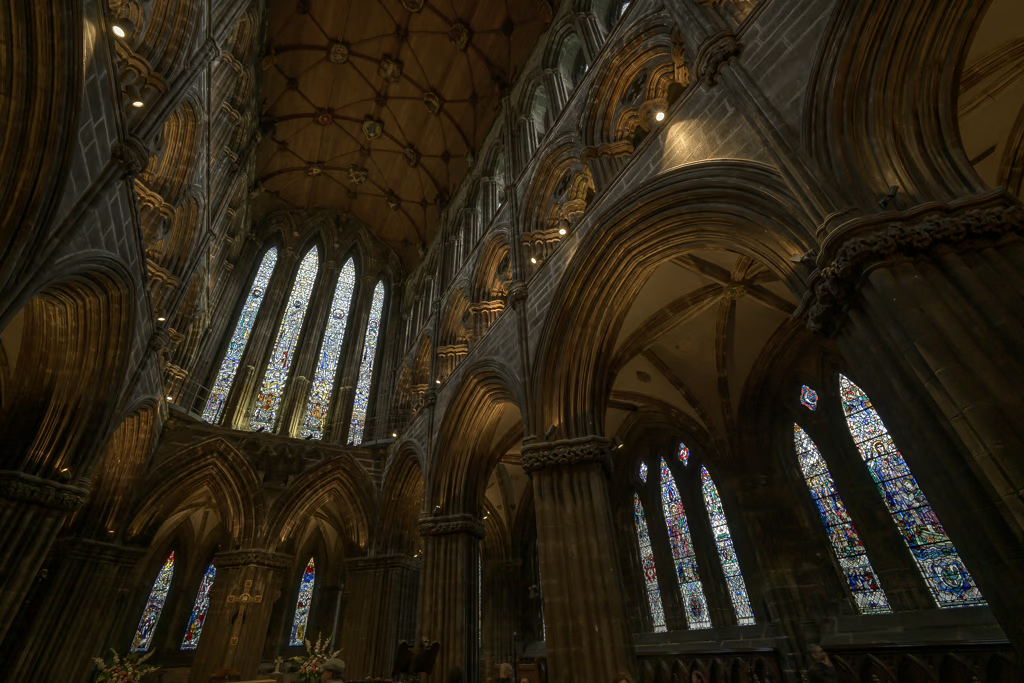
The central nave of the cathedral is a grand vast space, rising 105 feet above to a wooden ceiling, and flanked by great stone columns down the length of it. I am always awed by the naves of great cathedrals such as this. It’s an interesting challenge trying to figure out how to frame an image that adequately conveys the majesty of it. My ultrawide 15mm lens helped here.
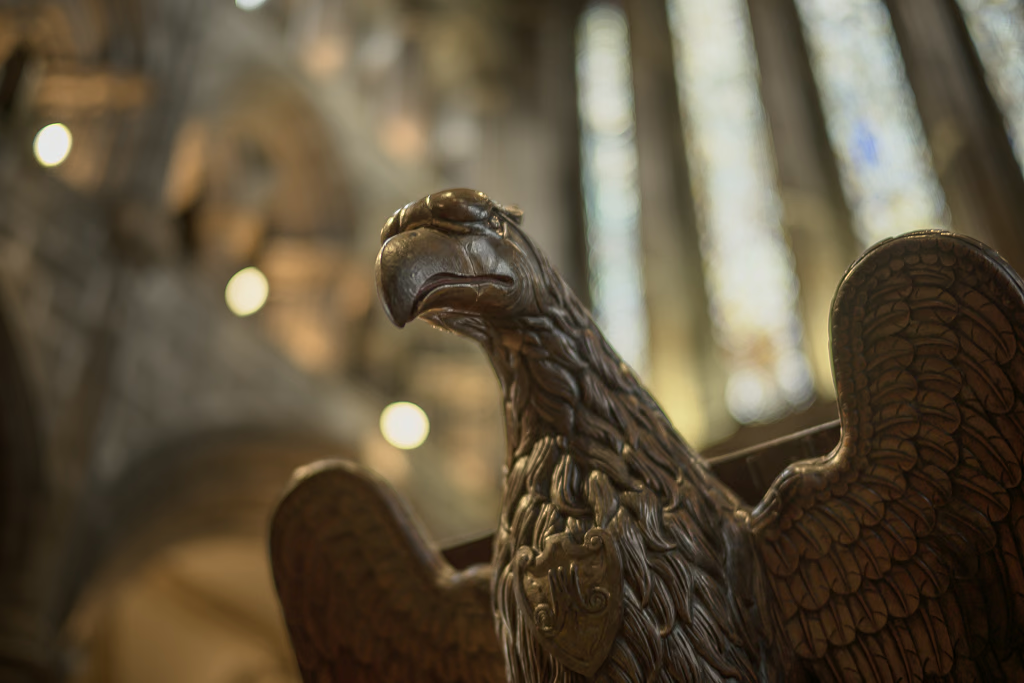
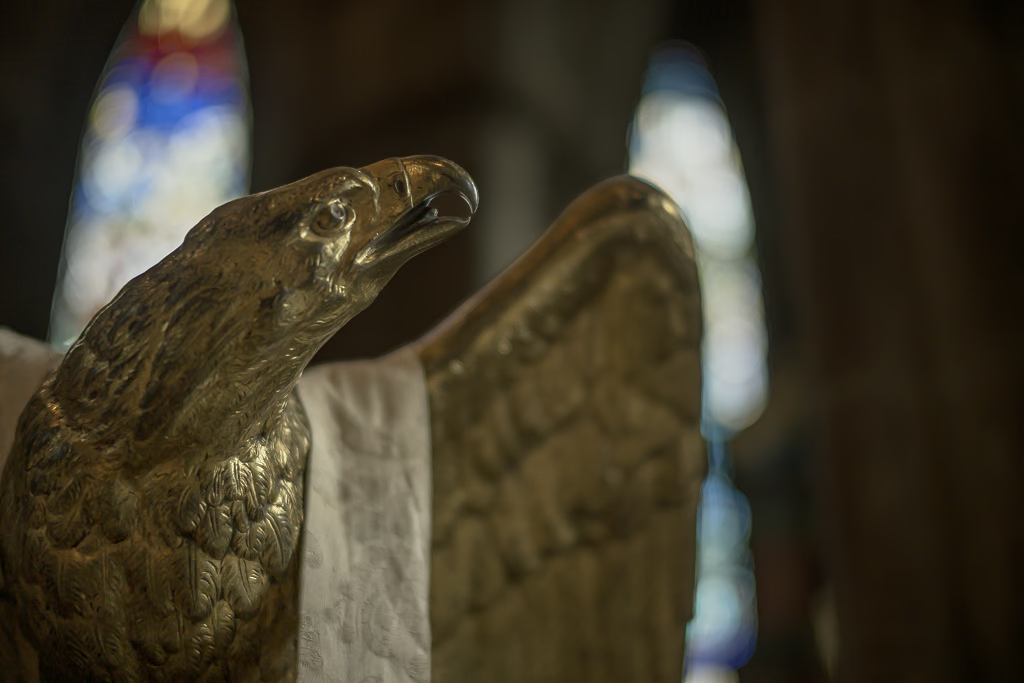
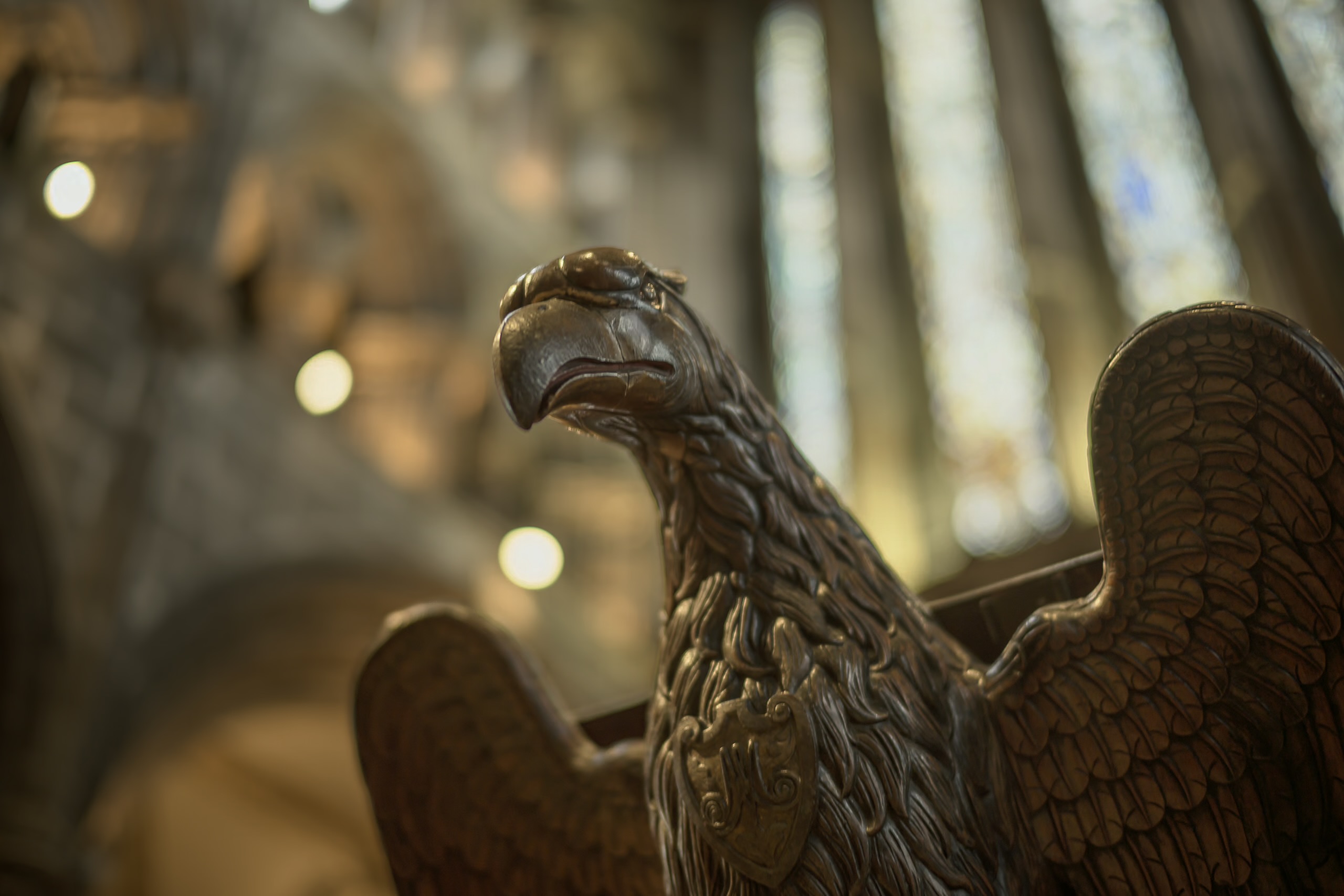
The main pulpit lectern was quite impressive and sort of scary, being the figure of a fierce eagle. I imagined perhaps it was meant to keep the parishioners in line, since otherwise it might swoop down on them. But it fact it represents Saint John the Evangelist, spreading the word of God far and wide (as a soaring eagle might do). I enjoyed using the very shallow depth of field afforded by my 40mm f/1.2 lens to visually isolate the eagle from the surrounding context of the vaulted ceiling and windows. A low angle focused on the eyes and beak helped create an appropriate sense of dread (I think). I found another eagle lectern in the cathedral as well, so definitely a bit of a theme!
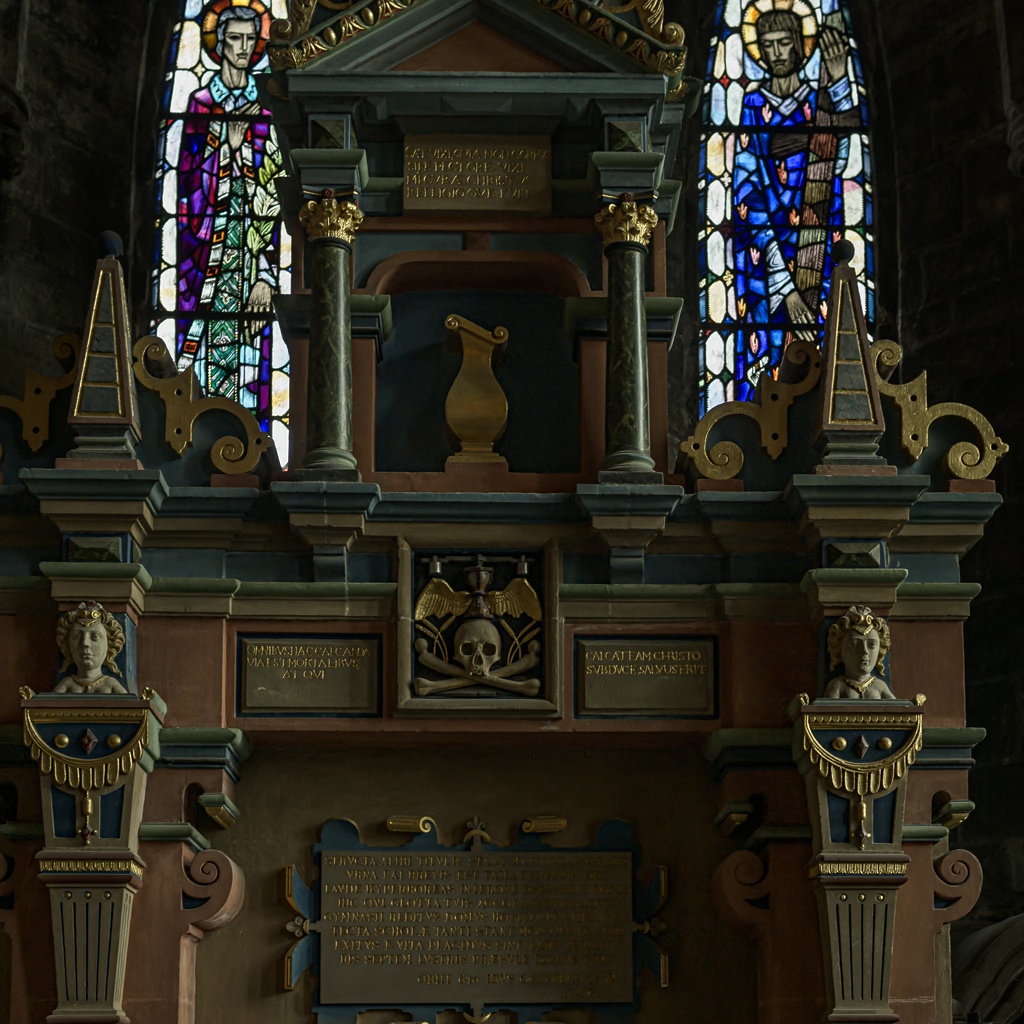
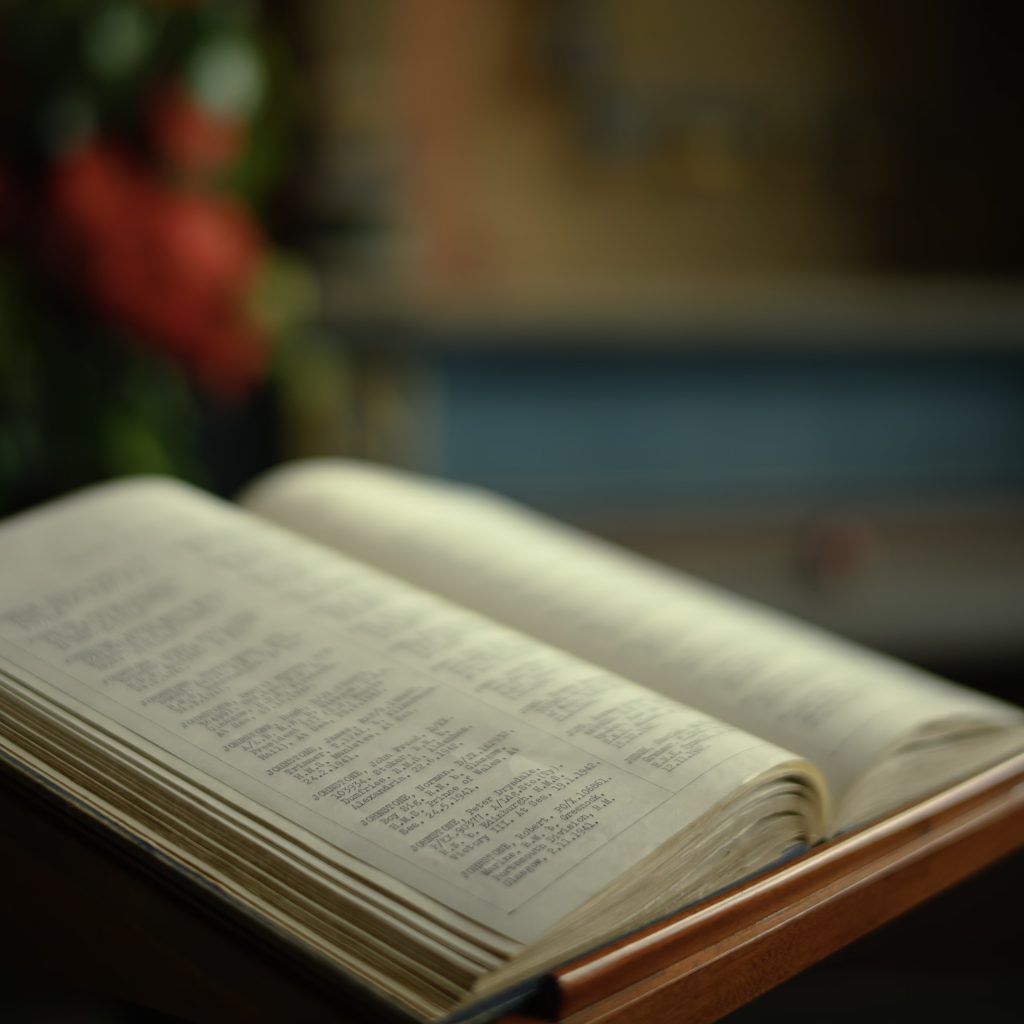
The monument of the grave of Archbishop James Law in the southeast corner was quite impressive, particularly with the winged hourglass above the skull and crossbones memento mori device. A book of names was positioned on a lectern in front of this–soldiers (or sailors) who had lost their lives in WW II it seemed.
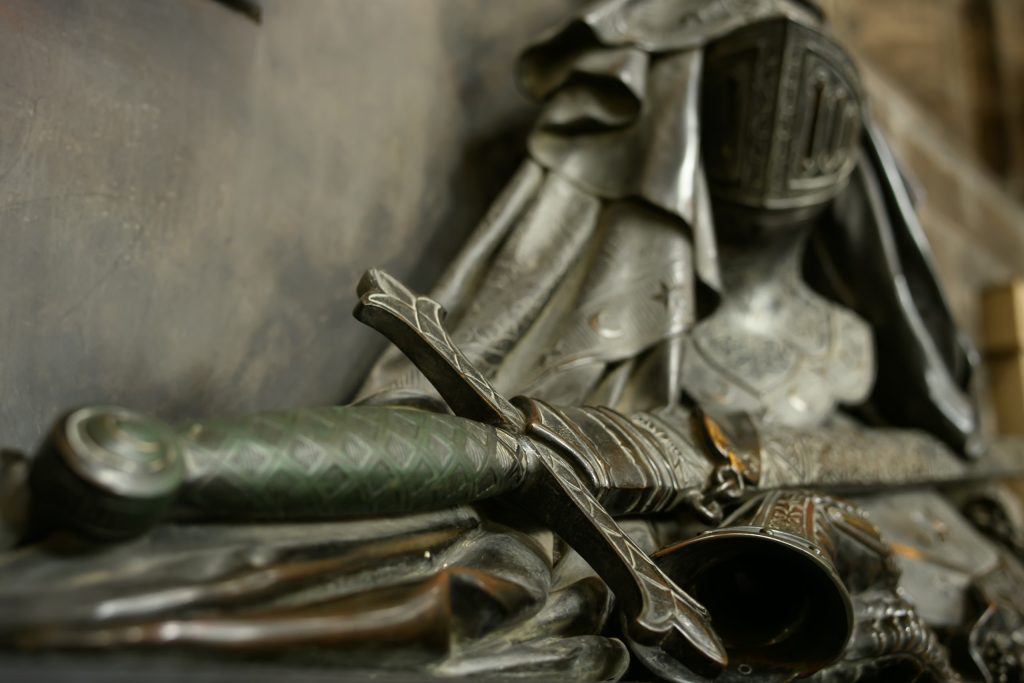
I was quite struck by a sculptural monument of armor and a sword. I worked to find an appropriately dramatic angle on it. Below it was a brass plaque (which I did not take a picture of), but according to sources I can find says the following:
In memory of ROBERT BURN ANDERSON
Lieutenant 1st Bombay Fusiliers
Brigade-Major Hodson's Horse
Adjutant Fane's Horse
Born in Glasgow 14th October 1833
Died in China 27th September 1860
A Soldier who fell in the war with China
In the service of his Country at the post of his duty
Loved in life and lamented in death
His schoolfellows thus record their sorrow and esteem.
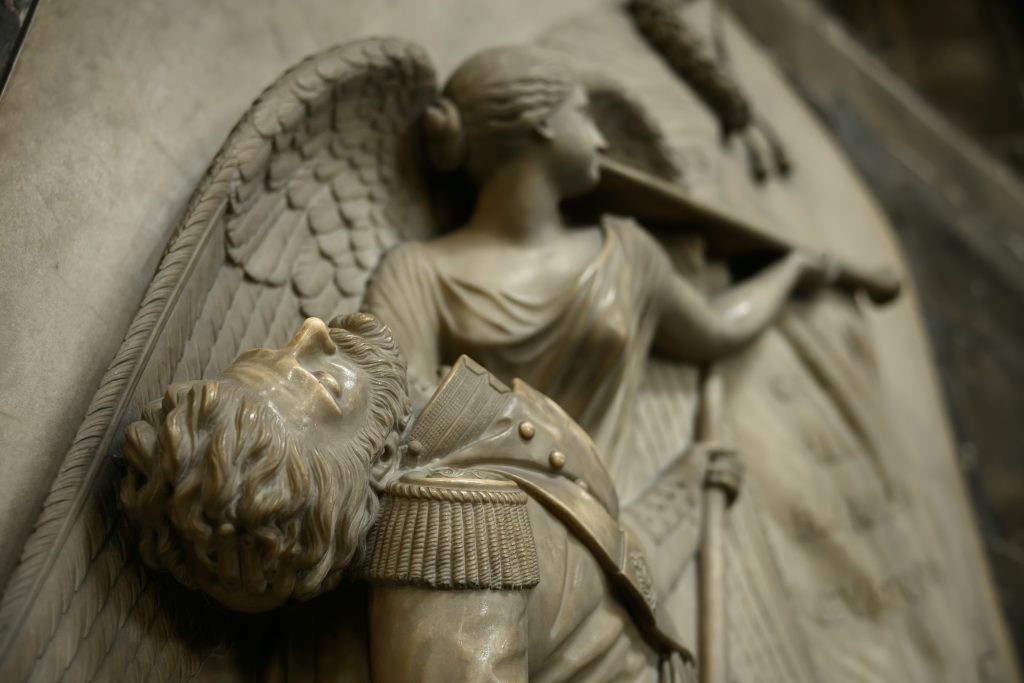
Adjacent to this was another dramatic bas-relief, in marble. Once again a dramatic close angle on the poor soldier I think accentuates the pathos of the tableaux. Below this was inscribed:
ERECTED TO THE MEMORY OF
MAJOR, ROBERT MURRAY BANNER, BREVET MAJOR, JOHN ANSTRUTHER Mc COWAN, LIEUTENANTS, WILLIAM LEAR MACNISH, WILLIAM TURNER, JAMES WEMYSS, ROBERT ABERCROMBY, EDWARD ALFRED BALL, FRANKLIN KNIGHT KIRBY.
THIRTEEN NONCOMMISSIONED OFFICERS, FOUR DRUMMERS, AND TWO HUNDRED AND NINETY EIGHT PRIVATES OF THE NINETY THIRD SUTHERLAND HIGHLANDERS, WHO FELL IM ACTION, OR DIED, DURING THE CRIMEAN CAMPAIGN OF 1854.5.6
I wander out
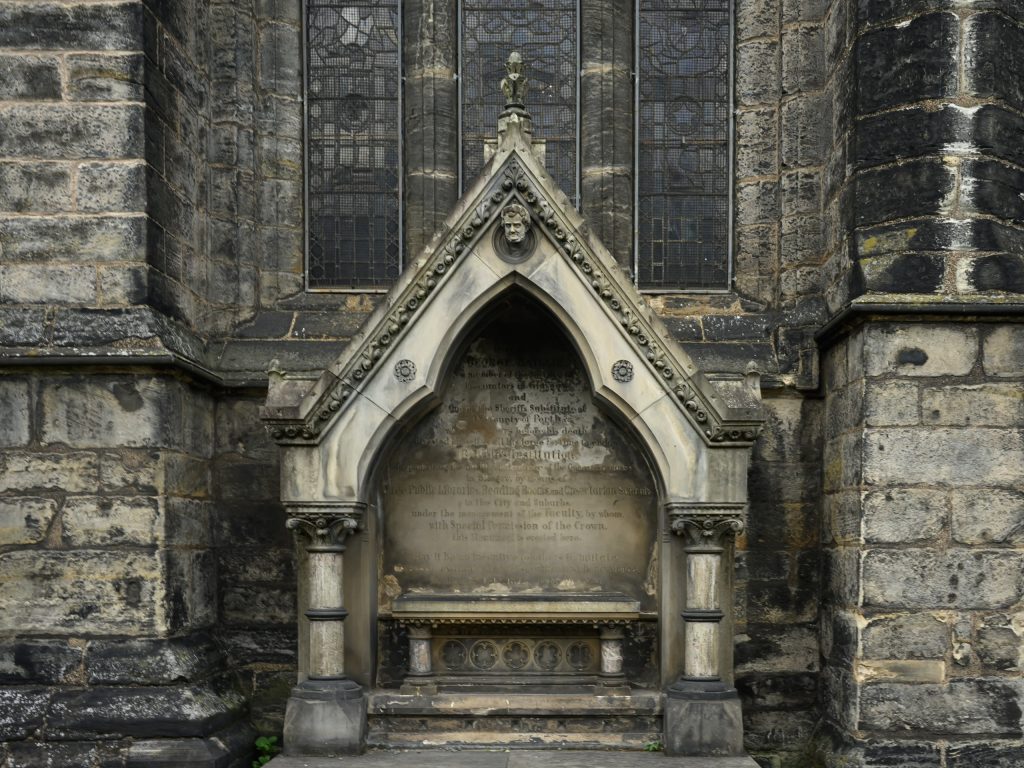
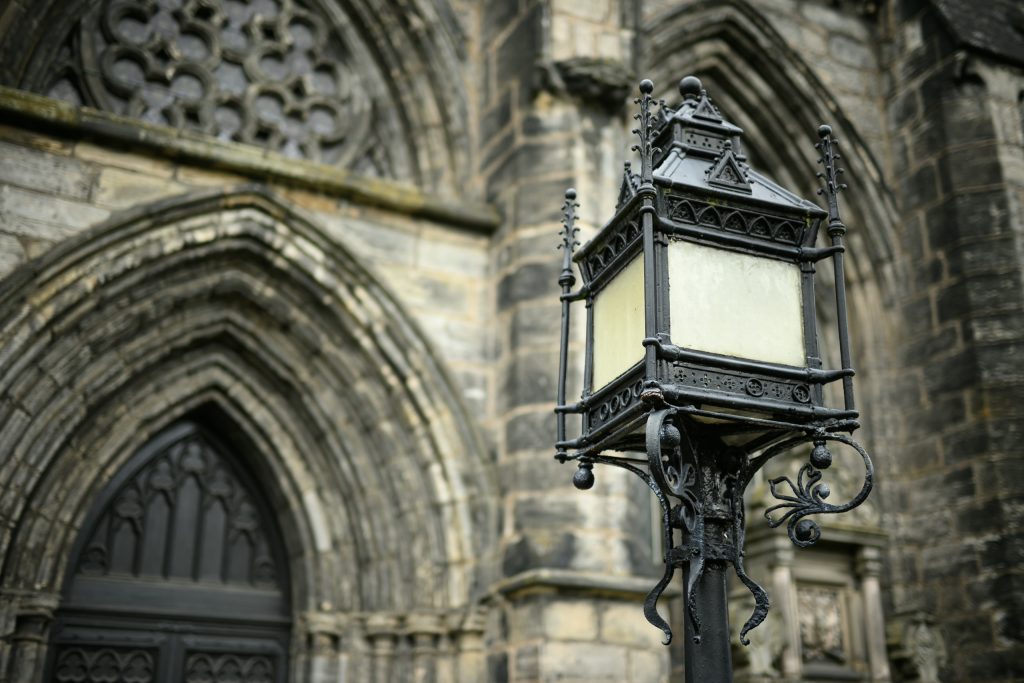
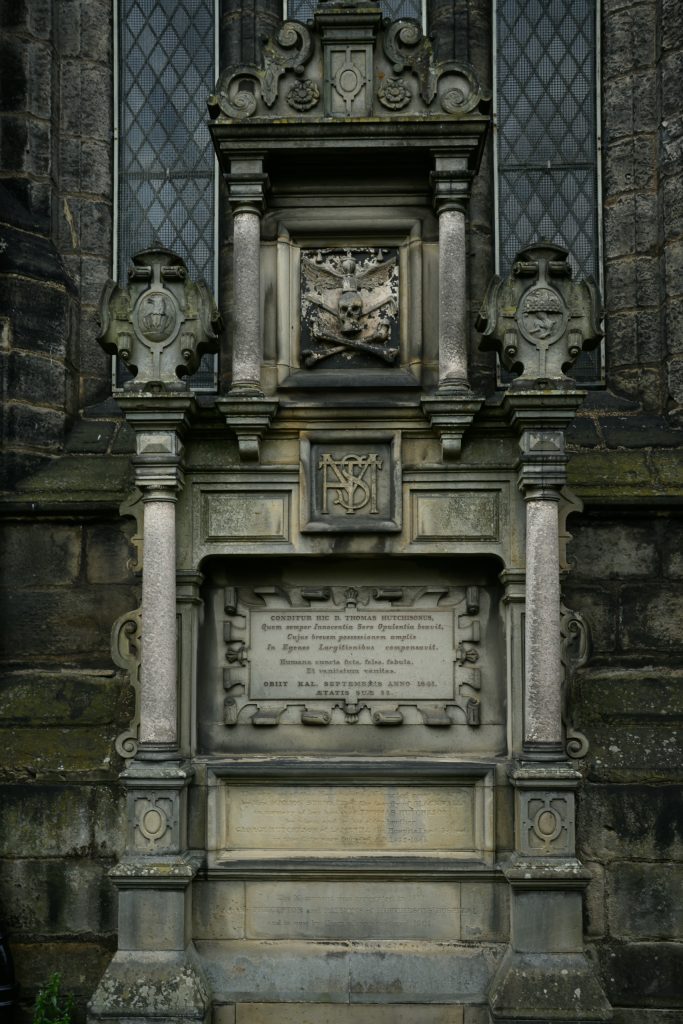
I took a stroll on the grounds south of the cathedral. Lots of cool gothic architectural decorations and details, and additional monuments which I won’t attempt to investigate the story of.
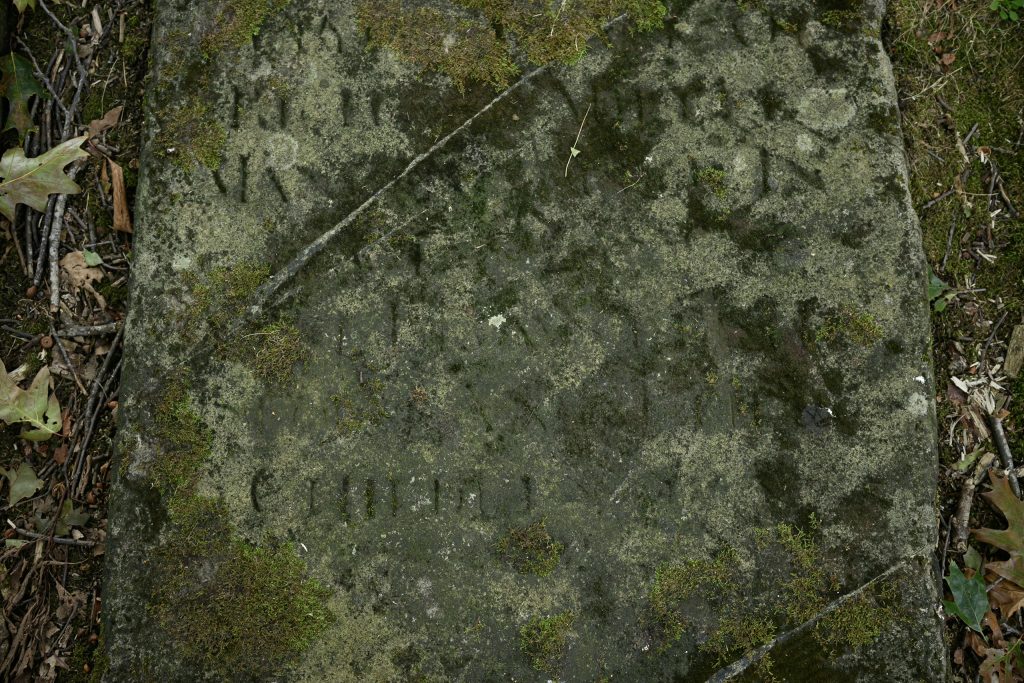
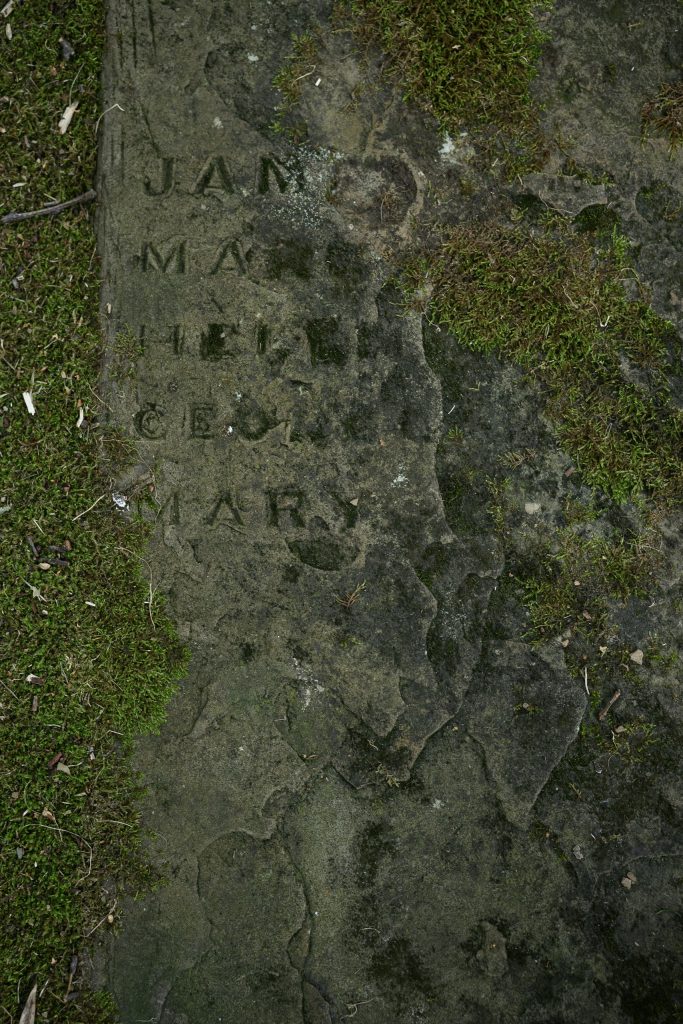
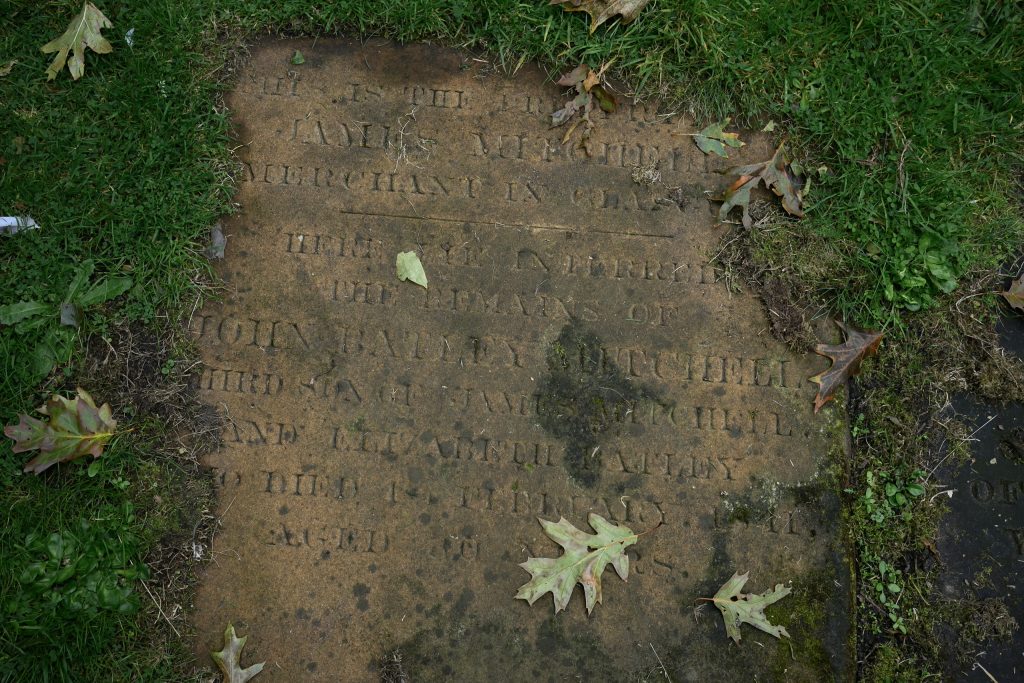
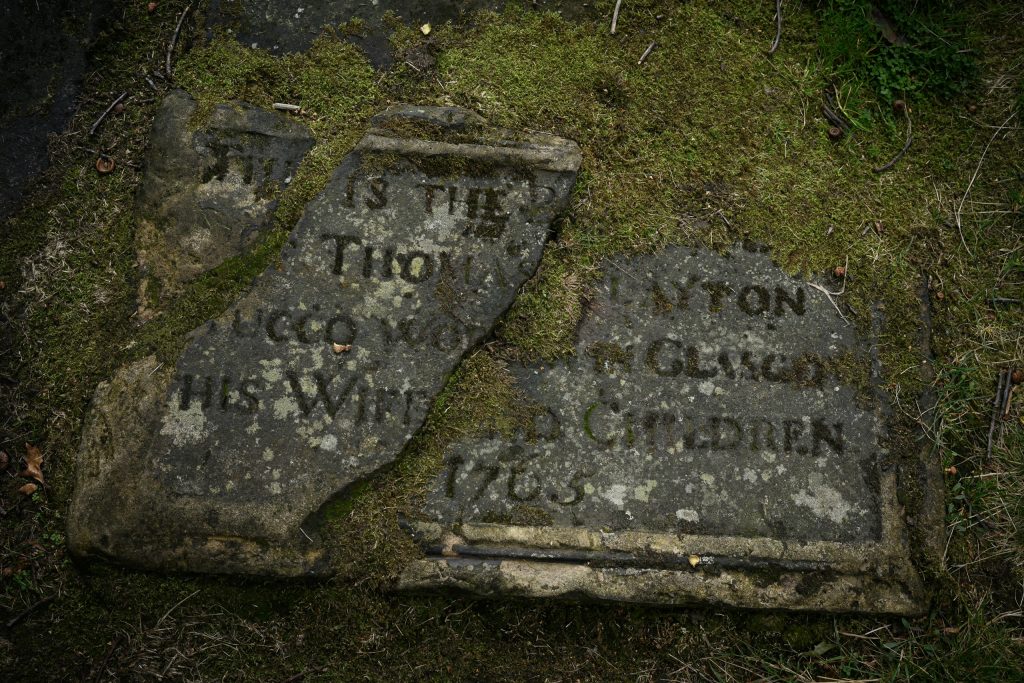
There were a number of ancient gravestones inset in the grass. I found it particularly poignant how the passage of time has worn away, broken and obscured the inscriptions, so that even the record of who these people were now fades into the past with the rest of their forgotten lives.
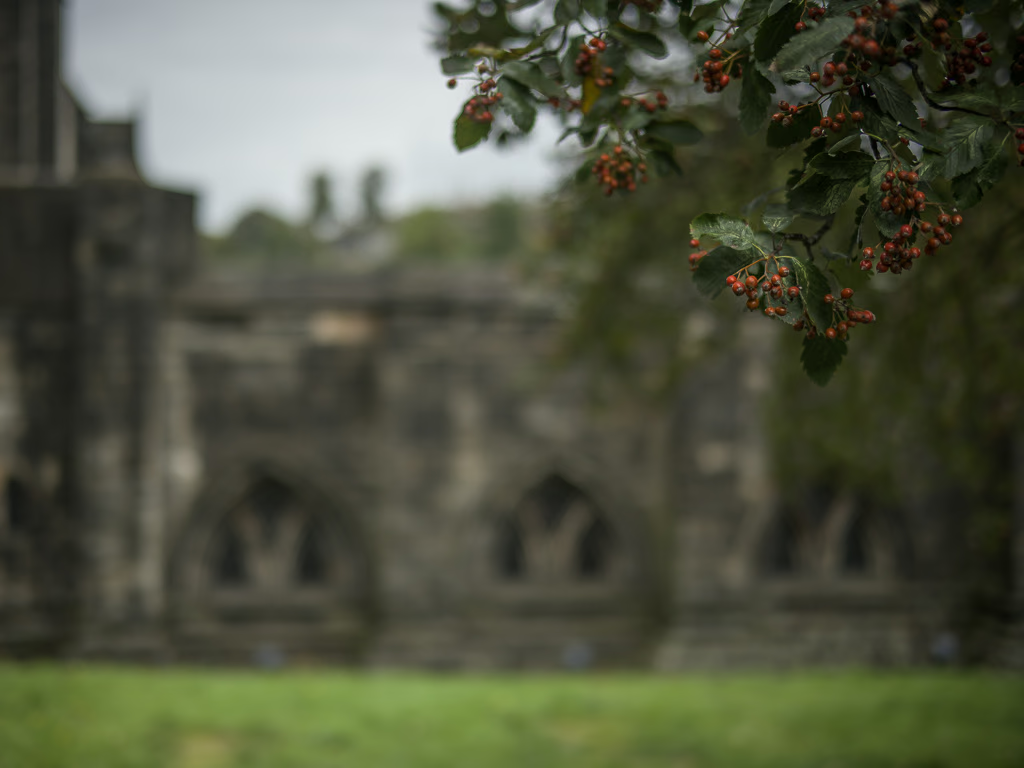
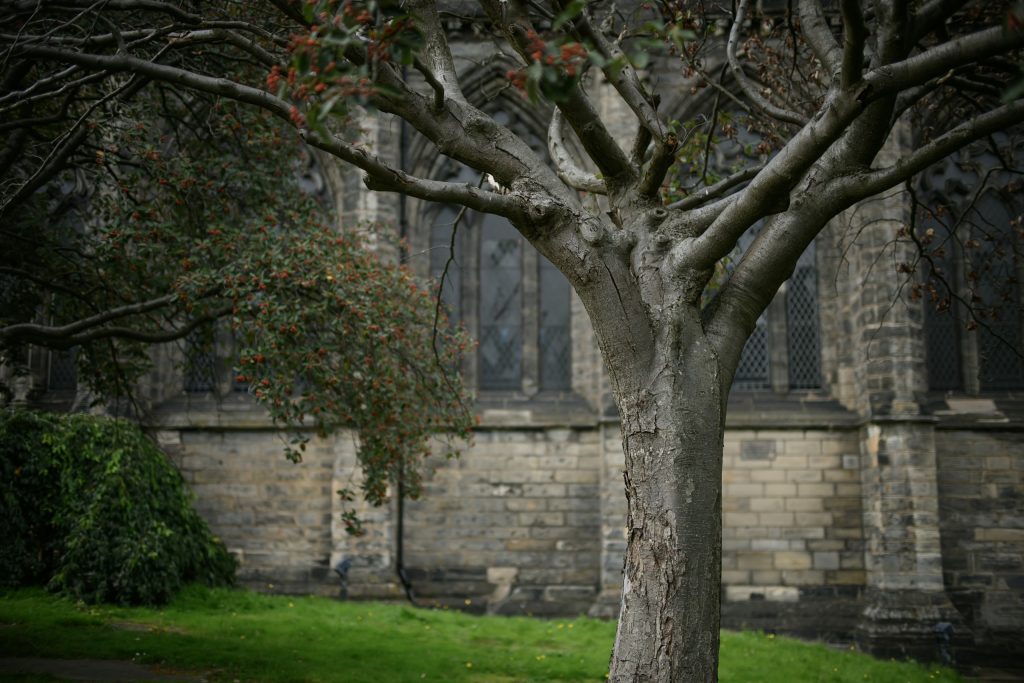
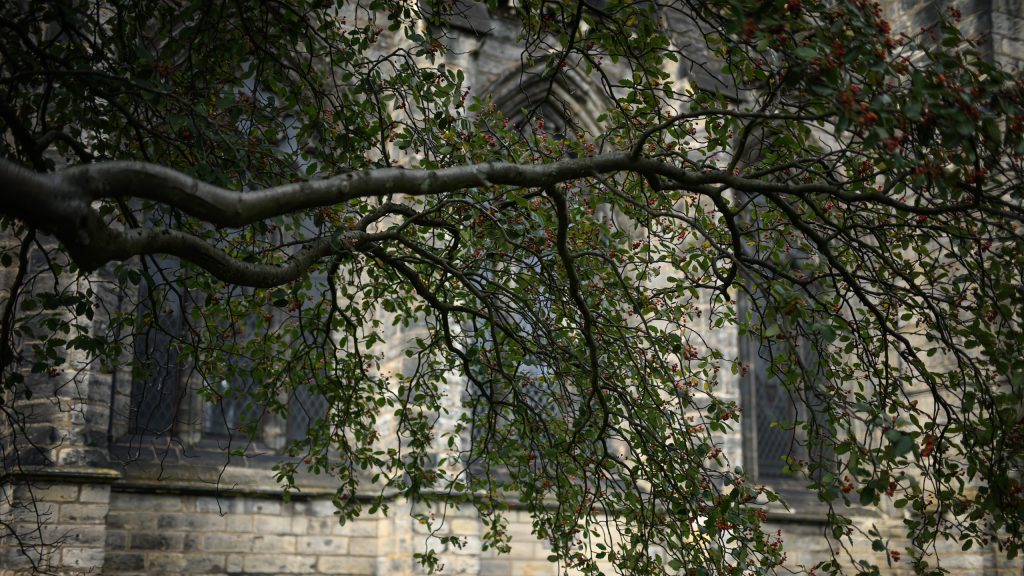
Rowan trees were here and there amidst the gravestones as well. I found myself drawn to how their graceful branches and red berries provided a beautiful natural counterpoint to the ornate ancient edifice behind them.
Leave a Reply