
By now I’ve shared a few of the discrete experiences I encountered on my second (and last!) full day in Glasgow: breakfast at The Brunch Club, wandering around The Kelvingrove and the Riverside Museum, and marveling at the Govan Stones at the Govan Old Church. Also some of the street art I encountered along the way. What knit these all together for me was the notion of a riverside walk along the River Clyde from its confluence with River Kelvin, and then upstream to the city center. For better or worse, I was in full tourist mode, and with the walk as the overarching plan, and knowing my limited time in Glasgow was drawing to a close, I felt like I was on a bit of a schedule.
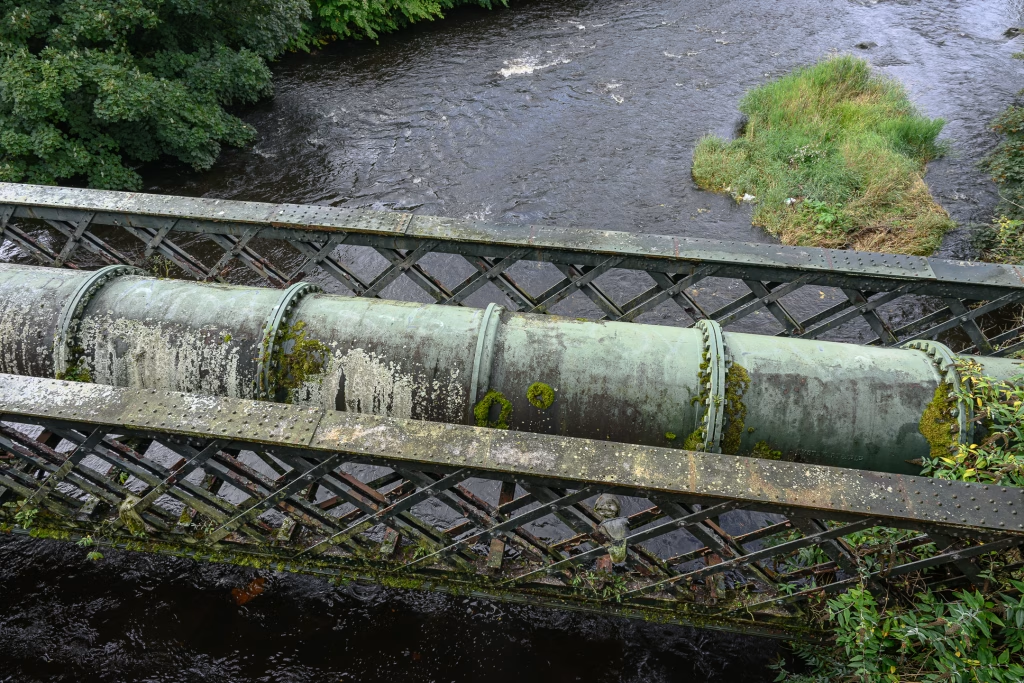
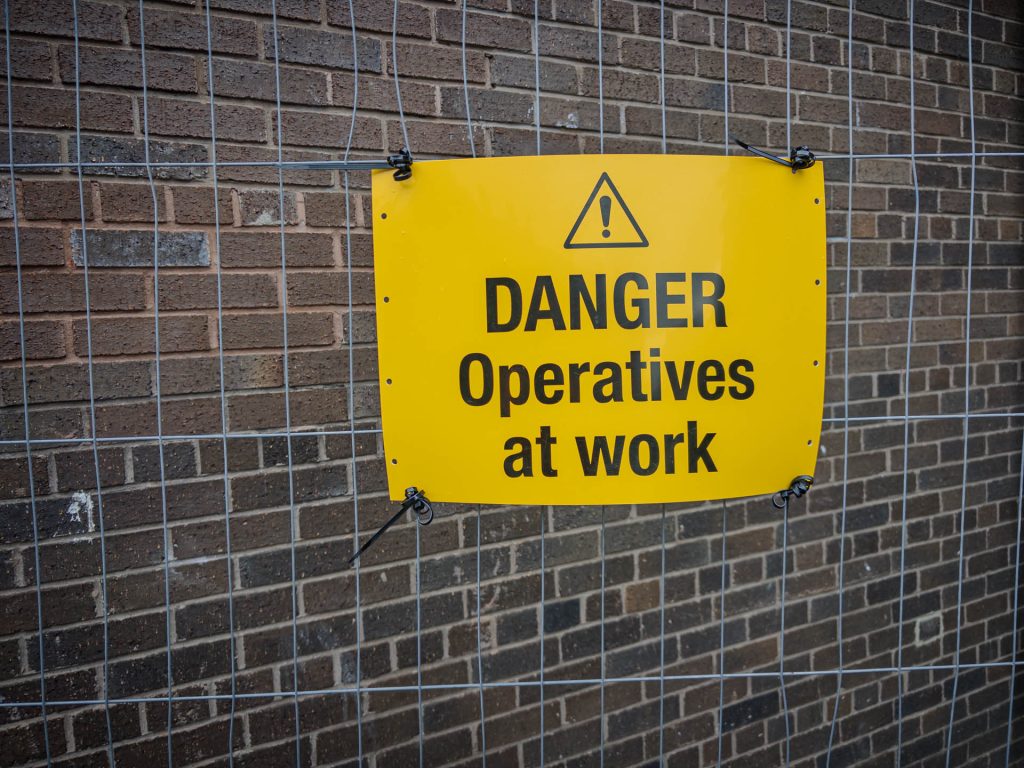
2. Warning sign.
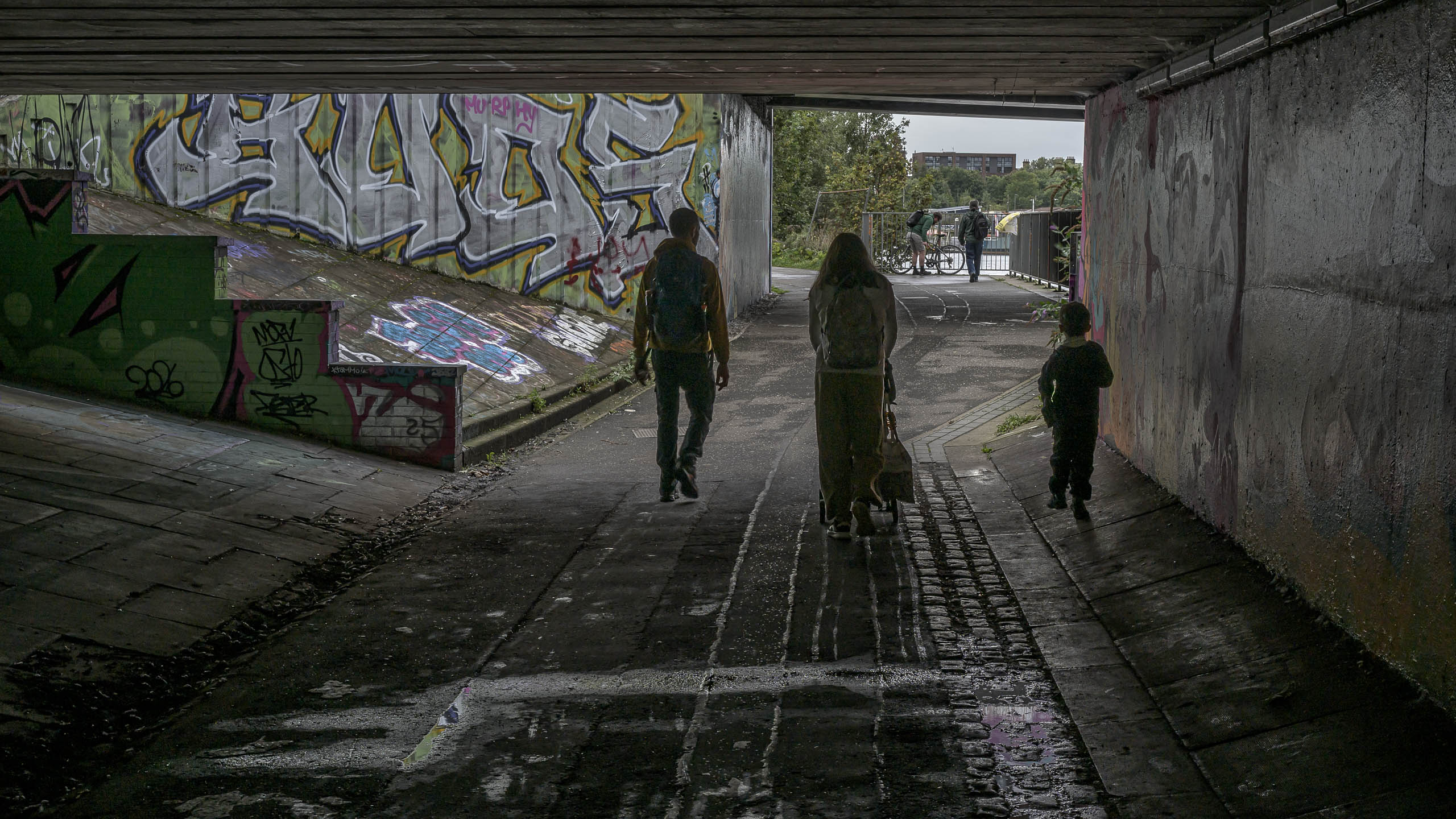
3. Family in pedestrian underpass on their way towards the Riverfront Museum.
As a consequence I felt a bit like an interplanetary probe: skipping among spots of cultural/historical significance, but not spending too much time at any of them (true of the previous day as well). This had the benefit of providing me with a quick overview of many interesting things, but the downside of course was that I didn’t really experience any of them in any depth. I can definitely see the benefit of the approach of a traveler such as Frank Lev (the soprano sax playing fellow I’d met the day before), spending a dedicated month in a foreign city, thus establishing a base from which to savor more completely what a place can offer to the curious mind.
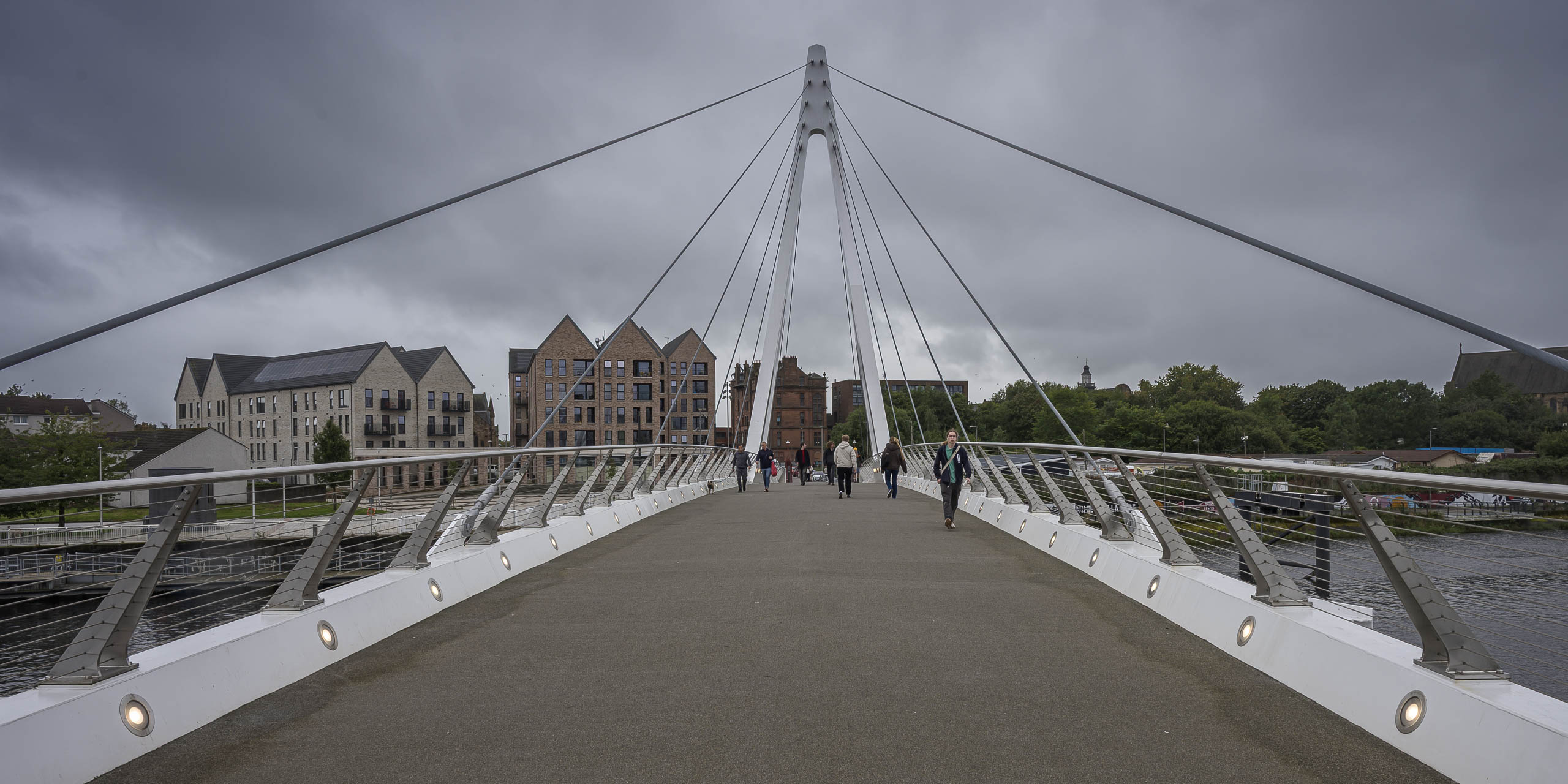
2. Govan-Partick pedestrian/cyclist bridge (opened 2024).
This riverfront walk was successful in its own right as a way of experiencing and learning about Glasgow. I got to see a bit of the riverfront adjacent neighborhoods, crossed over and under a few bridges, and sampled the air of this ancient city. Walking for me is one of my primary ways of understanding and coming to know a place, and my own relationship to it. Like how long does it take to walk from A to B? What would I see along the way? Sure, I could just Uber or Taxi from one thing to the next, but as much as anything, for me the walk is the thing.
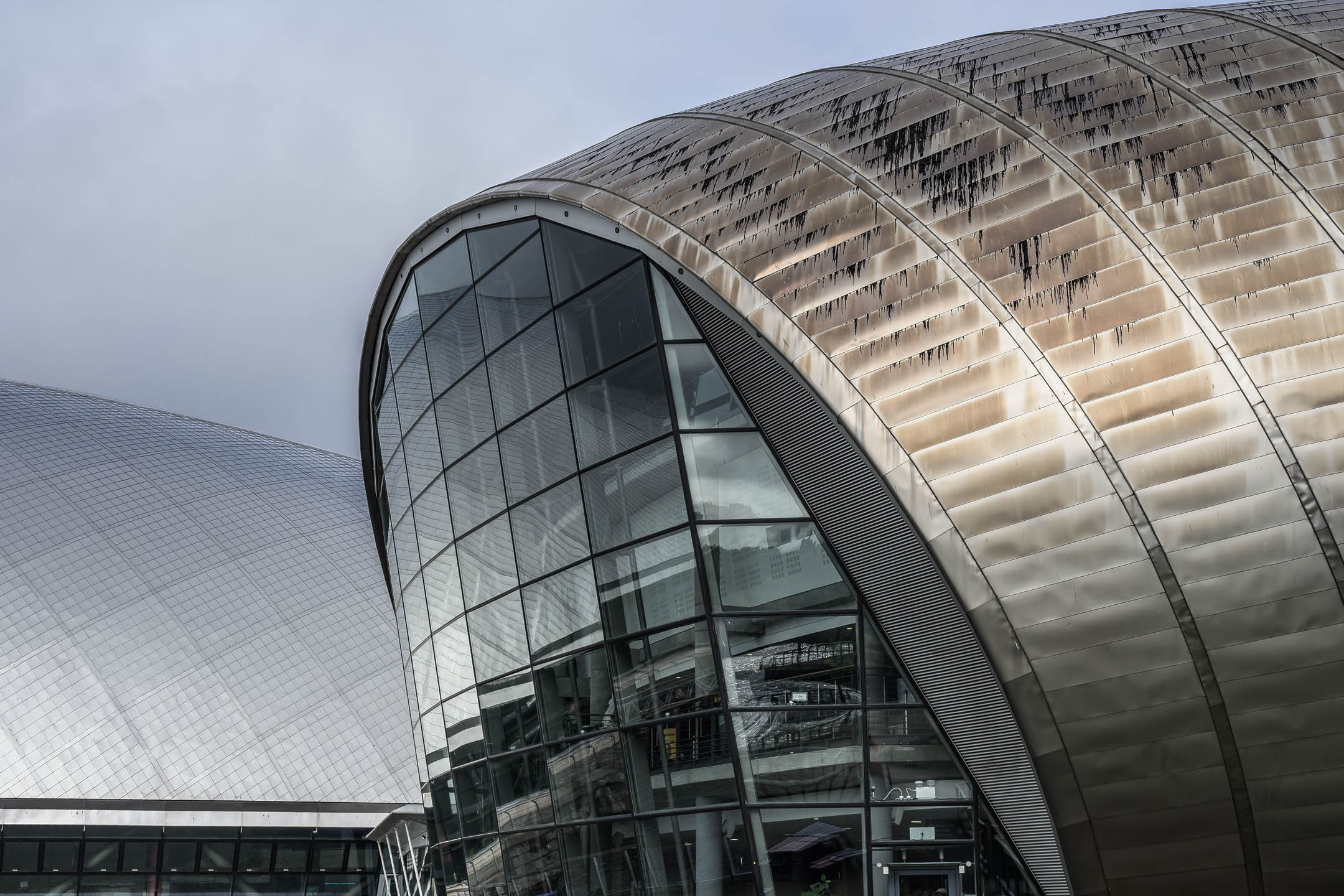
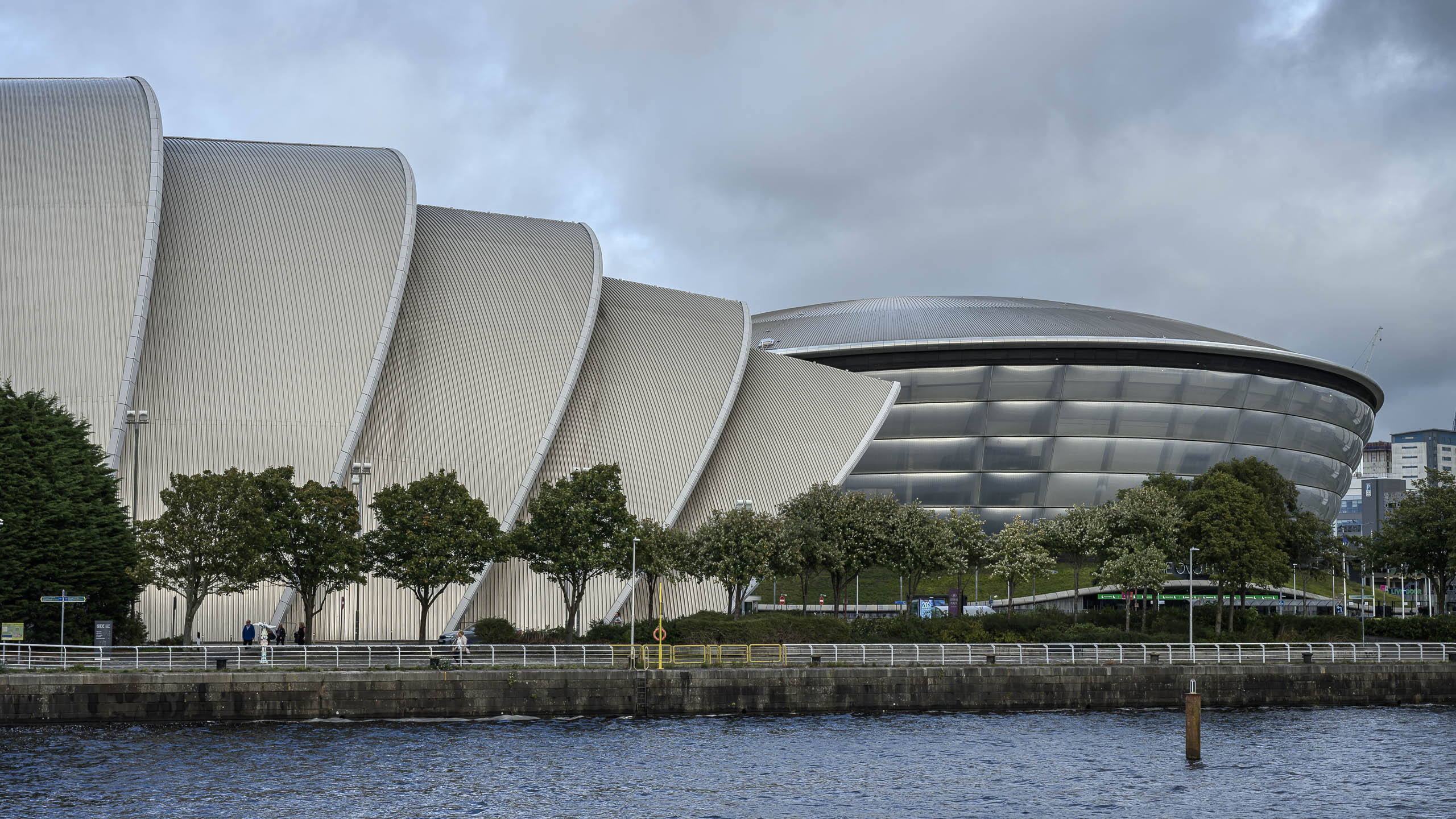
2. SEC Armadillo and the OVO Hydro.
The riverfront is also the site of many of Glasgow’s most strikingly modern civic structures. These include the aforementioned Riverside Museum, but also the Glasgow Science Centre with its distinctive pair of ovoid metal clad buildings, and the SEC Armadillo (Clyde Auditorium) and OVO Hydro conference and performance complex.
At one point, having walked around the Glasgow Science Centre, I got my internal compass all turned around. I don’t like to rely on phone apps or AI guidance too much, but for a bit I was experiencing some orientation confusion—I walked in the direction I thought the river should be, but had the sense that instead I was walking further away from it. A bit like Sherlock Holmes, when spotting in the distance the bridge from the Riverside Museum I had earlier crossed, I was compelled to sort out my confusion and re-orient myself. I pride myself on being able to maintain my orientation, so this loss of my sense of locality in the moment was disturbing to me: “American man found lost, wandering aimlessly through Glasgow… .”
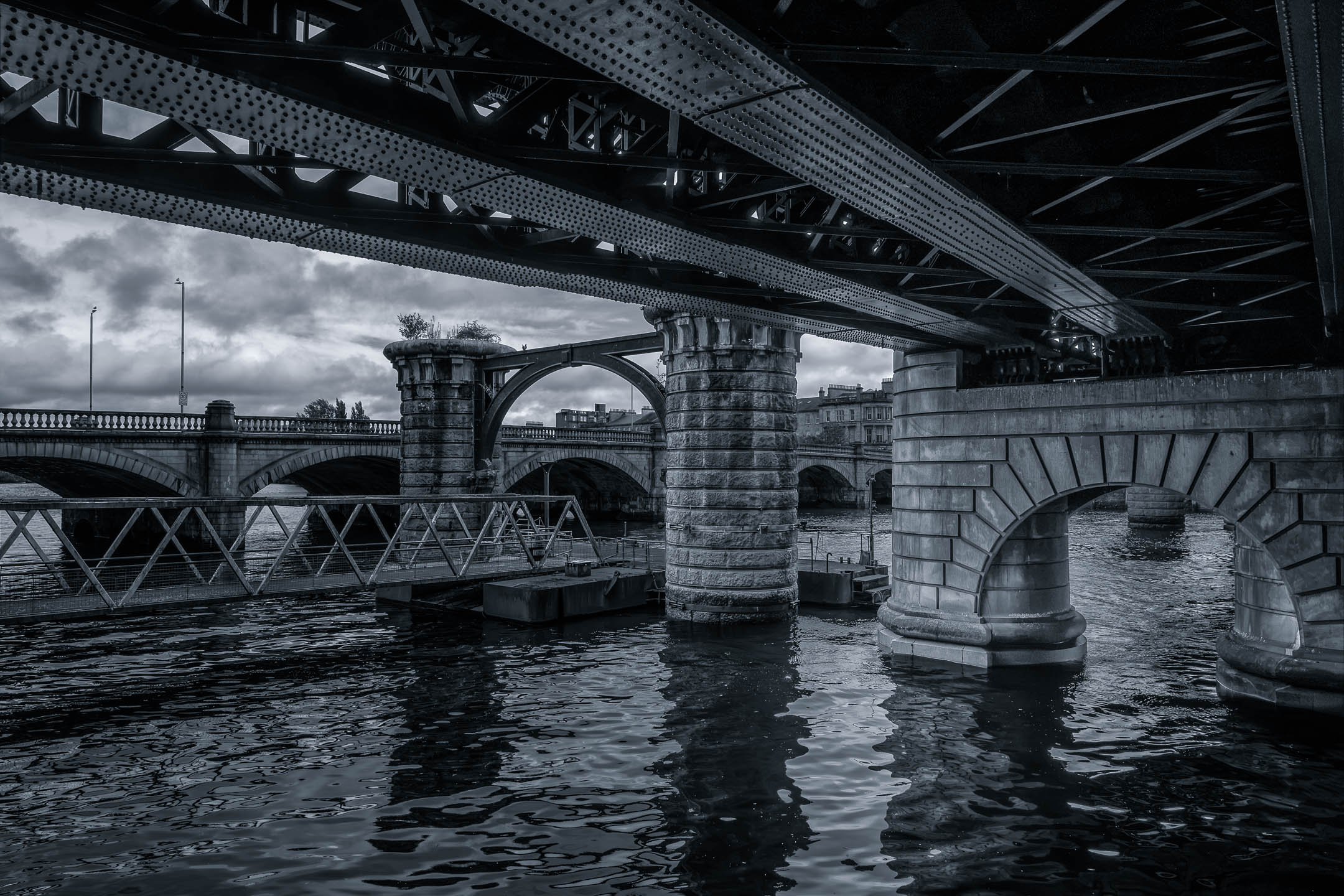
2. Two bridges, and the remains of a third (L to R): Glasgow Bridge, 1st Caledonian Railway Bridge, 2nd Caledonian Railway Bridge.
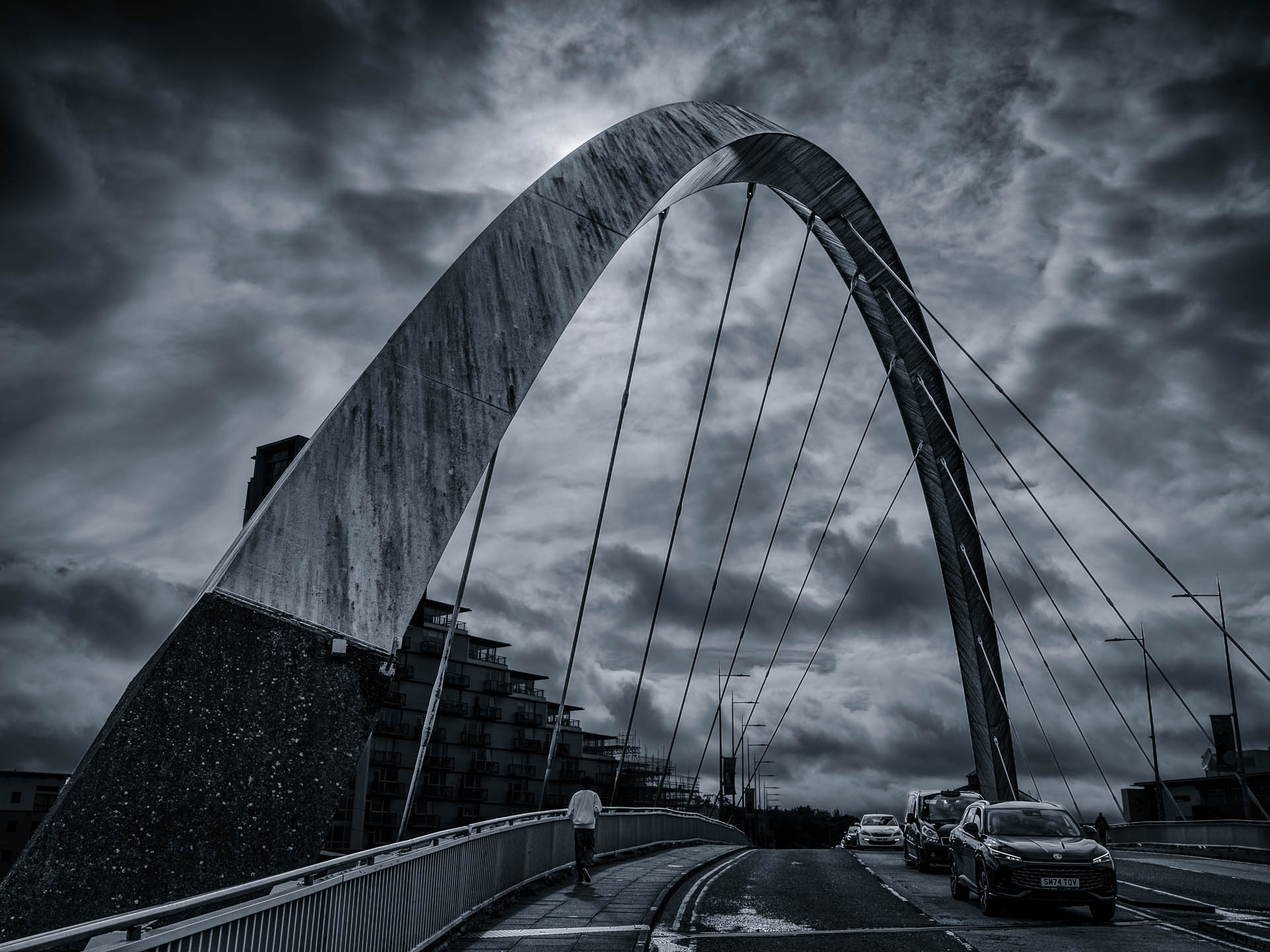
The many bridges across the Clyde present their own history of Scottish engineering genius. These range from the 2nd Caledonian Railway Bridge with its robust Victorian stone piers and steel trusswork (1905, replacing the earlier 1st Caledonian Railway Bridge, 1878, whose piers are still extant), to the startling modern Clyde Arc with its dramatic off angle steel plate arch, cables splaying to either side supporting the multi-lane deck beneath.
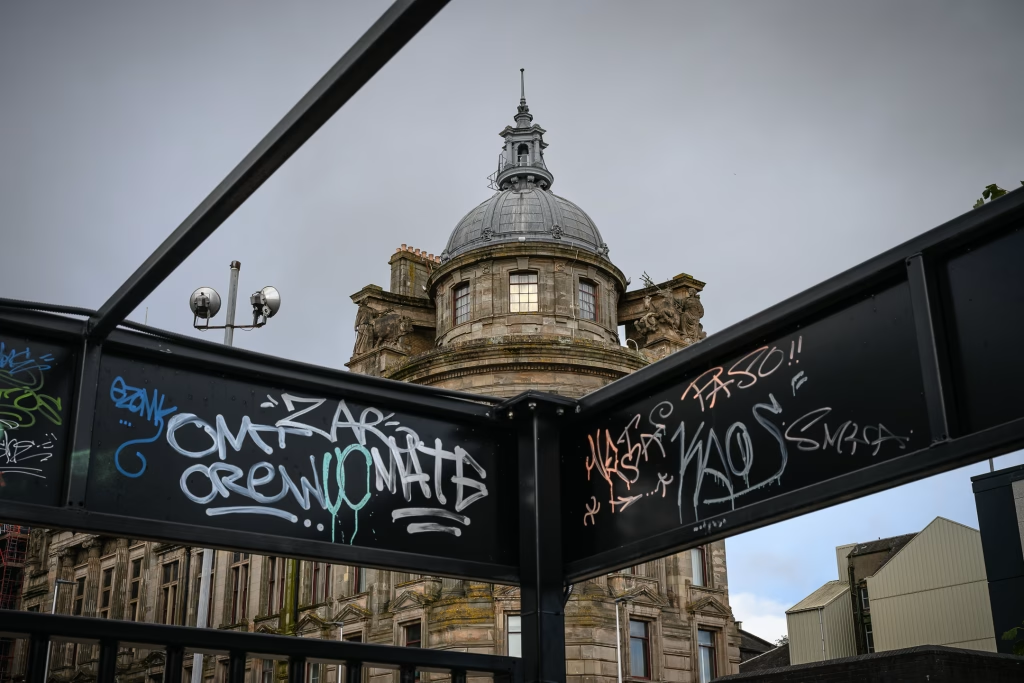
On the surface Glasgow seems to be a city of contradictions: from the gothic past of the Glasgow Cathedral and the Necropolis, and the Victorian exuberance of the Kelvingrove, to the strikingly modern civic structures along the riverfront (and elsewhere) looking forward into the beckoning future of the new millenium. But Glasgow seems to embrace these differences, creating through its engineering and architecture a fusion of past and future that speaks to the spirit of its people. Glasgow doesn’t attempt to raze and pave over its past, but rather honors and cherishes that, while at the same time not remaining bound by it.
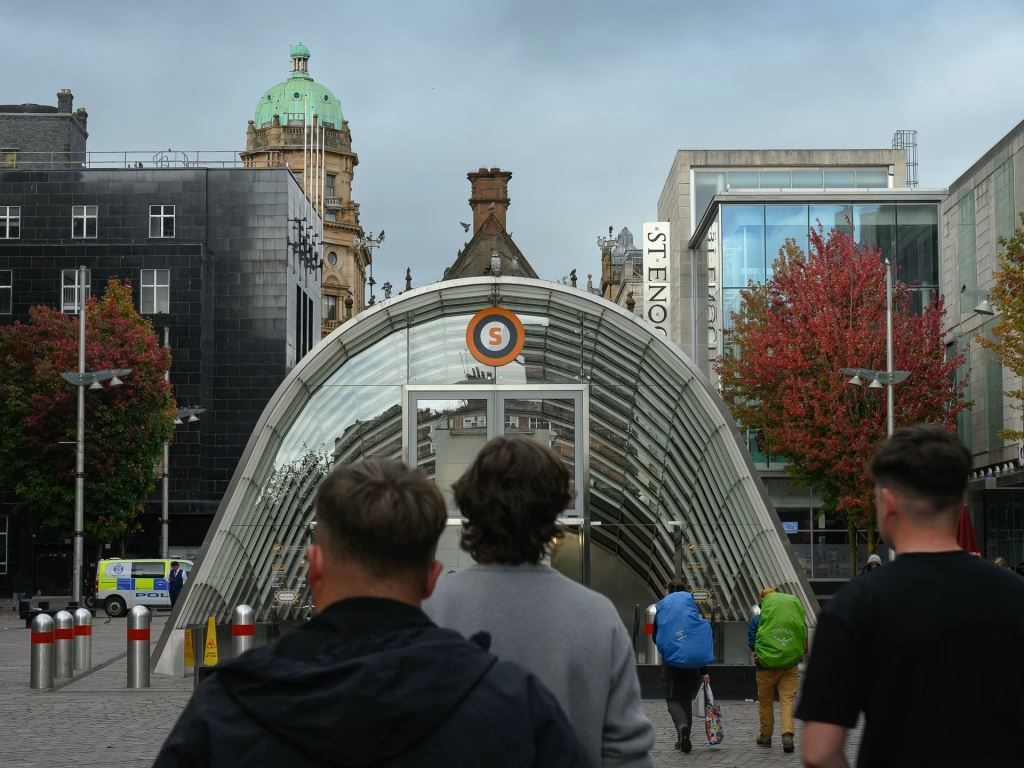
This dynamic creates a vibrant energy which one can sense everywhere: from the throngs streaming down Buchanan Street, the families and tourists crowding the many civic attractions, the wonderful murals surprising from around corners, as a center of higher learning, a node of tech and engineering innovation, and as a nexus of transportation connecting Glasgow into the web of Scotland and Britain, and beyond.
The end of the day found me back at the bottom of Buchanan Street again, and from there I made my way up to the Tiso Glasgow Outdoor Experience store, as I was hoping to buy a lighter pair of shoes to wear on days such a these (I’d only brought a pair of mid-weight leather hiking boots with me for this trip). Quite an amazing store in fact, with a faux rocky bit of Scottish highlands in the middle of it, including a little recycling waterfall and stream, and a rocky path around this for testing new boots on. The staff was super helpful, and rather than sell me something they knew wouldn’t be right for me, gave me recommendations for a specific shoe I might find somewhere else. Picking up a little dispenser of Smidge and half a dozen Cliff bars (prepping for the imminent start of my West Highland Way adventure), I reflected on how this was a bit how REI used to be.
From there I walked back to Cowcadden station once again, and thence a last ride on the Clockwork Orange back to my “Bright West End Pad,” and a reprise of dinner at Ting Thai. On the morrow my journey along the West Highland Way would commence!


Leave a Reply