
Breakfast and a plan
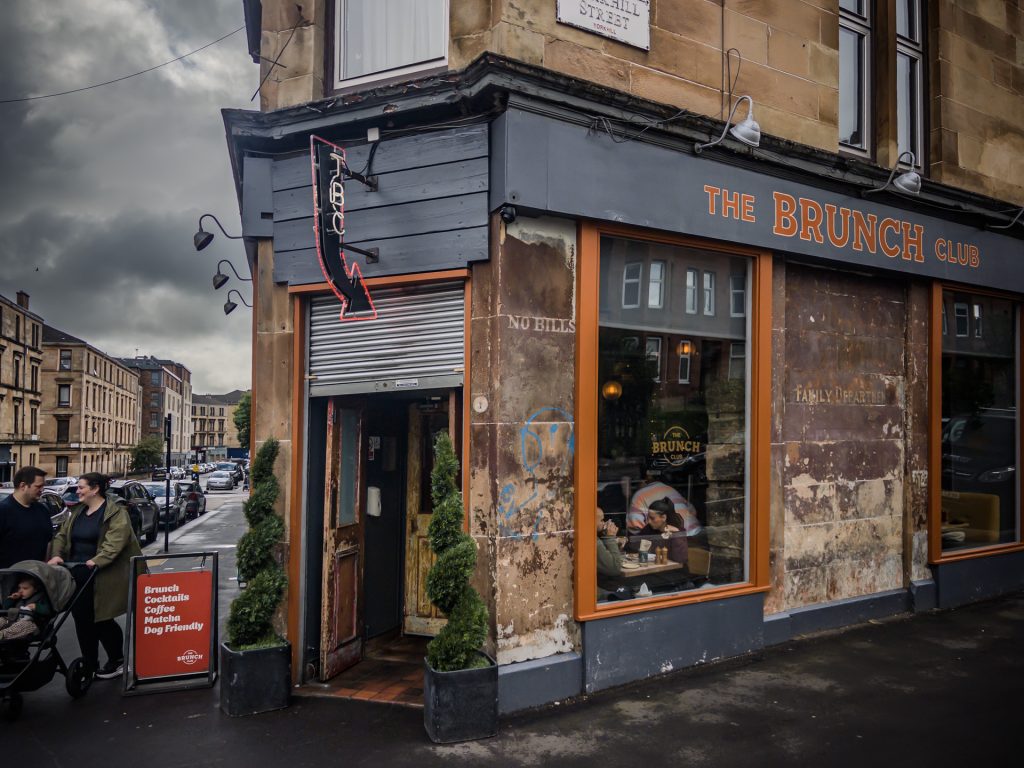
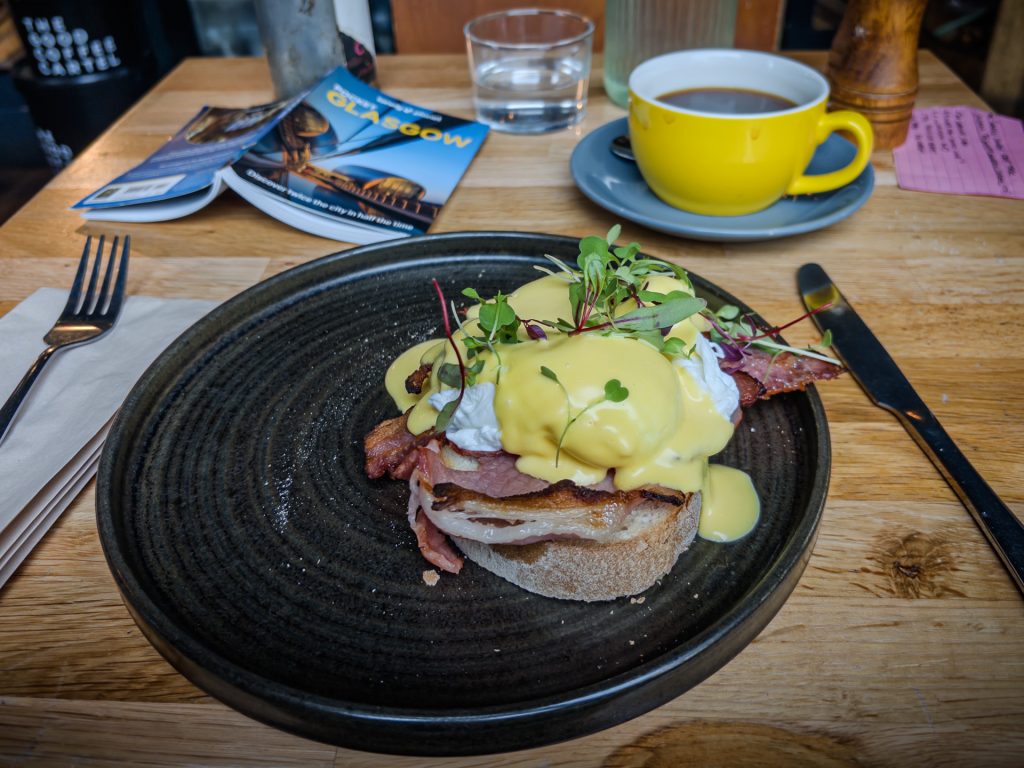
For breakfast on my second full day in Glasgow I wanted something more significant than a pastry (as truly momentous as that pastry from kaf coffee had been!), so doing a little local research I discovered a nearby brunch place, The Brunch Club. It’s an awesome place I highly recommend—it has a kind’ve funky hippy/rustic brick and oak beam with large bright windows kind of atmosphere. I ordered the Eggs Benedict, which was totally delicious. As I ate I read my Lonely Planet Glasgow guide and planned what to do with the day. A proposed walk along the Clyde River seemed appealing, but I then noticed that a fantastic museum/art gallery, The Kelvingrove, was practically next door to where I was sitting (five minutes away). So I resolved that would have to be my first stop.
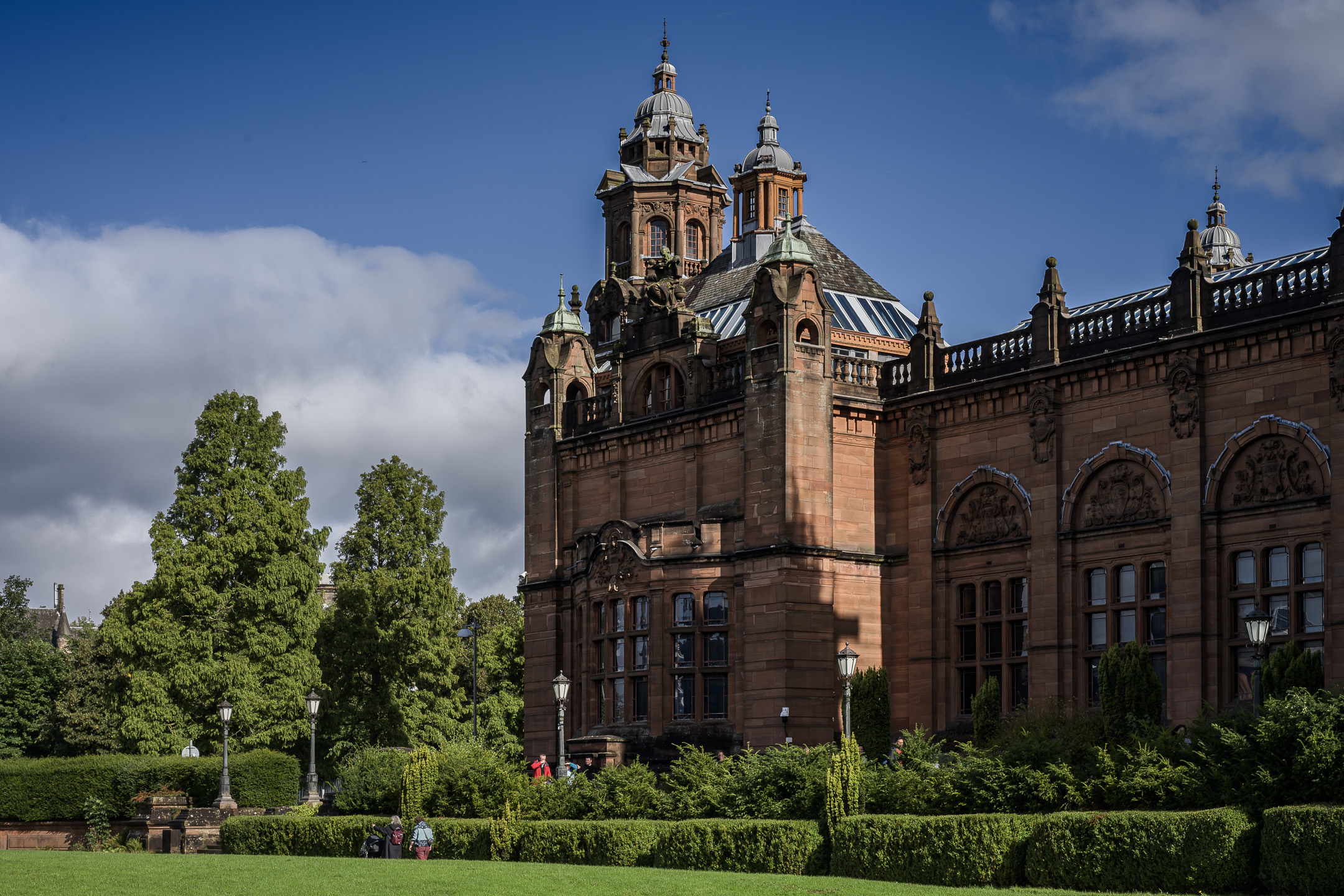
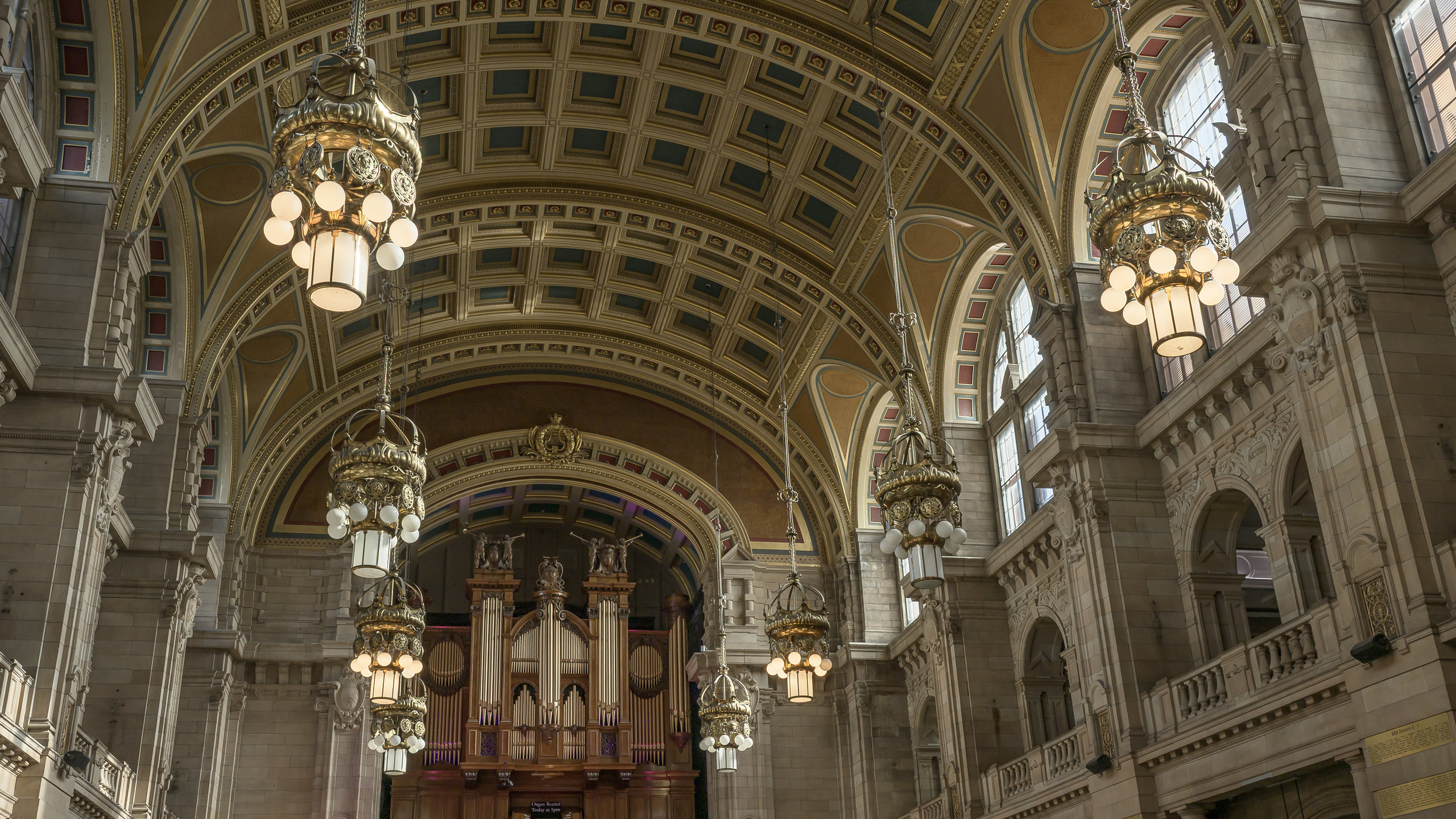
The Kelvingrove is a fantastically elaborate building, built in a Spanish Baroque style using red sandstone. It’s huge, featuring a towering center hall which is 125ft long by 56ft wide. This is flanked by two other large atriums/wings, one dedicated to the theme of Expression/art, the other Life (culture and artifacts). The center hall features a pipe organ at one end.
There are twenty-two galleries displaying over eight-thousand objects. I ended up just kind of walking around in a bit of a daze through it all, taking specific note of a small fraction of the collection that caught my eye. I’ll just present a superficial survey of those things here, separated by the themes of the wings they are found in.
West (Life) Court
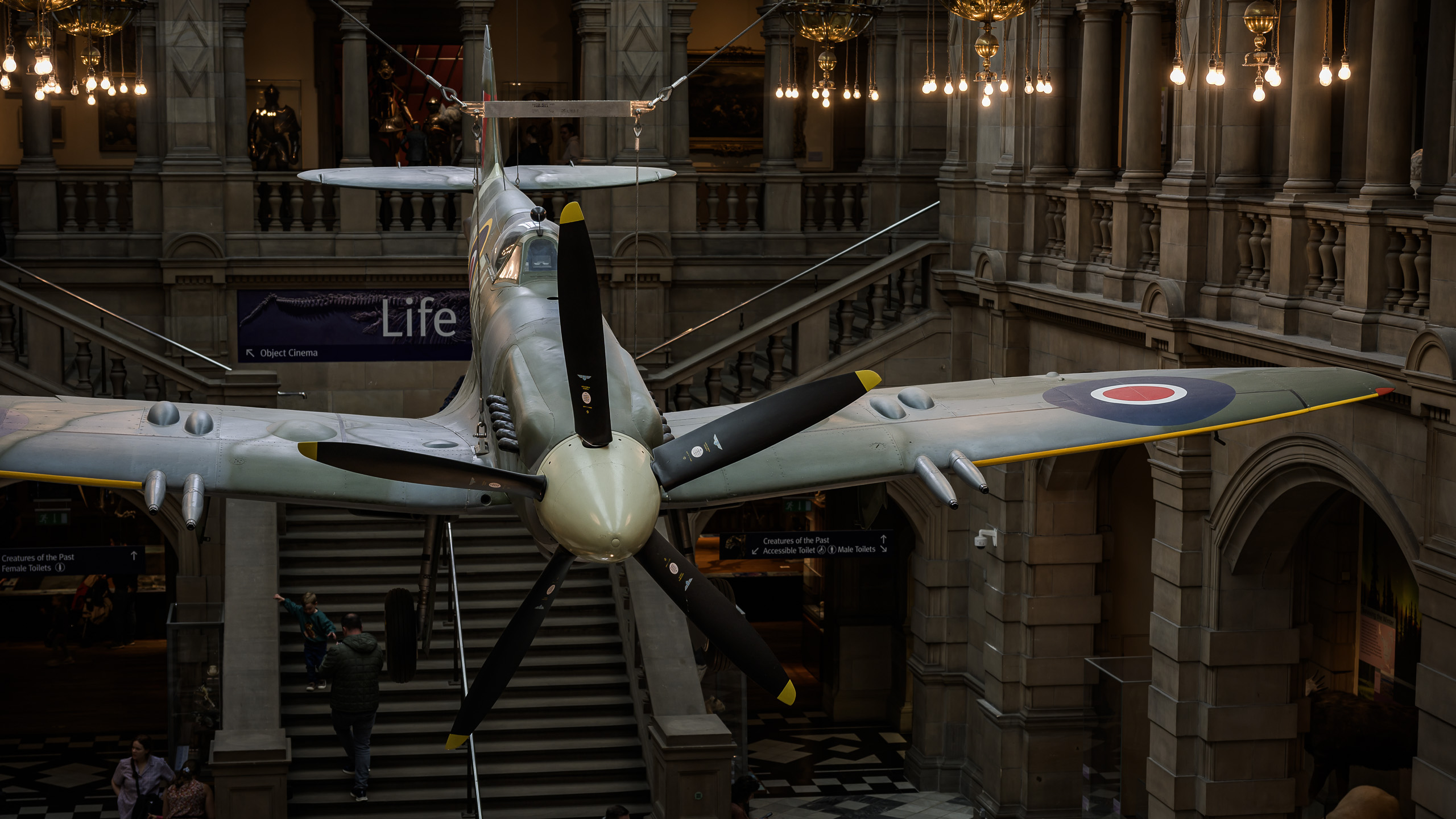
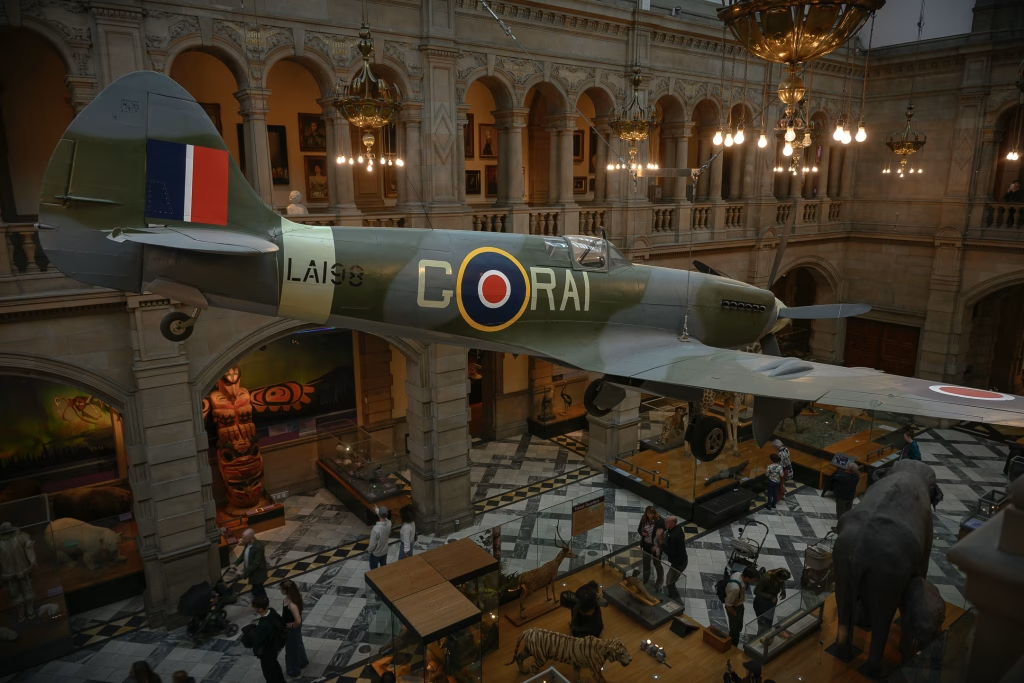
The centerpiece of the Life wing (for the twelve year old in me at least) has to be the actual WWII Spitfire aircraft just hanging there in mid-air in the huge atrium space. How cool is that?! Below on the floor were various taxidermied animals, including notably “Sir Roger the elephant.”
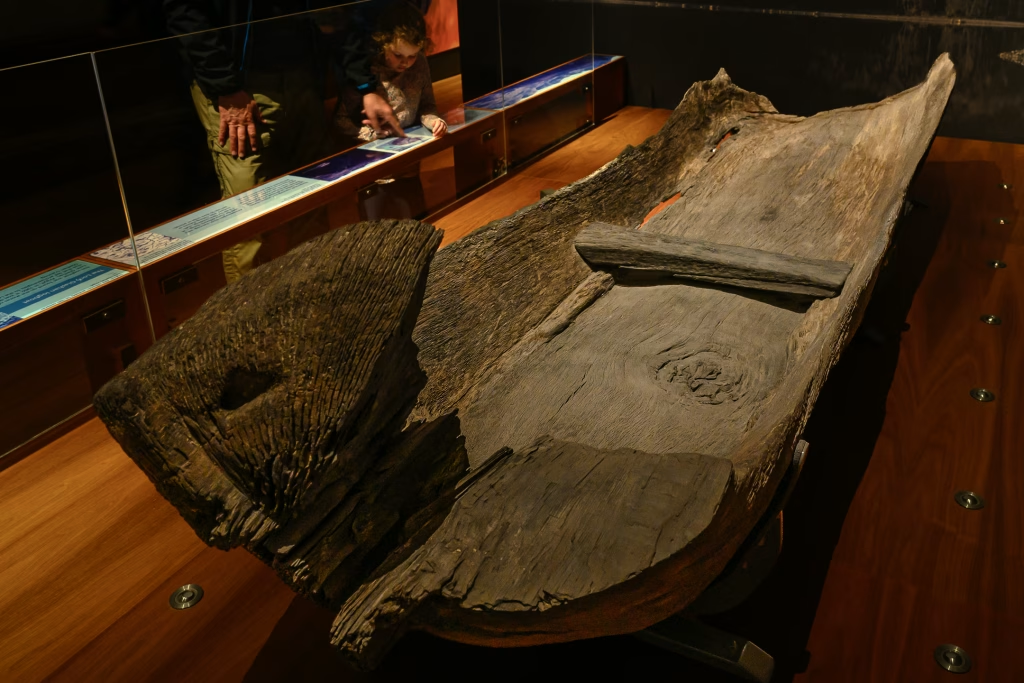
“The Loch Glashan logboat” of course harkened back to a much earlier era in Scotland’s history. Amazing to note that this oaken craft has survived the one or two millenia since it last plied the waters of a loch.
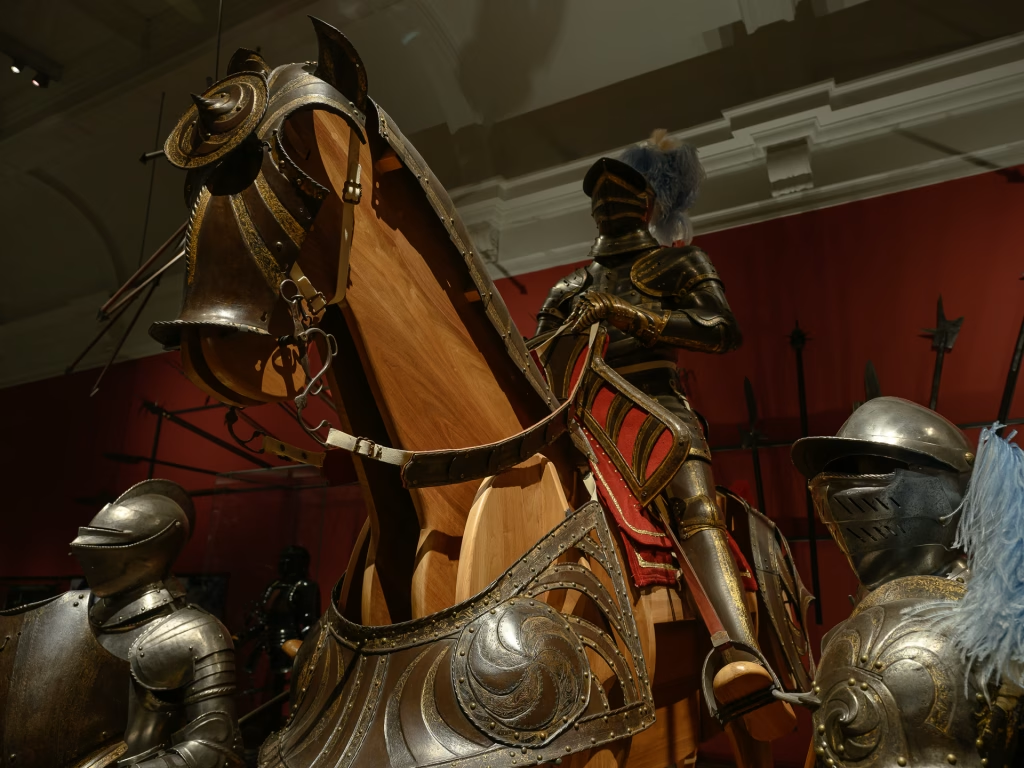
Armour is of course another example of something that speaks to the wonder of the young boy in me. This armour I read belonged to the Earl of Pembroke.
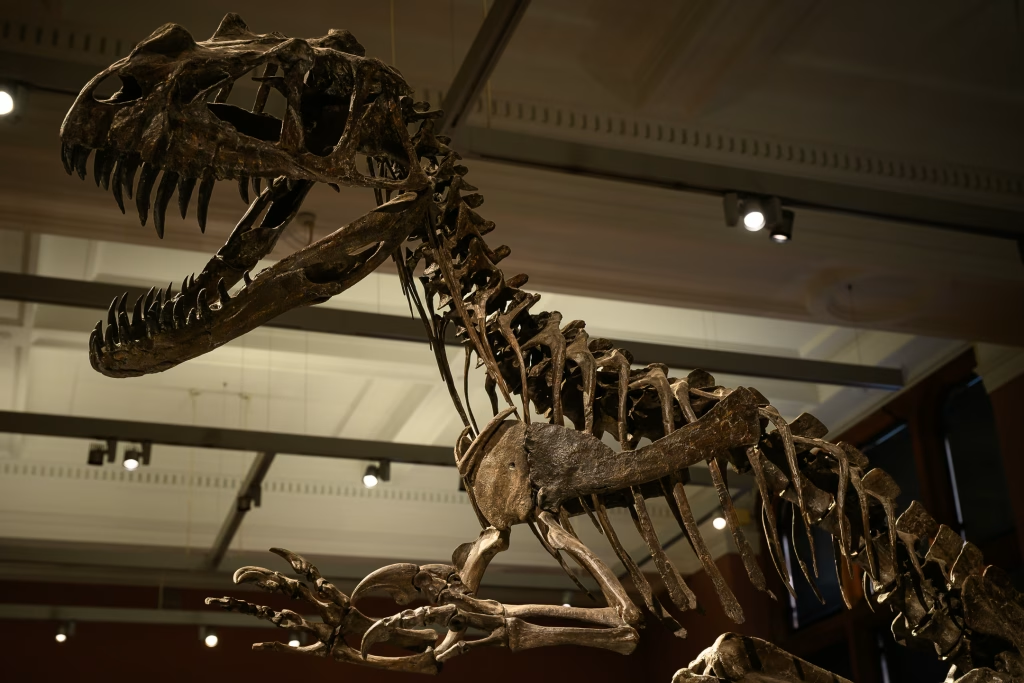
Finally, to round out the things I took photos of in the West Court is a cast skeleton of a “Ceratosaur.” The exhibit is titled “Scottish Dinosaurs,” but then it also notes the original is from Wyoming 🤷♂️.
East (Art) Court
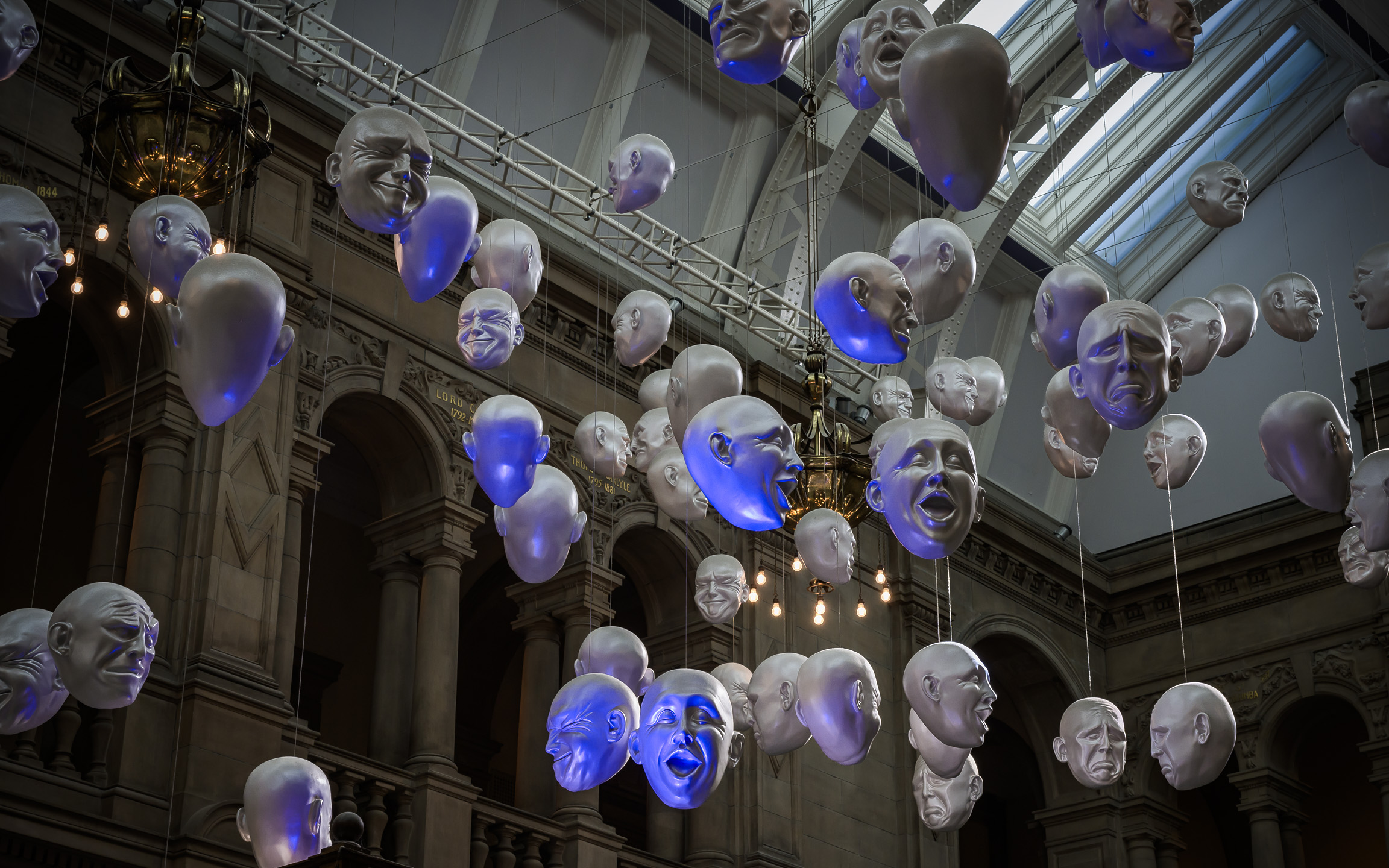
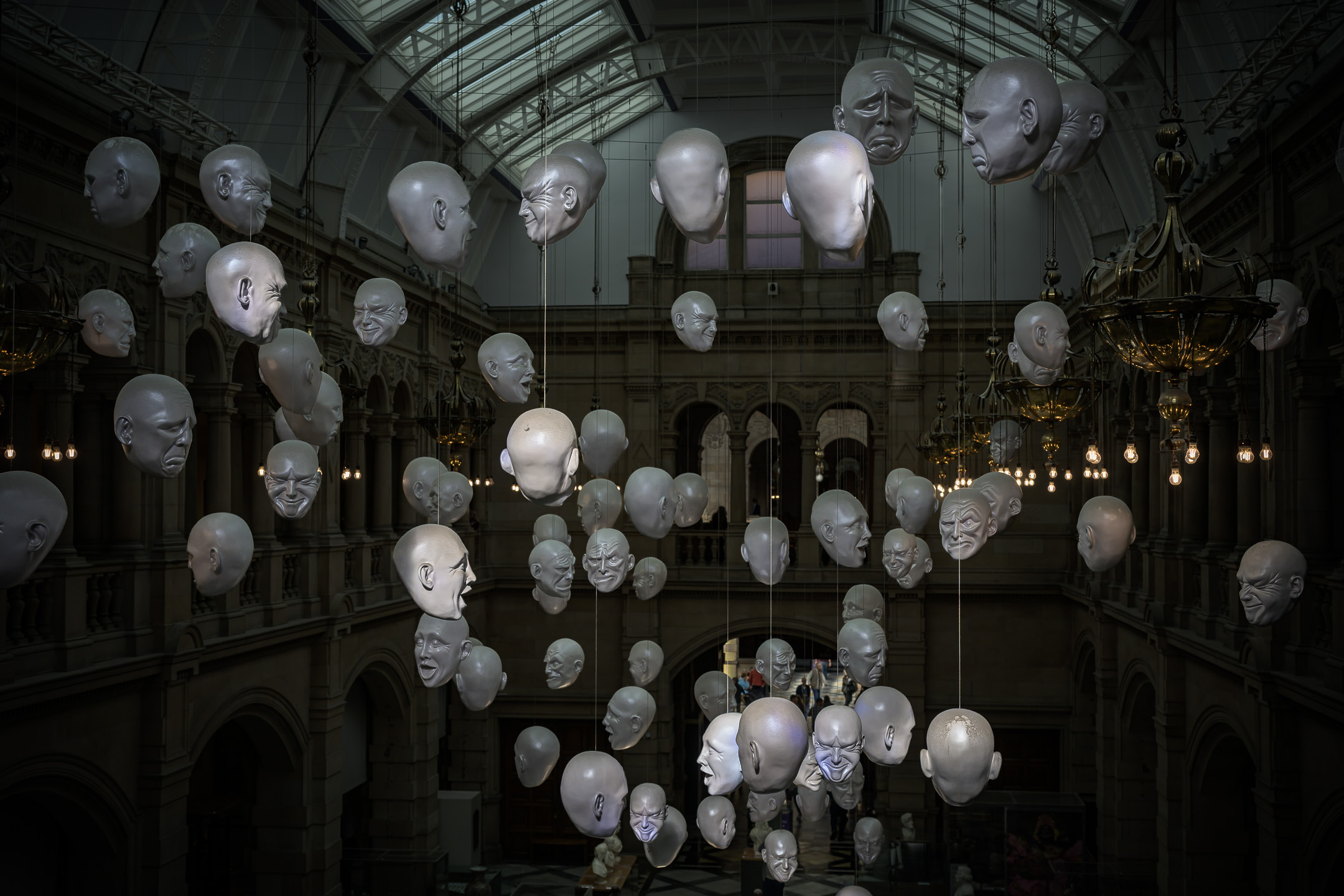
As the West Court has its Spitfire, the equally dramatic centerpiece of the East Court is the sculptress Sophie Cave’s installation titled “Floating Heads.” And float they do, over fifty of them filling the large airy space of the atrium. Dramatically lit, they display countless (well, ok, over fifty) examples of the varieties of human expressions/emotions. It’s quite a spectacle, and engrossing to look at. One might have seen an expression of wonderment on my face 😯 as I examined and took some photos of these.
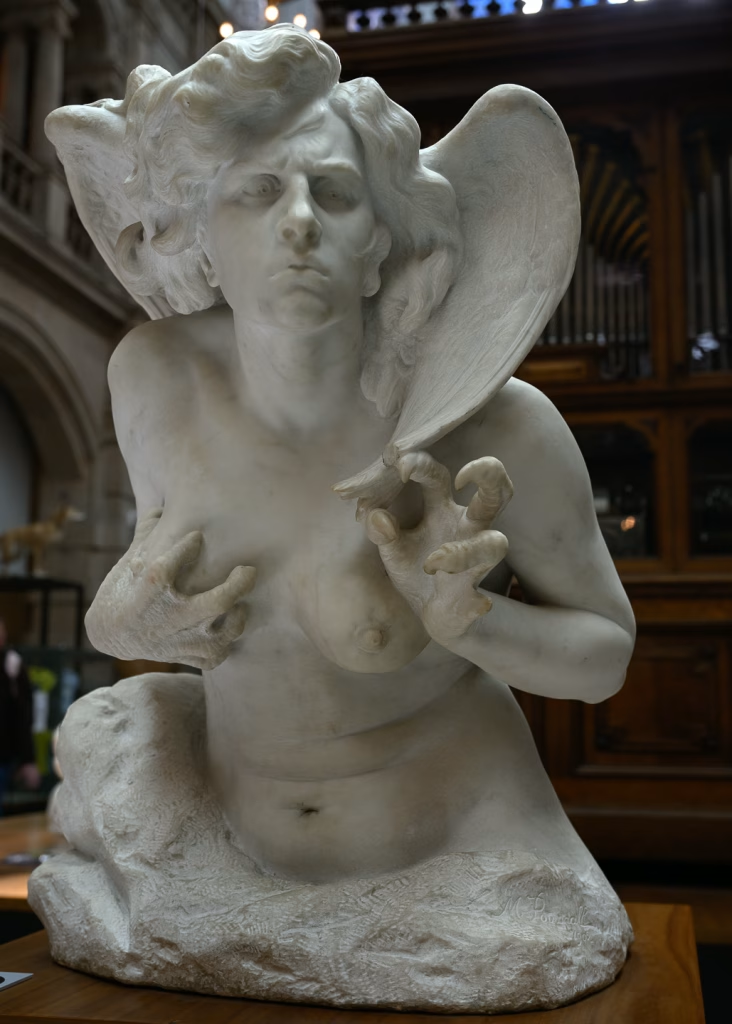
On the floor of the court, examining the marble sculpture of Celaeno the harpy, one might have seen a different expression on my face 😬. I mean, wow, I would not have wanted to encounter her in the mythic wild! This is the work of another sculptress, Mary Pownell, from 1902.
From the placard:
“Celaeno was half-human and half-bird. According to the Roman poet Virgil she was angered when the Trojan hero Aeneas and his crew killed animals on her island for food. Mary Pownall conveys her menace.”
No kidding!
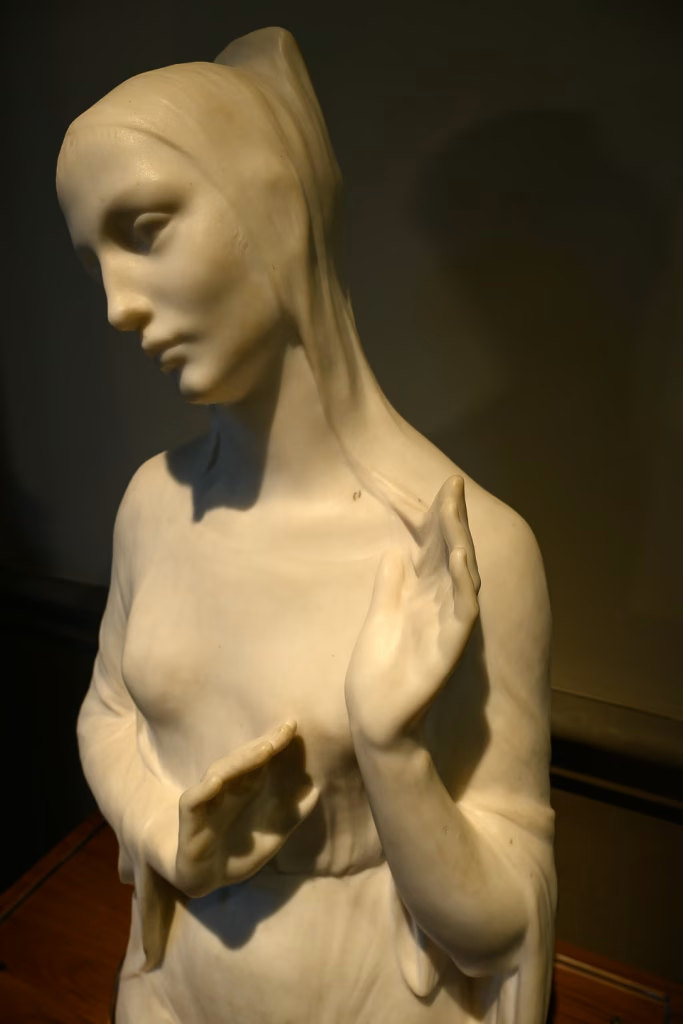
A gentler feminine image is presented with Richard Garbe’s “The Little Mantilla,” from 1929. I really just appreciated the grace, sense of peace, and beauty captured in this piece.
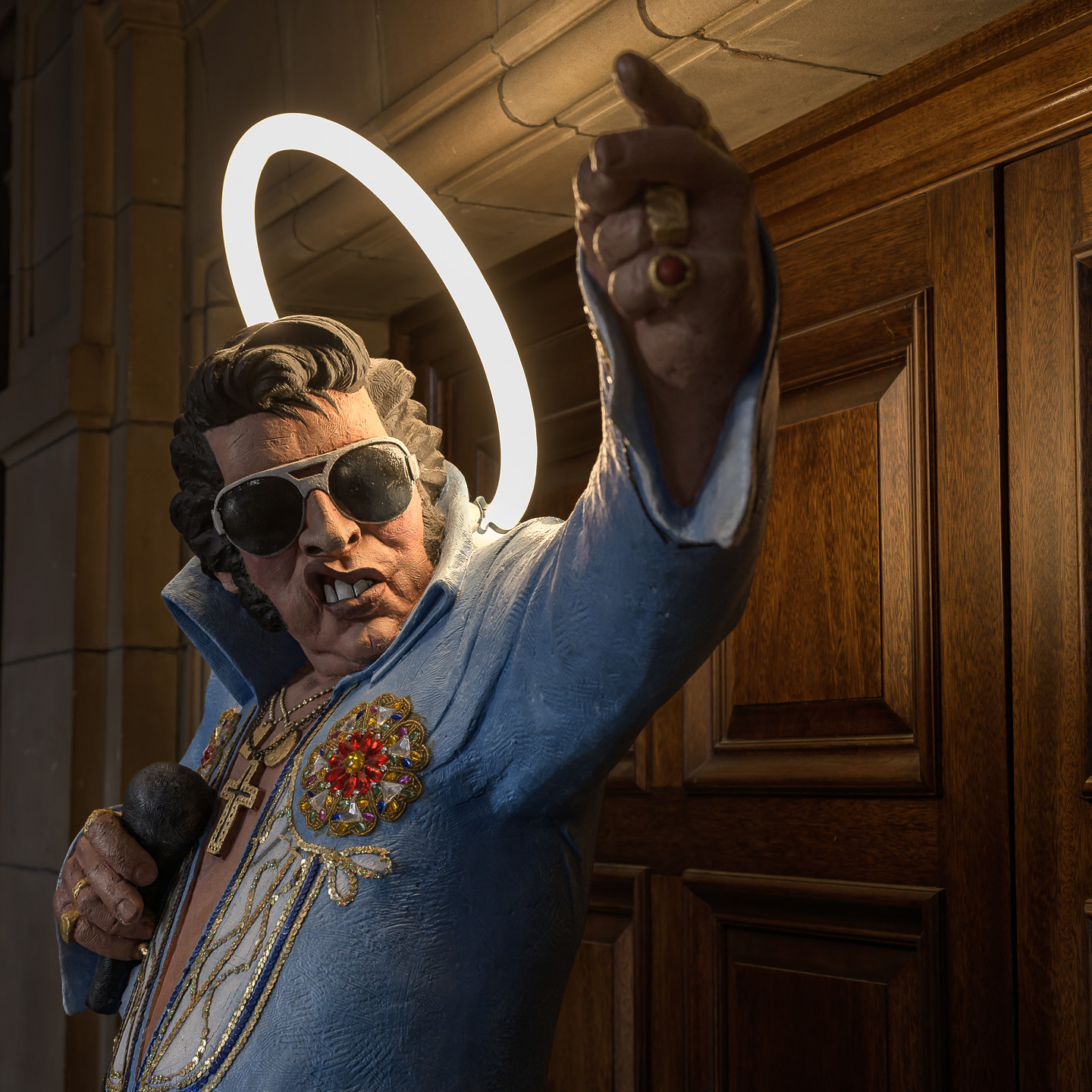
An entirely different mood is captured by Sean Reed’s “Return to Sender,” a send-up it seems of “The King”’s later years. It’s quite an arresting presence, snarling with glowing halo, and standing seven feet tall. Created in fiberglass and mixed media I read.
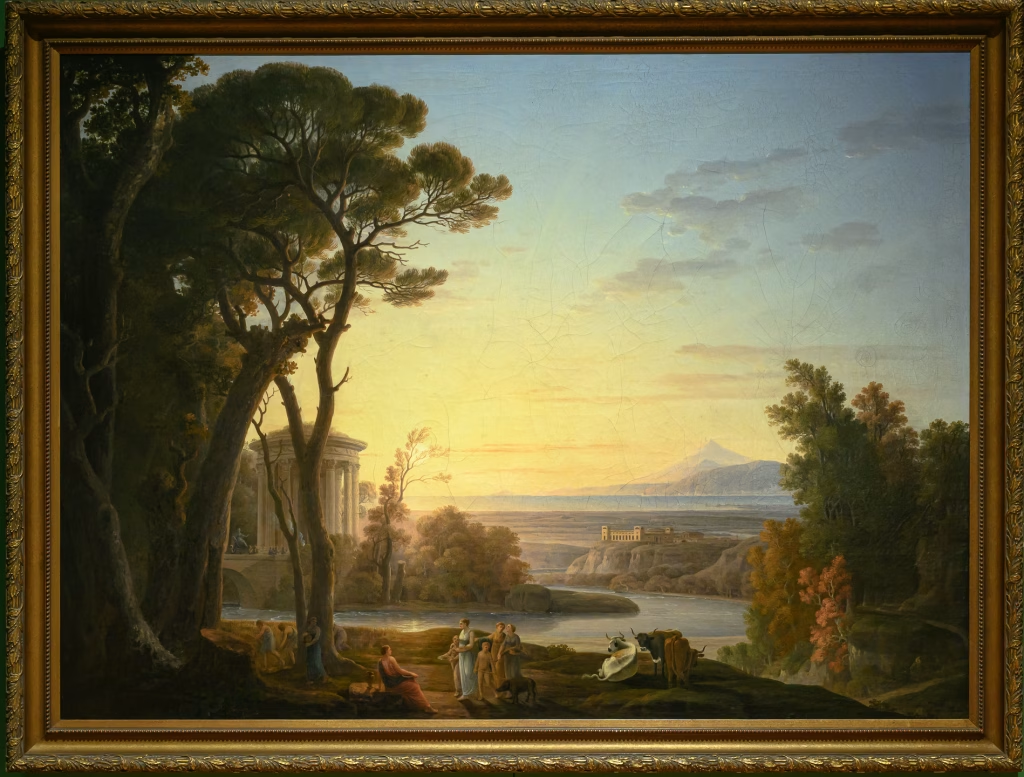
Moving on to two-dimensional works, I found myself transported by the scene of pastoral golden hazed bliss presented in Jacob More’s monumental painting “Evening,” from 1785. As I was on the verge of embarking on my West Highland Way adventure, I found myself wondering if such scenes might be awaiting me there?
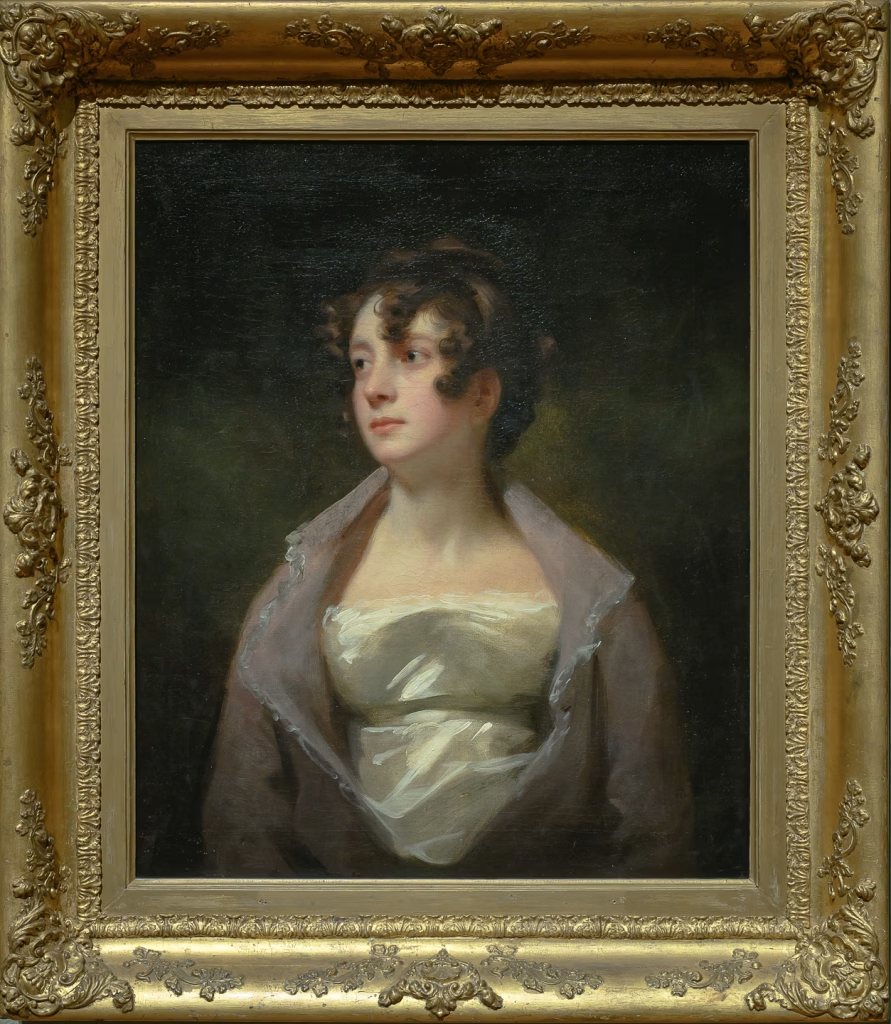
I found myself also captured by the wan portrait of “Mrs William Urquhart” by Henry Raeburn. Raeburn (I learned) was a prominent Edinburgh-based portraitist of the late 18th and early 19th centuries, and painted many portraits of the Scottish elite. My modern sensibility finds it notable that we don’t actually know this woman’s name, only that she is “Mrs William Urquhart.” A fine portrait nonetheless—to me it suggests a woman somehow trapped, but maybe I’m just reading into it.
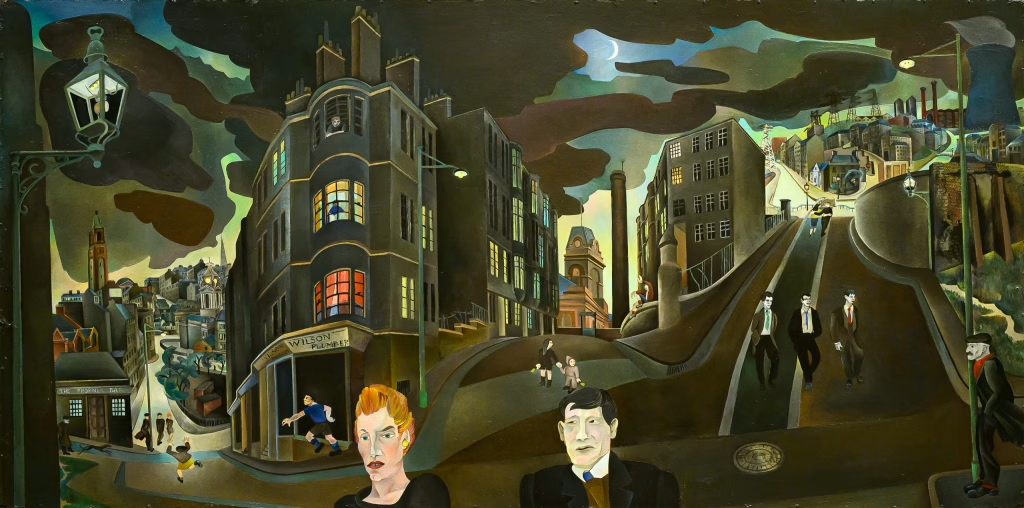
I was absolutely captivated by Alasdair Gray’s fantastic masterpiece “Cowcaddens Streetscape in the Fifties.” This large, vibrant canvas (8’ x 4’) captures the intensity and life of this Glasgow neighborhood in the post war years. This vision of the old buildings and generations combined with modern industry and the energy of youth is like a rolling visual cymbal crash. I particularly appreciate the wary side-eye the professional gent gives the upstart Sting like figure to his right in the foreground, presaging the cultural upending of the sixties and beyond now on the verge of this old neighborhood.
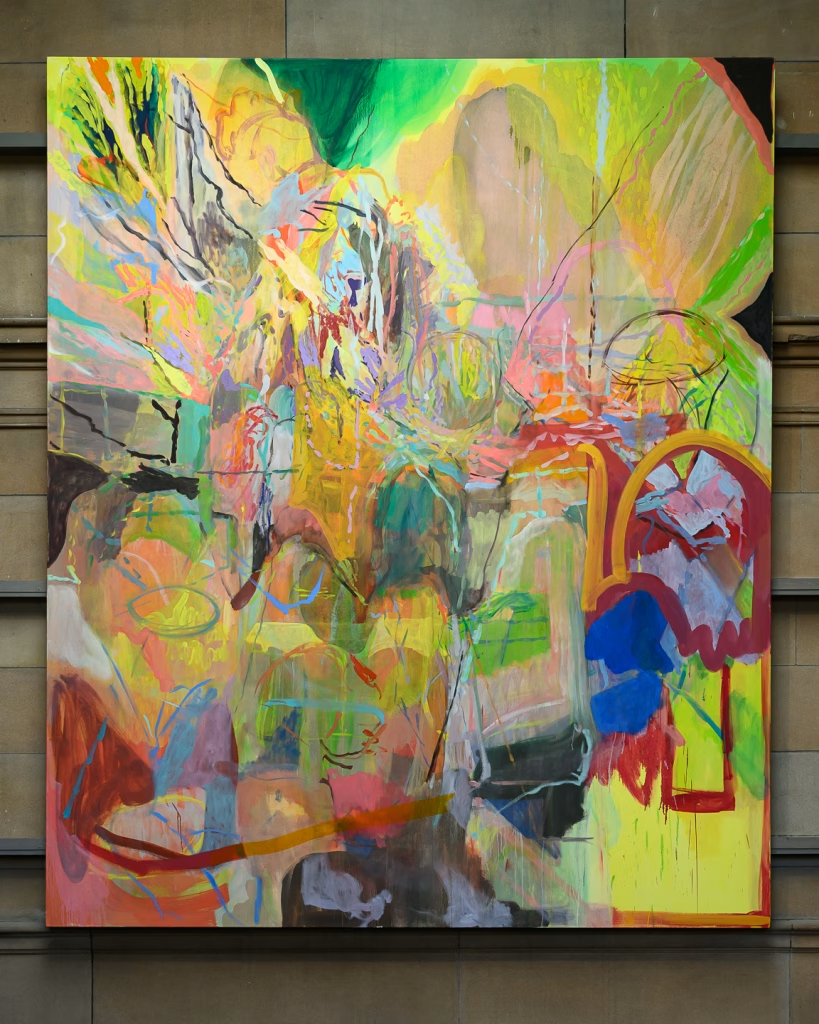
Finally (for this survey), hanging on the wall of light filled well, the Scottish artist Victoria Morton’s “Photosynthesis” veritably pulsed with life and energy. At 8.2 by 9.8 feet the vibrant colors, shapes and layers psychedelically impacted upon this viewer’s senses (please note, I had only had coffee so far this day!). Amazing how static shapes and colors can impart such a sense of motion! I appreciated this piece for a while.


Leave a Reply