
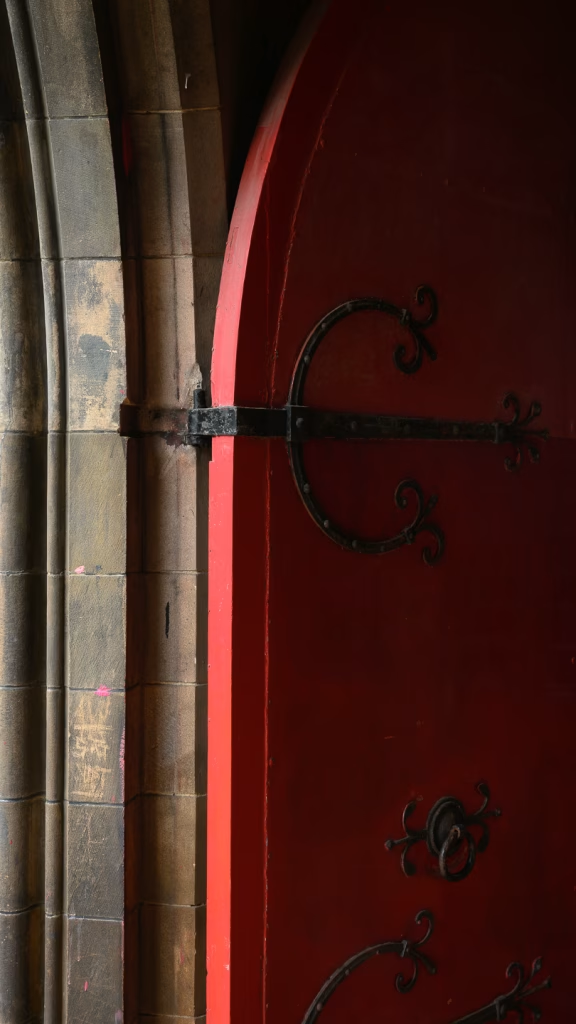
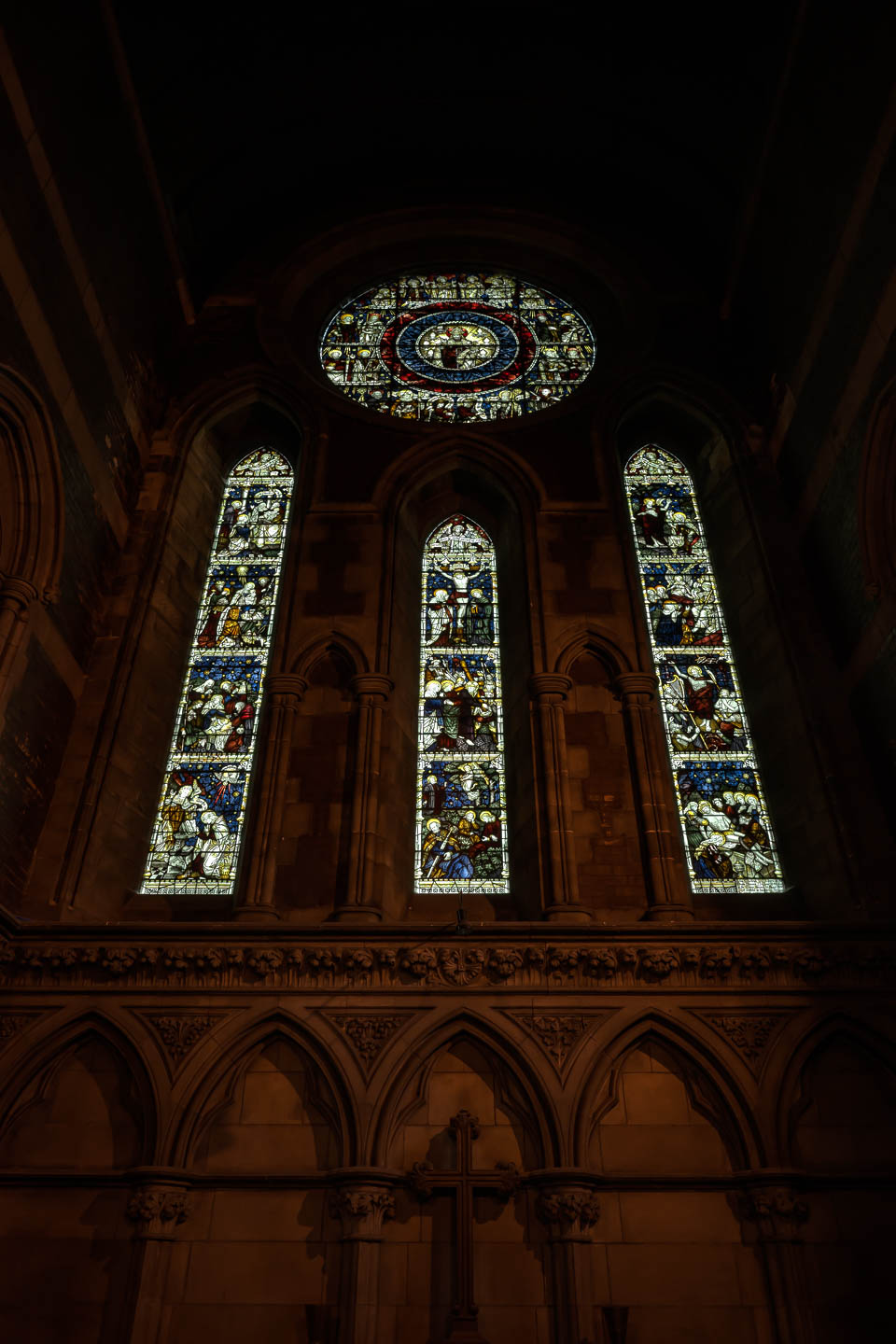
Next up on my list for my second (and last) full day in Glasgow was a trip across the River Clyde to the Govan Old Parish Church. There, I had read, one could encounter The Govan Stones. Although the current church building is relatively recent, dating to the late nineteenth-century, it has been the site of a church for the past fifteen-hundred years. Early Christian burials from beneath the foundations of an earlier church have been dated to between the fifth and sixth centuries AD.
The Govan Stones comprise in total forty-seven works in stone of various types, carved with Celtic designs. These have been unearthed from the churchyard, and date to the ninth to eleventh centuries AD. At that time the churchyard was part of a complex that included an adjacent “Doomster Hill” (since demolished), a place of assembly and the dispensing of justice in the early medieval Kingdom of Strathclyde.
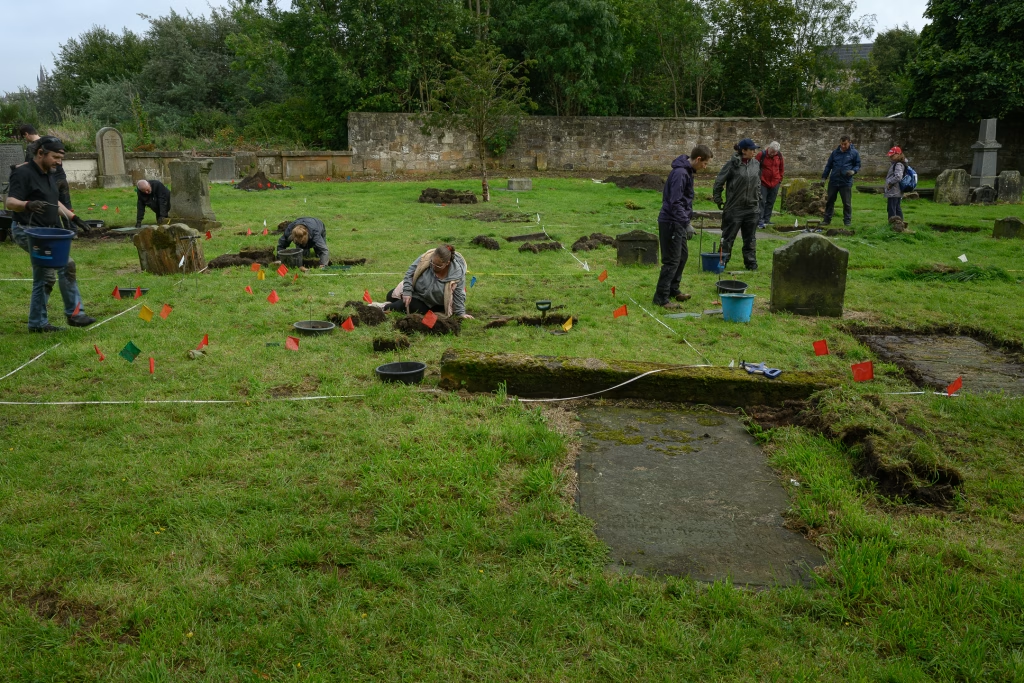
This was a bit of a cold and blustery day, with intermittent spitting rain. Entering the churchyard I saw a team of people on their hands and knees carefully excavating around embedded gravestones. The area had been variously marked with small colored flags, and sectioned into several plots with string boundaries. I asked a fellow sitting at the edge of this work where I might find the stones, and he told me “you are really really close!,” and then directed me to enter the church proper.
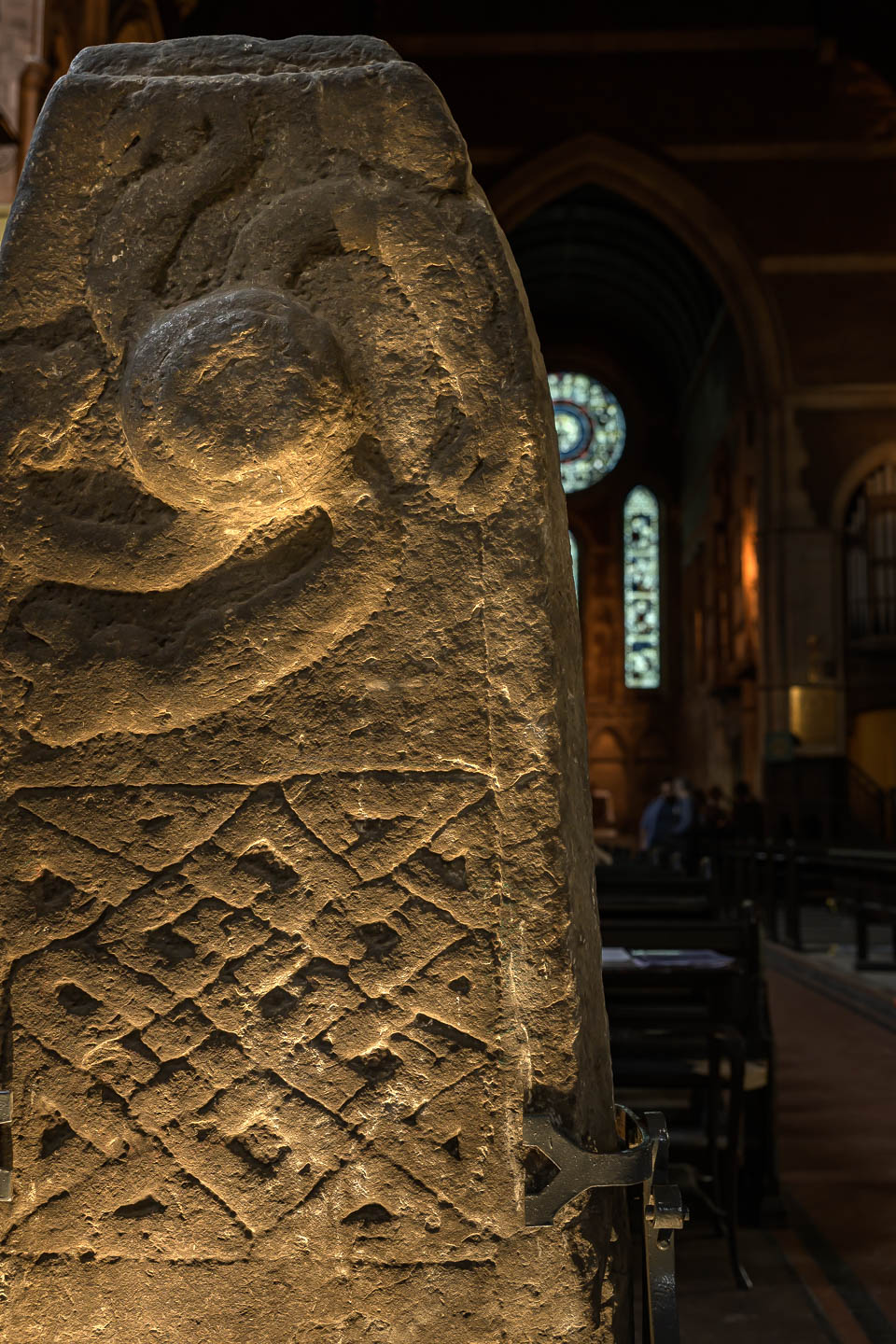
Upon entering the darkened church I was immediately impressed by three stones set standing apart and dramatically lit. The first of these has been named the “Sun Stone,” perhaps due to the design of the snakes emanating from a central boss (that’s no sun!)?
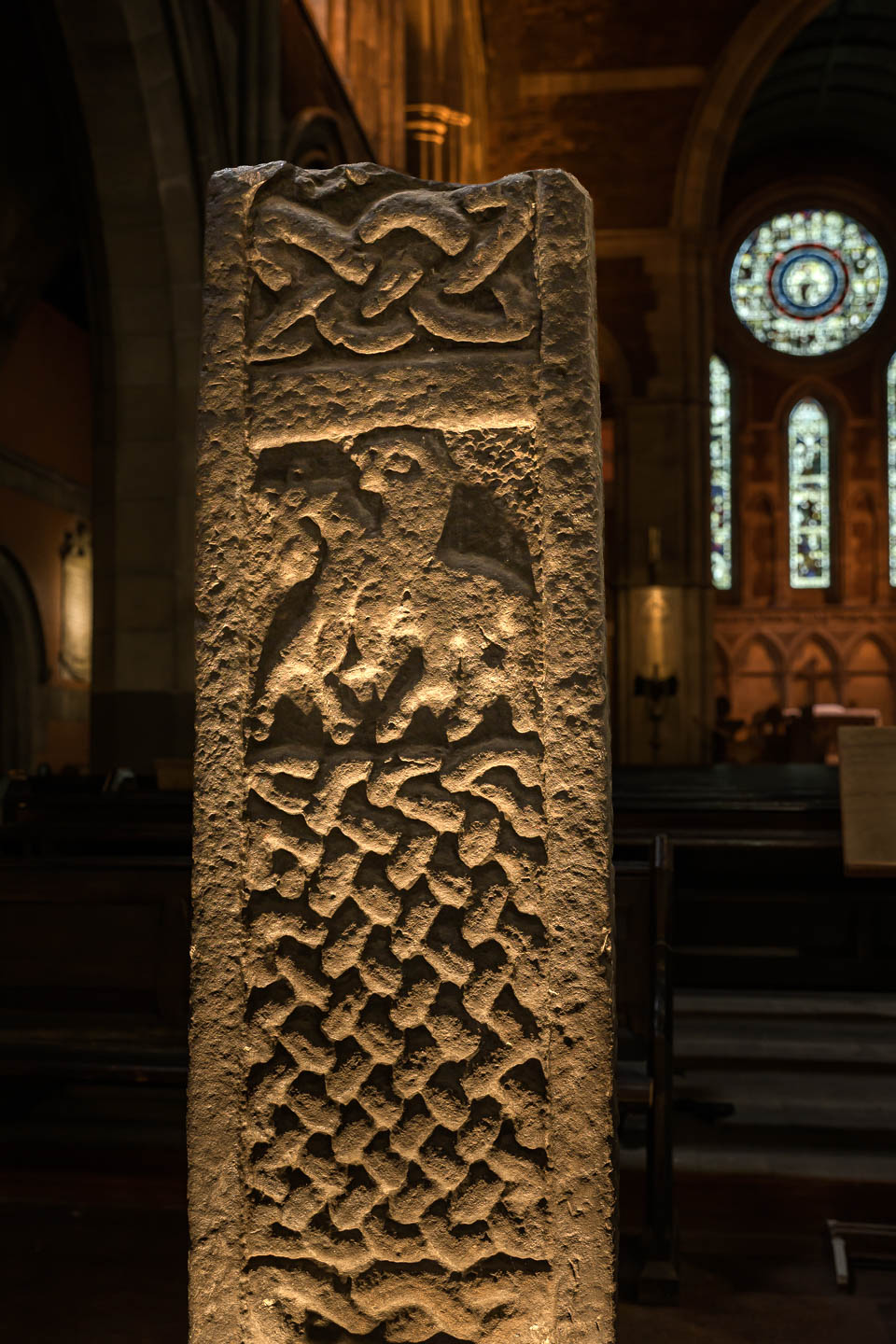
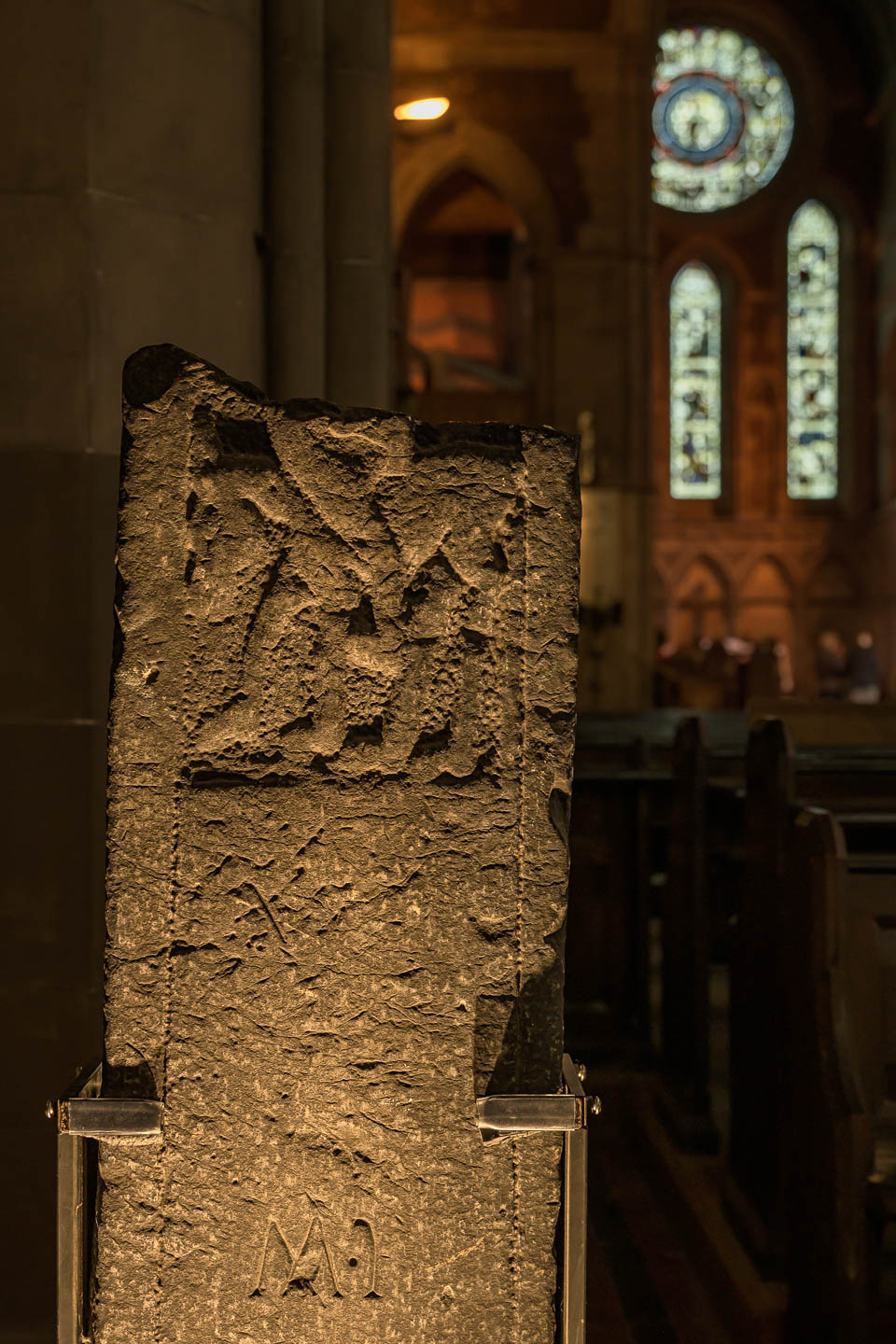
The second is named “The Jordanhill Cross,” as it is thought to have supported a Christian cross-head atop it, which has been lost to time. The third is called the Cuddy Stone, as some think the animal being ridden is a donkey. However this is not a universally held interpretation.
Moving clockwise around the interior of the church I came across a grouping of massive peaked horizontal stones referred to as “hogbacks,” a viking tradition thought to have represented long houses atop graves. I neglected to take any pictures of these however 😢.
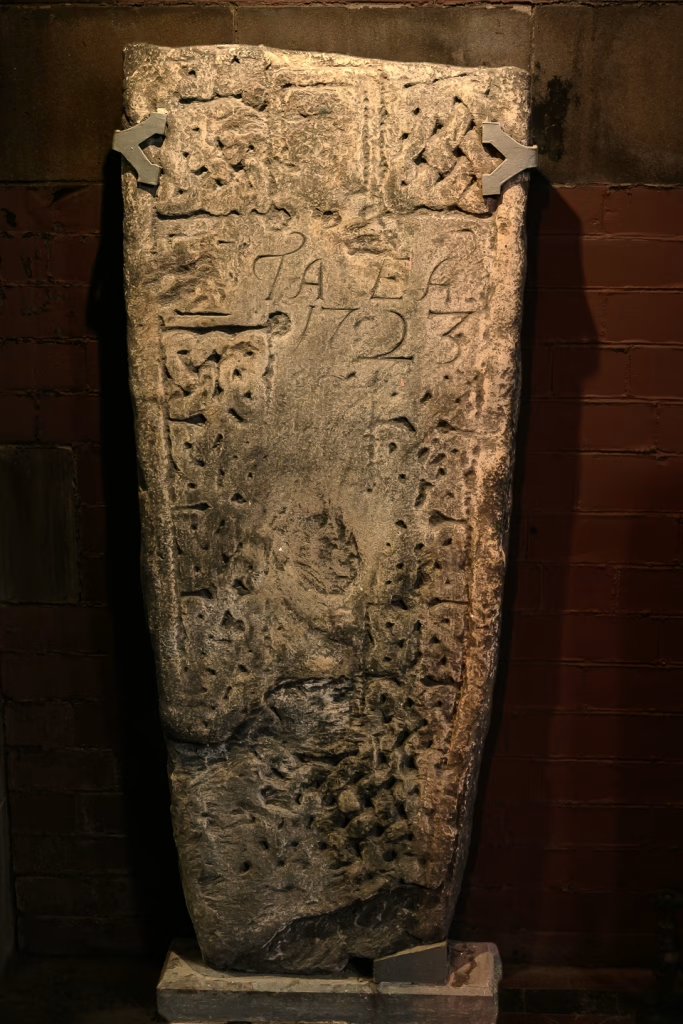
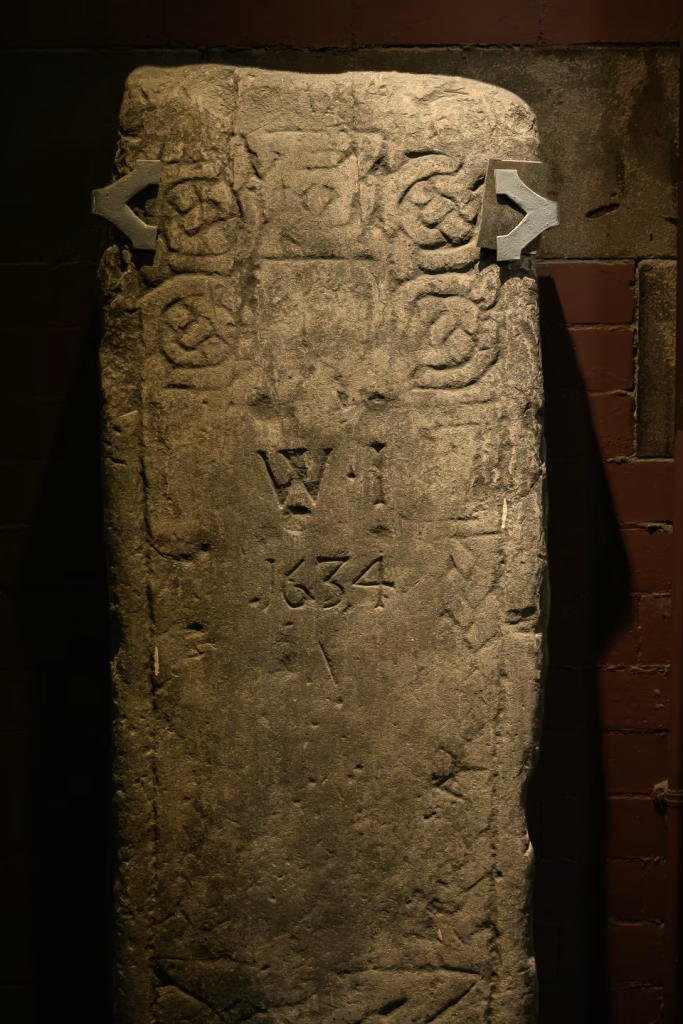
A number of the other Govan Stones are slabs which originally were laid flat as grave markers, but have now cradled upright along the wall. These are carved with Celtic knot motifs and whatnot, often with much more contemporary inscriptions later inscribed on top (eg, “W.I 1634”). Never let a good gravestone go to waste I guess!
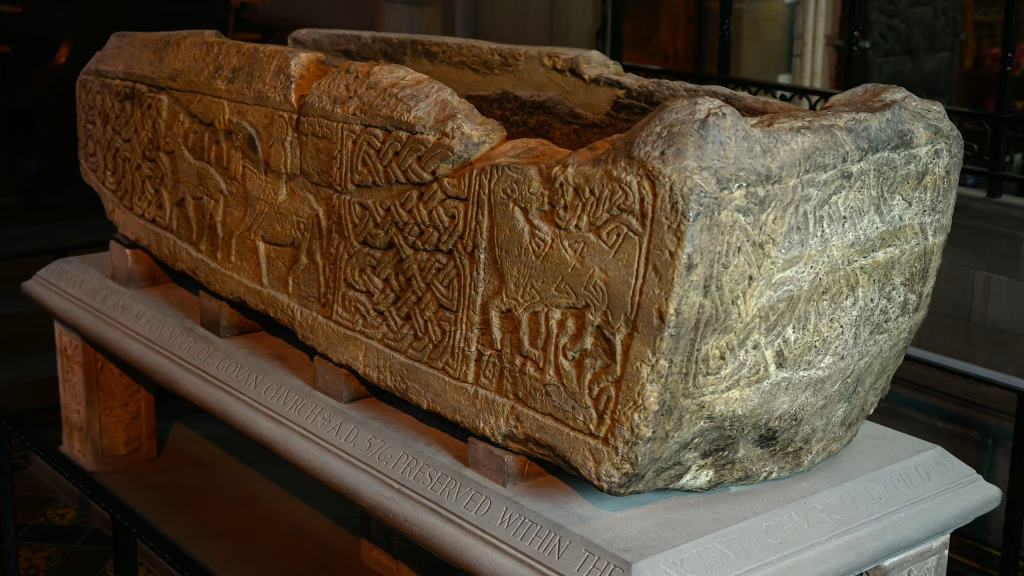
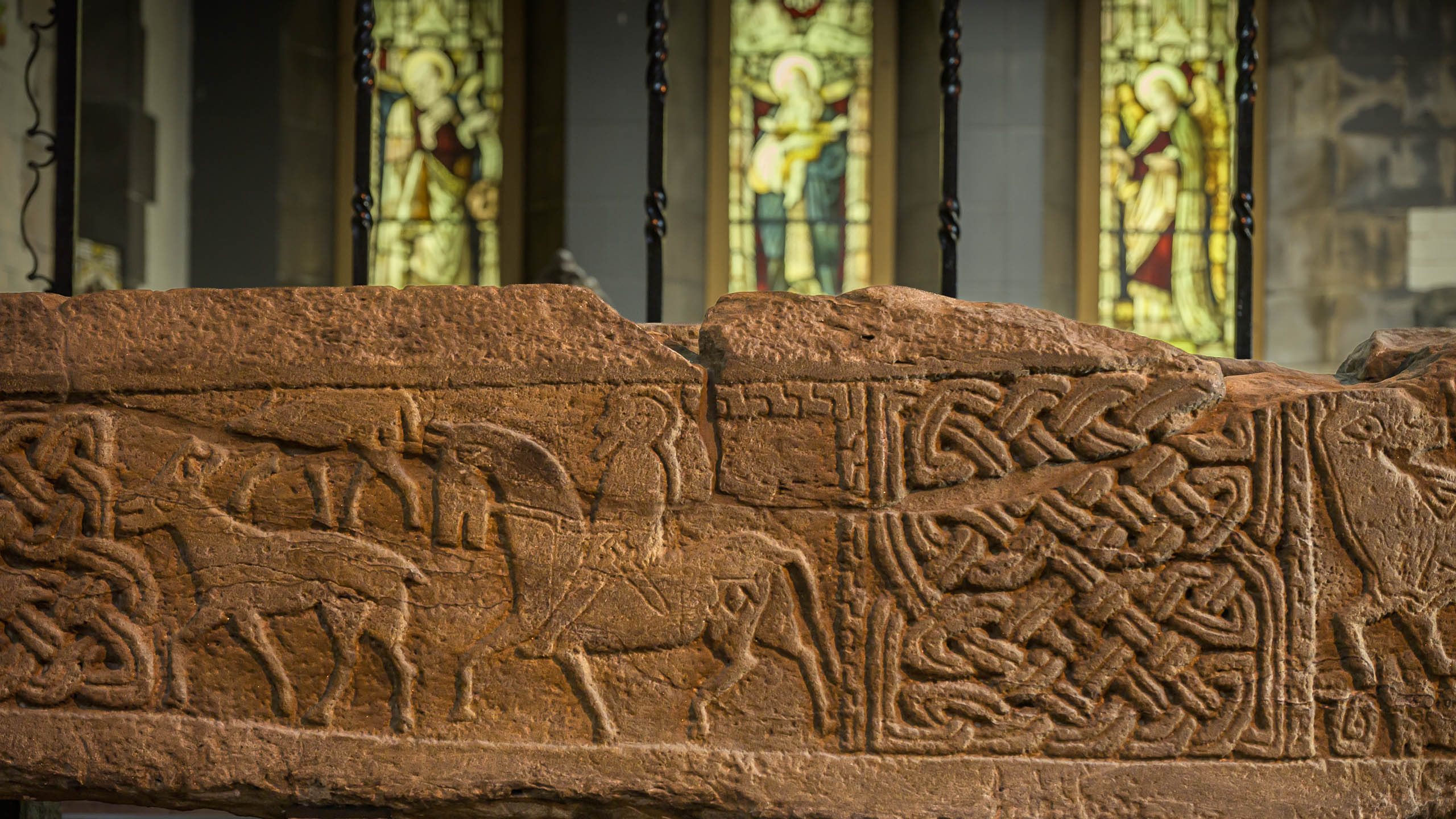
Finally making my way to a back corner of the church I came upon the Govan Sarcophagus. This is a stone sarcophagus, open on top, and is carved with Celtic (or Pictish!) designs, depicting scenes of a hunt, intertwined beasts, snakes, and so on. This was rediscovered in 1855 when a church sexton was digging a grave, but no remains were found within it. It is speculated to have held the remains of the patron saint of the church, St Constantine. But apparently which exact St Constantine is a matter of some dispute (more than one possible candidate it turns out!).
Who were these monuments and markers created for? There are no specific answers, only guesses. In the case of the Sun Stone experts only hazard “a high-ranking Strathclyde aristocrat,” from the tenth century. But in their day they were no doubt famous and known to all at Govan (although it’s somewhat humorous to note that a significant amount of shade has been thrown on the craftsmanship of this piece!). Rather than marking the renown of these individuals for ages to come, these become instead enduring monuments to the inevitability of obscurity.
Exiting the church I return to our modern age, but as ever the ghosts and echoes of Scotland’s past are all around.


Leave a Reply